



Prevenção de Irritação por Pinos de Punção: Liberação, Fim, e Revestimentos
Galling happens when metal from the workpiece adheres to the punch tip during shearing, leaving a rough buildup that scratches parts, dulls the cutting edge, and shortens tool life. The fix depends on which type of galling you're dealing with — clearance, Acabamento superficial, and coatings each solve a different piece of the problem, and using the wrong one wastes time and tooling budget.
Este guia retoma onde uma abordagem mais ampla Guia de matrizes de punção (inferido) leaves off. That resource covers die types, Materiais, and general clearance principles; here, the focus narrows specifically to why punch pins gall and how to stop it from recurring.
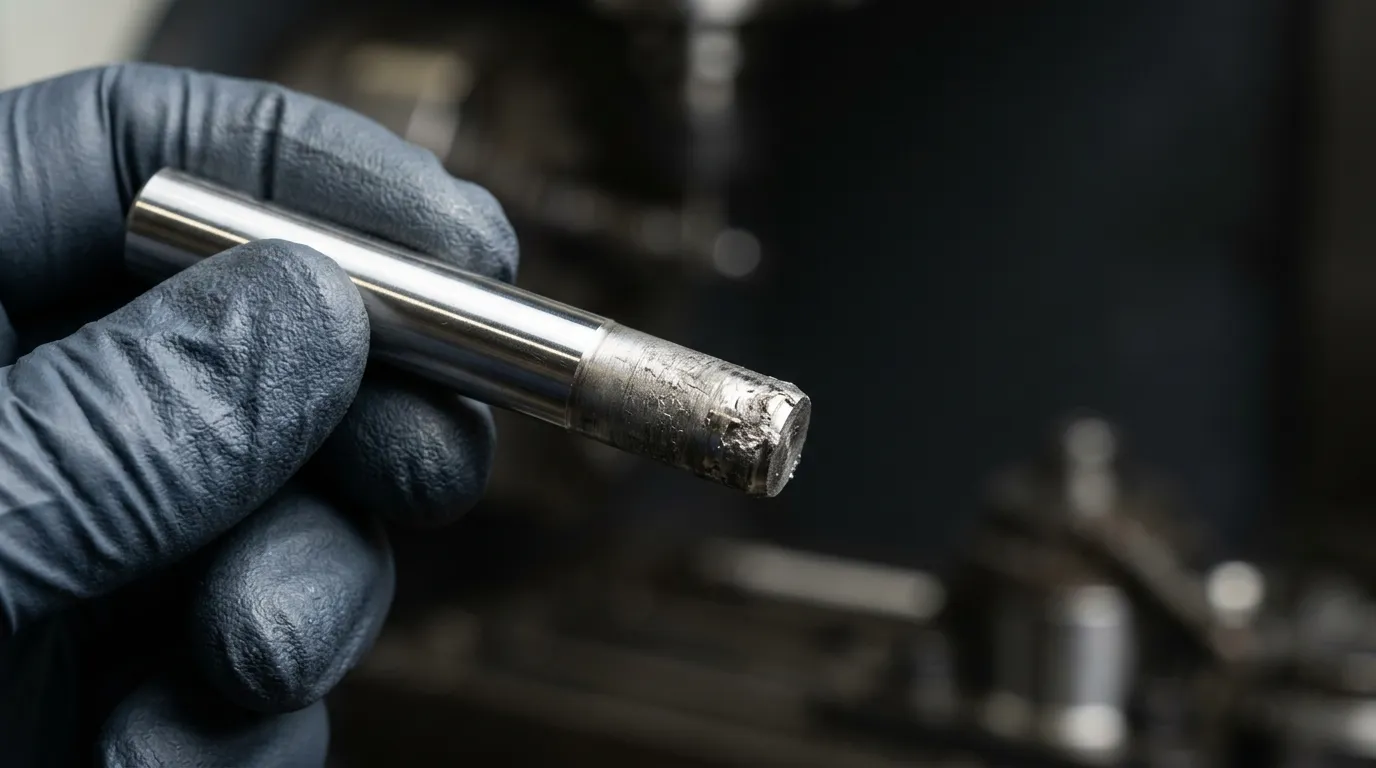
Diagnosticando o tipo de irritação no pino do seu pino de punção
Not all galling looks or behaves the same way, and the visible pattern tells you where to start fixing it.
Avaria adesiva — small particles of the workpiece material weld onto the punch surface under pressure and heat, building up a rough patch that grows with each stroke.
Agallagem abrasiva — hard inclusions or scale in the workpiece material scrape against the punch, wearing it down rather than depositing material on it.
Avaria corrosiva — less common, this occurs when a chemical reaction between the punch surface and workpiece (often from lubricant breakdown or moisture) accelerates surface degradation.
A análise técnica do Fabricador de As Falhas Frustrantes notes that adhesive galling is the most frequent type in stamping operations, largely because friction and localized heat are difficult to eliminate entirely in high-speed punching.
If you're also seeing stripping problems — parts hanging up on the punch instead of clearing the die — that's usually a downstream symptom of galling that's already progressed past the early stage. Insufficient or incompatible lubricant often makes any of these three types worse, so checking lubricant condition is a reasonable first step before adjusting the tooling itself.
If the punch tip is chipping or cracking rather than building up material, that's a separate failure mode — see Quebra de punção em matrizes de estampagem for that diagnosis instead.
Ajustando a distância correta para evitar a formação de galhas
Clearance is the single most commonly cited fix for galling, and for good reason: too little clearance increases contact pressure and heat, which is exactly what drives adhesive galling.
Clearance requirements shift with material hardness and thickness. Mate's Orientações para prevenção de galhas points to a combination of increased die clearance and a small back taper — typically around 2° total, split evenly per side — as an effective remedy when galling is persistent rather than occasional.
| Tipo de material | Typical Clearance (% of Stock Thickness) | Notas |
|---|---|---|
| Aço macio | ~10% | Regra básica da indústria por Moeller Punch |
| Aço inoxidável | 15–20% | Dureza mais alta aumenta o atrito e o calor |
| Alumínio | 8–12% | Material mais macio, mas propenso ao acúmulo de adesivo |
| Aplicações propensas a galling | 20–30% | Combinado com o afunilamento traseiro, conforme as recomendações de ferramentas do Mate |
Back taper works by reducing the contact area between the punch flank and the sheared edge as the punch travels through the material, which lowers the friction that drives adhesive buildup. This is a geometric change to the punch itself, not just a die adjustment, so it's worth discussing with whoever handles your tooling specification.
Tool steel hardness also plays a role here: harder steels resist the surface deformation that starts adhesive galling, but very hard, brittle steels can be more prone to abrasive wear if the workpiece contains hard inclusions. Matching hardness to the specific failure type you diagnosed earlier matters more than simply choosing the hardest available steel.
Melhorando o acabamento superficial para reduzir a galha
A rougher punch surface gives workpiece material more microscopic points to adhere to, so improving finish directly reduces adhesive galling risk — and it's also how you remove galling that's already present.
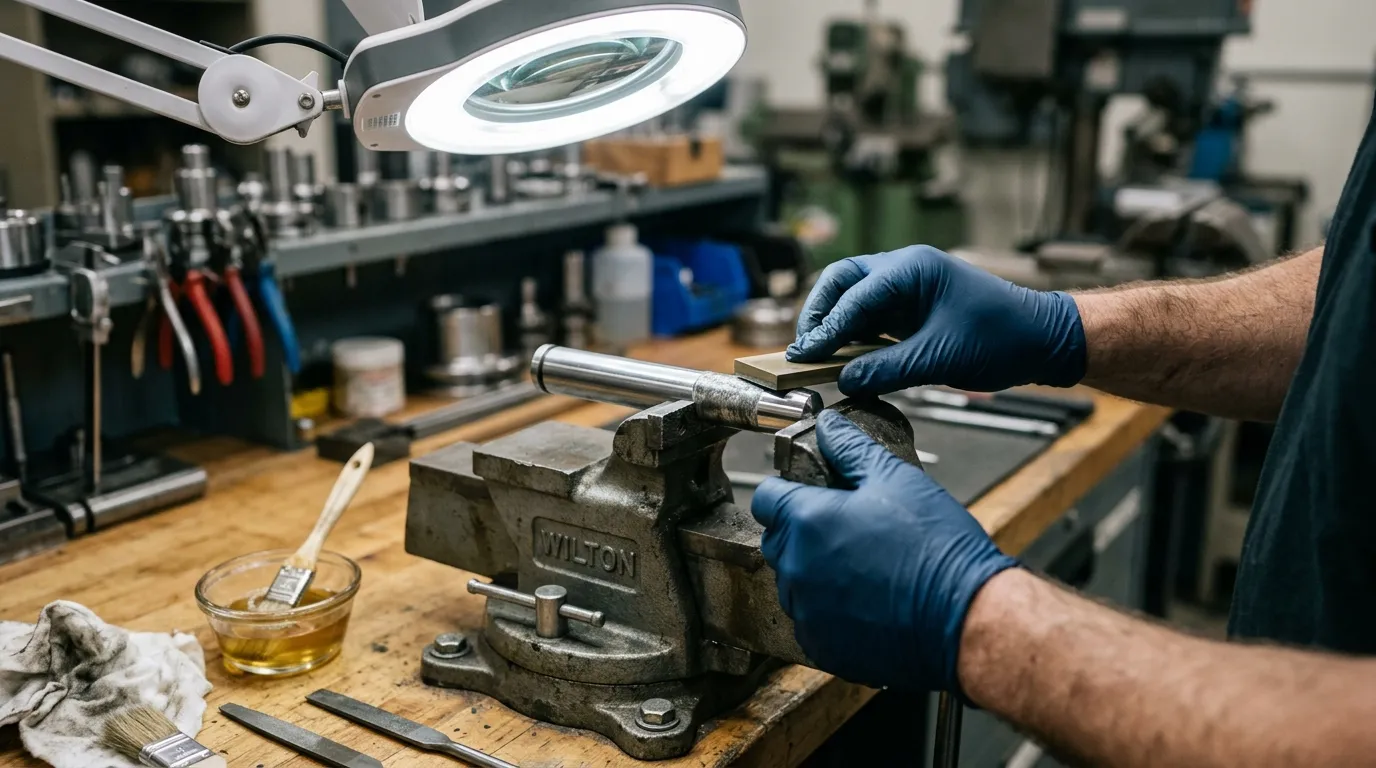
For removing existing buildup, the process generally follows these steps:
Inspect the punch tip under magnification to confirm galling rather than chipping or wear.
Stone or polish the affected area lightly, working in the direction of the original finish rather than across it.
Re-measure the punch profile to confirm dimensions haven't drifted from the polishing.
Reapply lubricant appropriate to the workpiece material before returning the punch to service.
Sunshine's punch and pin manufacturing supports surface finishes as smooth as Ra0.4, which is a relevant benchmark if you're specifying a replacement or reworked punch pin rather than hand-polishing an existing one.
For punches that have galled repeatedly despite polishing, a full regrind may restore geometry more reliably than spot polishing — Afiação e remoagem de pinos de punção covers when a regrind is the better option versus a quick polish.
Escolhendo um revestimento para resistência à galha
Coatings reduce the friction coefficient between the punch and the workpiece, which helps prevent the localized adhesion that starts adhesive galling. But they work best as a supplement to correct clearance and finish, not a replacement for them.
| Tipo de revestimento | Benefício Primário | Troca Típica |
|---|---|---|
| TiN (Nitroto de Titânio) | Boa dureza de uso geral e redução de atrito | Menos eficaz contra aglomeração severa de adesivo em materiais abrasivos |
| CrN (Nitrueto de cromo) | Melhor resistência ao desgaste adesivo em inox e alumínio | Dureza um pouco menor que a TiN |
| DLC (Diamond-Like Carbon) | Very low friction coefficient, strong adhesive-galling resistance | Custo mais alto, more sensitive to substrate finish quality |
A caution worth taking seriously: as noted in industry commentary on revestimentos de superfície para aços de defilação, applying a coating over a punch with incorrect clearance or a poor base finish often just delays the problem rather than solving it. Coating a punch that's already galling from bad clearance can mask the symptom for a short run before the underlying issue reappears.
Heat treatment is a related lever worth mentioning here: Sunshine's heat treatment process increases hardness by roughly 30%, which improves impact and wear resistance independent of any coating applied afterward. That's a useful option to raise with a supplier when a punch needs both better hardness and a coating.
Checklist de Manutenção para Detecção Precoce de Agallamento
Catching galling early keeps a polish job from turning into a full regrind or replacement. Build these checks into routine tooling inspection:
Inspect punch tips visually every scheduled changeover, looking for a dull or rough patch near the cutting edge.
Track part quality — burrs, rough hole edges, or inconsistent stripping often show up before galling is visible on the punch itself.
Confirm lubricant type and application rate match the current workpiece material, especially after switching stock.
Re-check die clearance after any regrind, since repeated sharpening gradually changes the punch profile.
Flag punches that gall repeatedly on the same material for a clearance or coating review rather than repeatedly polishing the same spot.
If you're evaluating how a punch pin fits into the broader tooling assembly, o Guia de componentes do die covers how punch pins interact with guide bushings and other components that also affect alignment and wear.
Persistent galling despite correct clearance and finish is usually a signal to discuss a coating or a specification change — that conversation is easiest with a supplier who can quote both the regrind and the coating option together, so you're not solving the problem in two separate steps.
Compartilhar:


Escrito por Sunshine
Em Sol, Somos um fabricante e fornecedor profissional de componentes de moldes de precisão, oferecendo uma ampla variedade de produtos para aplicações de estampagem e molde por injeção. Nosso foco principal inclui a formação de matrizes, pinos e mangas ejetor, e postes guia e buchas. Com usinagem CNC avançada, Controle rigoroso de qualidade, e fortes capacidades de produção, Garantimos confiabilidade, Peças de alta precisão, juntamente com componentes padrão em estoque para fornecimento global rápido e eficiente.
NOTÍCIAS
RECEBA O SERVIÇO
Com peças de qualidade para todos os orçamentos e equipe amigável treinada para tornar sua visita informativa e sem complicações.
