



Componentes do molde de matriz: Guia de Seleção para Ferramentas de Estampagem Duráveis
Die mold components control stamping accuracy, Estabilidade do alinhamento, and tooling lifespan. Choosing the right guide posts, Buchas, socos, and wear-resistant materials helps reduce downtime and improve repeatable production. Most early tooling failures come from poor alignment, incorrect material selection, or weak maintenance planning. Standard components work well for many production lines, while custom parts are better for specialized tolerances or high-load applications.
Stamping tools fail faster when components are mismatched to production conditions. A guide system with poor alignment can wear out punches early, while overly hard tooling materials may crack under repeated impact. Buyers need more than a parts catalog. They need a selection framework that balances durability, sourcing speed, Manutenção, and repeatable performance.
What are die mold components and why do they affect stamping durability?
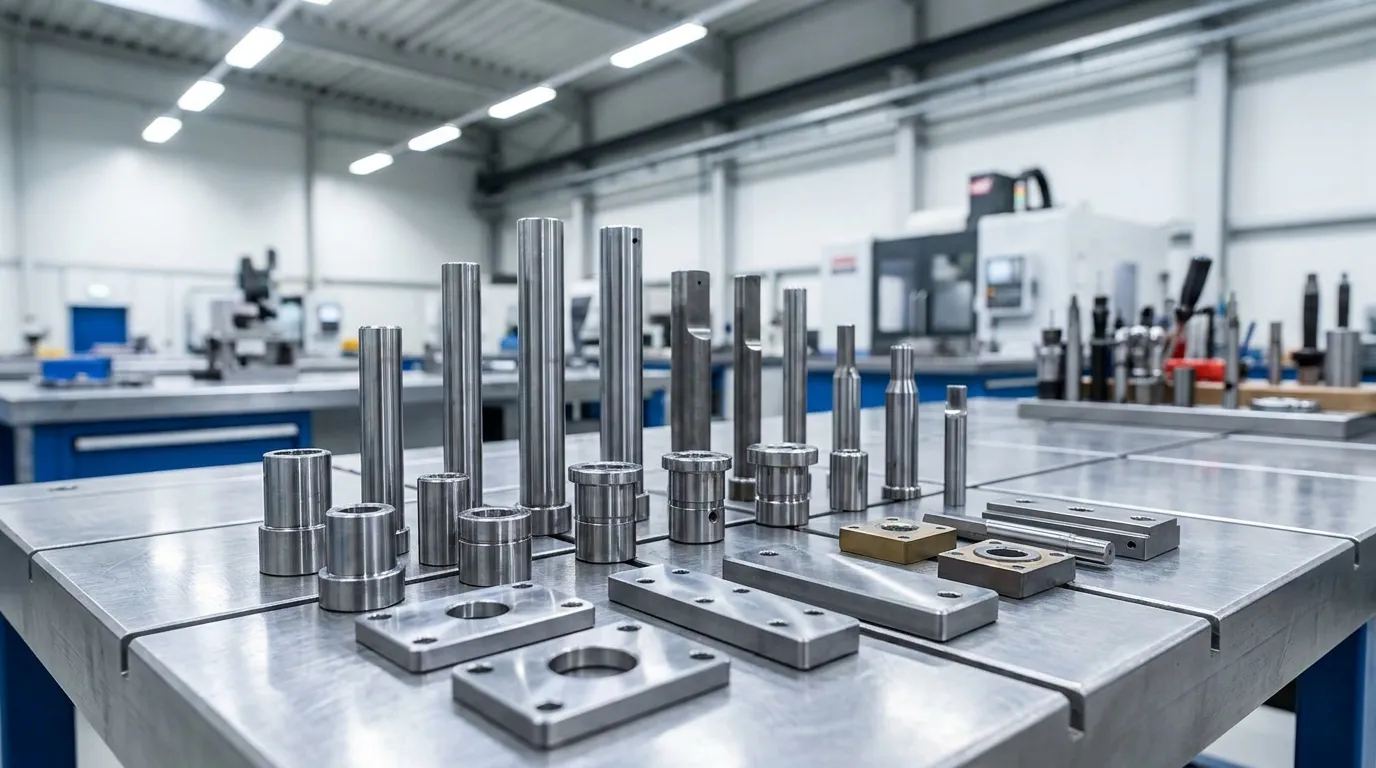
Die mold components directly affect stamping accuracy, Resistência ao desgaste, and tooling lifespan. Sistemas de guias, socos, and bushings must work together to maintain alignment and repeatable production under high-cycle operation.
Die mold components are the precision parts inside a stamping tool that guide movement, control alignment, and shape material during production. Common examples include punches, isso, Marcos orientadores, Buchas, Sistemas ejetores, wear plates, and sleeves.
When one component wears unevenly, the entire tooling system can drift out of tolerance. That creates burrs, Variação dimensional, and unnecessary downtime. In high-cycle stamping lines, even small alignment errors become expensive over time.
Many buyers focus only on hardness or material grade. That approach misses a bigger issue. Long-term stamping performance depends on how well components work together under load, Velocidade, and repeated impact.
| Componente | Função principal | Impacto de Durabilidade |
|---|---|---|
| Socos | Forma ou material cortado | Exposição ao desgaste elevado |
| Postes-guia | Manter o alinhamento | Evite desgaste desigual |
| Buchas | Reduzir o atrito | Melhorar a estabilidade do movimento |
| Placas de desgaste | Proteger superfícies | Estender a vida útil da ferramenta |
| Sistemas ejetores | Remover peças estampadas | Reduzir a interrupção da produção |
For a broader overview of tooling structures and systems, Veja isso Guia de componentes de molde e explorar o relacionado Sistemas de componentes do die.
Which die mold components have the biggest impact on tool life?
Postes-guia, Buchas, socos, and wear-resistant inserts typically determine tool lifespan more than secondary accessories. Poor alignment or inadequate hardness increases friction, Deriva dimensional, and premature failure during repeated stamping cycles.
Guide systems usually have the biggest effect on long-term durability because they control movement accuracy. If alignment drifts even slightly, punches and dies begin wearing unevenly. That shortens service life and increases replacement frequency.
Punch material also matters, especially in high-volume stamping. Harder materials improve wear resistance, but higher hardness is not always better. Extremely hard punches can become brittle under repeated impact loads and may crack earlier than tougher materials with lower hardness.
A high-cycle automotive stamping line provides a good example. One manufacturer replaced guide bushings every two months because alignment tolerance was too loose. After tightening guide fit tolerances and improving lubrication control, the replacement cycle extended significantly without changing punch material.
| Componente | Causa comum de falha | Efeito na vida útil da ferramenta |
|---|---|---|
| Postes-guia | Desalinhamento | Desgaste desigual |
| Buchas | Atrito e contaminação | Redução da precisão |
| Socos | Fragilidade ou desgaste | Cracking e tempo de inatividade |
| Palmilhas de desgaste | Fadiga superficial | Intervalos de manutenção mais curtos |
| Springs | Fadiga de compressão | Operação inconsistente |
Compradores que comparam tolerâncias e resistência ao desgaste também devem analisar esses Componentes de molde de precisão for tighter production requirements.
How do you choose guide posts and bushings for repeatable alignment?
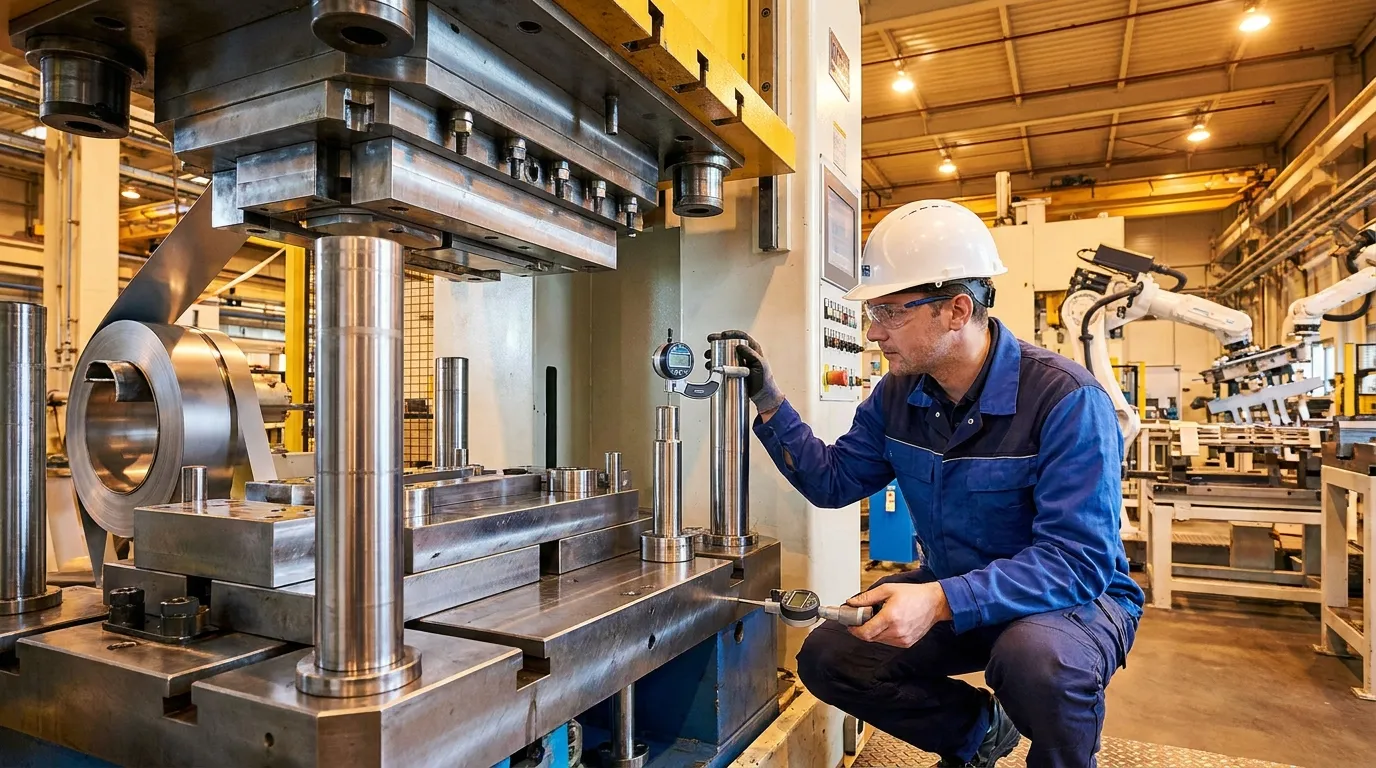
Guide posts and bushings should match production load, stamping speed, e requisitos de tolerância. Tight alignment control reduces uneven wear, protects punches, and improves repeatable part accuracy over long production runs.
Guide systems should be selected based on operating conditions, not just catalog dimensions. High-speed stamping lines usually require tighter fit tolerances and smoother surface finishes to reduce friction and vibration.
Poor alignment creates a chain reaction. Bushings wear faster, punches shift slightly off-center, and stamped parts lose dimensional consistency. In severe cases, the die set can crack from uneven stress distribution.
Folga e tolerância de ajuste
Tighter clearances improve alignment accuracy, but excessive tightness can increase friction and lubrication problems. The best balance depends on cycle speed, stamping load, and contamination exposure.
Standard guide systems often perform well for medium-volume production because replacement parts are easier to source. Fully custom systems are usually reserved for specialized tolerances or unusual tooling geometry.
| Condições de Produção | Abordagem Recomendada |
|---|---|
| Estampagem de volume médio | Sistemas de guia padrão |
| Produção em alta velocidade | Buchas de ajuste de precisão |
| Cargas de impacto pesadas | Materiais de guia mais resistentes |
| Ambiente contaminado | Design de lubrificação aprimorada |
Seleção de materiais e acabamento superficial
Surface finish affects wear more than many buyers expect. Rough surfaces increase friction and accelerate bushing wear, especially during long production runs.
A manufacturer that switched from fully custom guide systems to stocked standard assemblies reduced downtime because replacement inventory became easier to maintain. Faster replacement availability often matters more operationally than small precision gains.
For commonly stocked assemblies and replacement availability, Revise estes Peças do sistema de guia.
What materials work best for high-cycle stamping applications?
The best die mold component material depends on stamping force, Volume de produção, e condições de desgaste. Harder materials improve wear resistance, but excessive hardness can increase brittleness and shorten component life under impact loads.
Tool steel remains the most common material for punches, isso, and wear components because it balances hardness, Resistência, and machining stability. Heat treatment also plays a major role. Two components made from the same steel can perform very differently after processing.
Many buyers assume maximum hardness guarantees maximum durability. Isso nem sempre é verdade. A stamping operation using extremely hard punch materials experienced repeated cracking because the tooling absorbed heavy impact loads during each cycle.
Tabela de Decisão de Seleção de Componentes do Die
| Volume de Produção | Carga de Estampagem | Foco em Material Recomendado | Padrão ou Personalizado |
|---|---|---|---|
| Baixo volume | Luz | Aço para ferramentas gerais | Padrão |
| Volume médio | Moderado | Aço de desgaste tratado termicamente | Padrão |
| Alto volume | Pesado | Alta resistência ao desgaste com tenacidade | Personalize quando necessário |
| Estampagem de precisão | Moderado | Aço para ferramentas de tolerância apertada | Costume |
| Estampagem de material abrasivo | Pesado | Aço aprimorado resistente ao desgaste | Costume |
Heat treatment quality matters as much as material grade. Poor heat treatment creates inconsistent hardness, Fadiga superficial, and uneven wear patterns.
Replacement planning also affects material decisions. Some manufacturers choose slightly lower hardness materials because they are easier to machine, faster to replace, and less prone to cracking.
Compradores que planejam manutenção de estoque podem comparar os disponíveis Peças de reposição para moldes before finalizing specifications.
When should you use standard components instead of custom parts?
Standard die mold components reduce sourcing time and replacement delays for most applications. Custom parts become necessary when tolerance, Geometria, or production load requirements exceed standard component limitations.
Standard components work well in many stamping operations because they simplify sourcing, Manutenção, e planejamento de inventário. Replacement parts are easier to stock, and production downtime is usually shorter when failures occur.
Custom components make sense when production requirements exceed standard tolerances or when tooling geometry is highly specialized. Precision electronics stamping and complex automotive applications often fall into this category.
Custom die components are not automatically higher quality. Standard parts are often the safer operational choice when replacement speed matters more than extreme precision.
Tabela de Seleção Padrão vs Personalizada
| Situação | Escolha Melhor | Principal Motivo |
|---|---|---|
| Estampagem geral | Padrão | Obtenção mais rápida |
| Substituições frequentes | Padrão | Planejamento de inventário mais fácil |
| Requisitos extremos de tolerância | Costume | Controle de precisão |
| Geometria especializada | Costume | Melhor encaixe |
| Produção global em múltiplos locais | Padrão | Disponibilidade consistente |
Lead time is another factor. According to manufacturing timeline analysis from Engenharia Ulitech, tooling revisions and component delays often extend production schedules more than buyers initially expect.
For common stocked options, compare available Peças padrão de molde.
Why do die mold components fail earlier than expected?
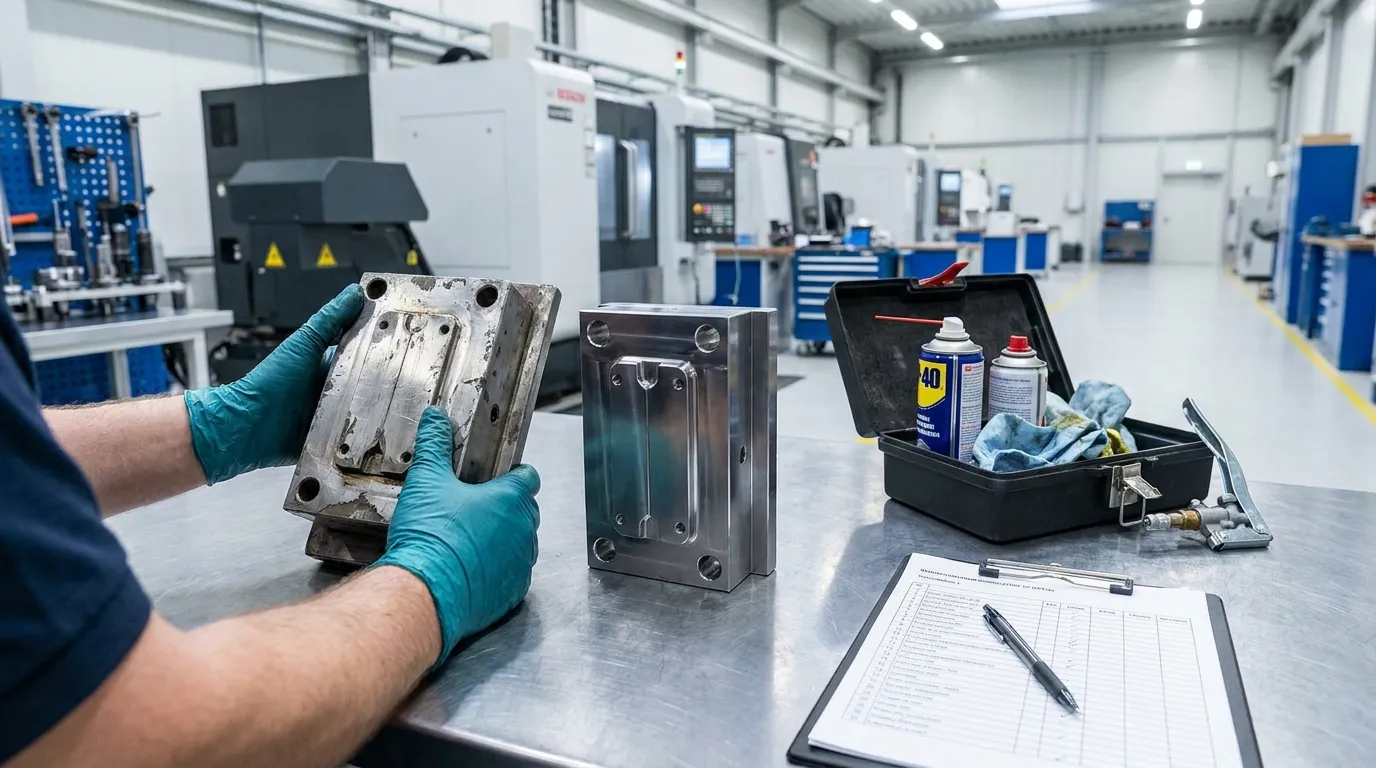
Most premature die component failures are caused by alignment problems, lubrificação insuficiente, Contaminação, or incorrect material selection. Preventive maintenance and proper fit tolerance usually extend tool life more effectively than simply choosing harder materials.
Misalignment is one of the biggest causes of premature wear. Even small guide system movement creates uneven loading across punches and bushings. Com o tempo, that increases friction and dimensional drift.
Contamination is another common issue. Metal particles and debris can damage bushings quickly if lubrication systems are inconsistent or poorly maintained.
Lista de Verificação de Solução de Problemas por Falha Prematura
| Sintoma de falha | Causa Provável | Etapa de Inspeção | Solução recomendada |
|---|---|---|---|
| Desgaste desigual do punção | Desalinhamento | Verifique a folga do guia | Ajuste a tolerância de ajuste |
| Pontuação de buchas | Lubrificação ruim | Inspecionar o fluxo de lubrificação | Melhorar o cronograma de lubrificação |
| Estalo de punção | Dureza excessiva | Especificações do material de revisão | Aumentar o equilíbrio de tenacidade |
| Fadiga superficial | Contaminação | Inspecionar a exposição a detritos | Melhore a rotina de limpeza |
| Deriva dimensional | Sistema de guia desgastado | Meda de precisão do alinhamento | Substituir guias desgastadas |
Many tooling failures blamed on material quality actually start with maintenance problems. Regular inspection schedules usually prevent larger failures before production stops.
A preventive maintenance program that checks alignment, Lubrificação, and surface wear at fixed intervals often reduces replacement costs more effectively than upgrading every component material.
Operações que lidam com tolerâncias apertadas podem revisá-las Peças de ferramentas de alta precisão for improved alignment consistency.
How should buyers evaluate suppliers and lead times?
Supplier evaluation should focus on delivery consistency, Suporte de inventário, Controle de qualidade, e disponibilidade de substituição. A low component price means little if replacement delays stop production for weeks.
Global buyers also need to consider customs processing and shipping documentation. Import delays caused by incomplete paperwork can extend lead times significantly. Recent customs guidance from Costumes de Bangladesh e análise logística a partir de EximAgent AI show that documentation errors remain a major cause of shipment delays.
Perguntas para fazer aos fornecedores
- Do they stock replacement inventory locally?
- Can they maintain consistent tolerances across batches?
- What is the average replacement lead time?
- Do they provide inspection reports?
- How do they handle urgent replacement requests?
One manufacturer experienced several weeks of downtime because replacement guide components were unavailable during a production spike. After switching to a supplier with stocked standard assemblies, the company reduced replacement delays and stabilized scheduling.
Supplier quality control also matters during production launch. Manufacturing analysis from HH Molds Inc. highlights how inspection planning affects tooling consistency and long-term production stability.
For broader sourcing considerations and tooling categories, Revise isso Sourcing de componentes de ferramentas.
What maintenance practices extend die mold component lifespan?
Regular inspection, Controle de lubrificação, and planned replacement schedules extend component lifespan more effectively than reactive repairs. Most long-term tooling problems develop gradually before major failures appear.
Maintenance teams should track wear patterns instead of waiting for visible damage. Small alignment shifts can create uneven punch loading long before production defects become obvious.
Lista de Verificação de Manutenção Recomendada
- Inspecionar o alinhamento do guia em intervalos programados
- Limpe detritos de superfícies móveis regularmente
- Monitorar a consistência da lubrificação
- Troque as buchas gastas antes que a deriva de tolerância se espalhe
- Mantenha os componentes de reposição disponíveis
- Registre padrões de desgaste recorrentes para ajustes futuros
A scheduled inspection program helped one stamping operation reduce premature punch wear after identifying uneven guide loading early. The company avoided a larger die failure because technicians corrected alignment before cracks developed.
Mantendo um backup Inventário de ferramentas sobressalentes also shortens recovery time when failures happen unexpectedly.
Acertando o Próximo Passo
Choosing the right die mold components is about balancing precision, Durabilidade, sourcing speed, and maintenance practicality. Buyers who focus only on hardness or upfront cost often miss the operational factors that affect long-term tooling performance.
Start by evaluating alignment stability, Volume de produção, replacement lead times, and maintenance requirements together. Standard components may provide the best long-term value for many stamping lines, especially when replacement speed matters. For tighter tolerances or specialized production demands, custom tooling can still be the better fit when managed carefully.
Perguntas Frequentes
What are die mold components?
Die mold components are the precision parts used inside stamping tools to guide movement, shape material, and maintain alignment during production. Common examples include punches, Marcos orientadores, Buchas, Sistemas ejetores, and wear-resistant inserts.
What components affect stamping accuracy the most?
Postes-guia, Buchas, and punches have the biggest effect on stamping accuracy because they control alignment and dimensional consistency. Worn or poorly matched components often cause uneven wear, Rávidas, e deriva dimensional.
What material is best for stamping dies?
The best material depends on production volume, Carga de impacto, e condições de desgaste. Tool steels with proper heat treatment usually balance hardness, Resistência, and wear resistance better than overly hardened materials.
When should custom die components be used?
Custom die components are best when standard parts cannot meet tolerance, Geometria, or production-load requirements. They are commonly used in high-precision or specialized stamping applications.
Why do die components wear out early?
Most premature wear comes from misalignment, Lubrificação ruim, Contaminação, or incorrect material selection. Preventive maintenance and accurate fit tolerances usually improve lifespan more than increasing hardness alone.
How do you improve mold life?
Mold life improves when components are properly aligned, regularly lubricated, and inspected before excessive wear develops. Scheduled replacement planning also reduces sudden production failures.
Compartilhe:


Escrito por Sunshine
Em Sol, Somos um fabricante e fornecedor profissional de componentes de moldes de precisão, oferecendo uma ampla variedade de produtos para aplicações de estampagem e molde por injeção. Nosso foco principal inclui a formação de matrizes, pinos e mangas ejetor, e postes guia e buchas. Com usinagem CNC avançada, Controle rigoroso de qualidade, e fortes capacidades de produção, Garantimos confiabilidade, Peças de alta precisão, juntamente com componentes padrão em estoque para fornecimento global rápido e eficiente.
NOTÍCIAS
RECEBA O SERVIÇO
Com peças de qualidade para todos os orçamentos e equipe amigável treinada para tornar sua visita informativa e sem complicações.
