



Cunhos de Punção: Tipos, Materiais, Tolerâncias, and Buying Guide
Punching dies are precision tooling systems used for cutting, Modelagem, and forming sheet materials in industrial manufacturing. Buyers should compare die types, tool steel vs carbide materials, Capacidade de tolerância, clearance control, supplier machining standards, and logistics readiness before ordering. The best punching die setup depends on production volume, material hardness, required accuracy, Expectativas de manutenção, and supplier quality control.
Choosing the wrong die setup can increase scrap rates, shorten tool life, and delay production schedules. Buyers also face pressure to balance cost, Precisão, and lead time, especially when sourcing custom tooling from overseas suppliers. This guide explains how punching dies work, quais materiais têm melhor desempenho, how tolerances affect quality, and what to check before placing an order.
What are punching dies and how do they work?
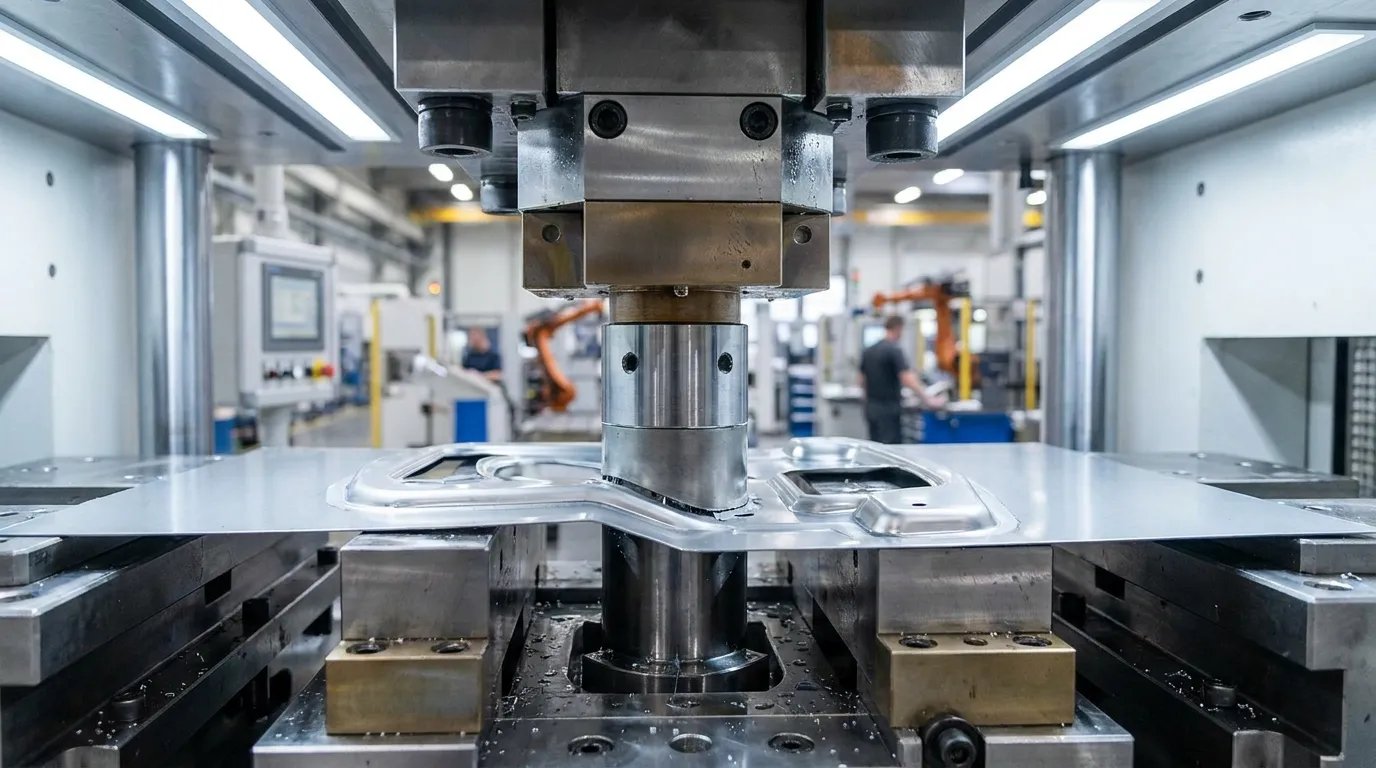
Punching dies are tooling systems used to cut, Formato, or form material through controlled force and precision alignment. The punch applies pressure while the die receives and shapes the material, allowing consistent high-volume production in stamping and forming operations.
A punching die system includes two core components: the punch and the die. The punch presses into the material, while the die supports the material and controls the final shape. This process is common in sheet metal stamping, Fabricação de peças automotivas, electronics production, and appliance components.
The accuracy of the tooling directly affects edge quality, burr formation, and repeatability. Even small alignment issues can create uneven cuts or excessive wear. That’s why manufacturers focus heavily on machining precision, Tratamento térmico, and clearance control during production.
Compradores que precisam de uma visão mais ampla dos sistemas de ferramentas industriais podem revisar isso Guia de componentes de molde junto com os fundamentos de ferramentas explicados em Componentes básicos do chip.
A terminologia do setor sobre perfuradores e matrizes é explicada claramente por Guia de terminologia de punção e matriz do MISUMI.
Which types of punching dies are used in manufacturing?
Progressive dies support high-volume automated production, while compound dies combine multiple cutting operations in one stroke. The best choice depends on production speed, Complexidade, material thickness, e exigia precisão.
Different punching die designs are built for different manufacturing goals. A low-volume fabrication shop may prioritize lower tooling cost and easier maintenance. A high-speed automotive supplier usually focuses on cycle time, consistency, e resistência ao desgaste.
| O Tipo | Melhor Uso | Principal Vantagem | Limitação |
|---|---|---|---|
| Progressive Die | Produção em grande volume | Processamento automatizado rápido | Maior complexidade de ferramentas |
| Matriz composta | Operações múltiplas de corte | Alta precisão em um único golpe | Menos flexível para conformação complexa |
| Matriz de Blanking | Corte de peças planas | Produção de blanks limpos | Capacidade limitada de conformação |
| Matriz de Formação | Dobrar e modelar | Componentes formados por alças | Mais variação de configuração |
Matrizes de perfuração progressiva vs composta
Progressive dies move material through several stations in sequence. Each station performs a separate operation, which improves production speed for large manufacturing runs. These dies are common in automotive and electronics manufacturing.
Compound dies perform multiple cutting operations at the same station during one press stroke. They’re often used when part accuracy matters more than production speed. De acordo com Referência do die composto do MISUMI, compound tooling structures are commonly paired with hardened tool steels such as SKD11.
For buyers comparing broader tooling categories, Os Sistemas de Ferramentas provides additional manufacturing context.
What materials are best for punching dies?
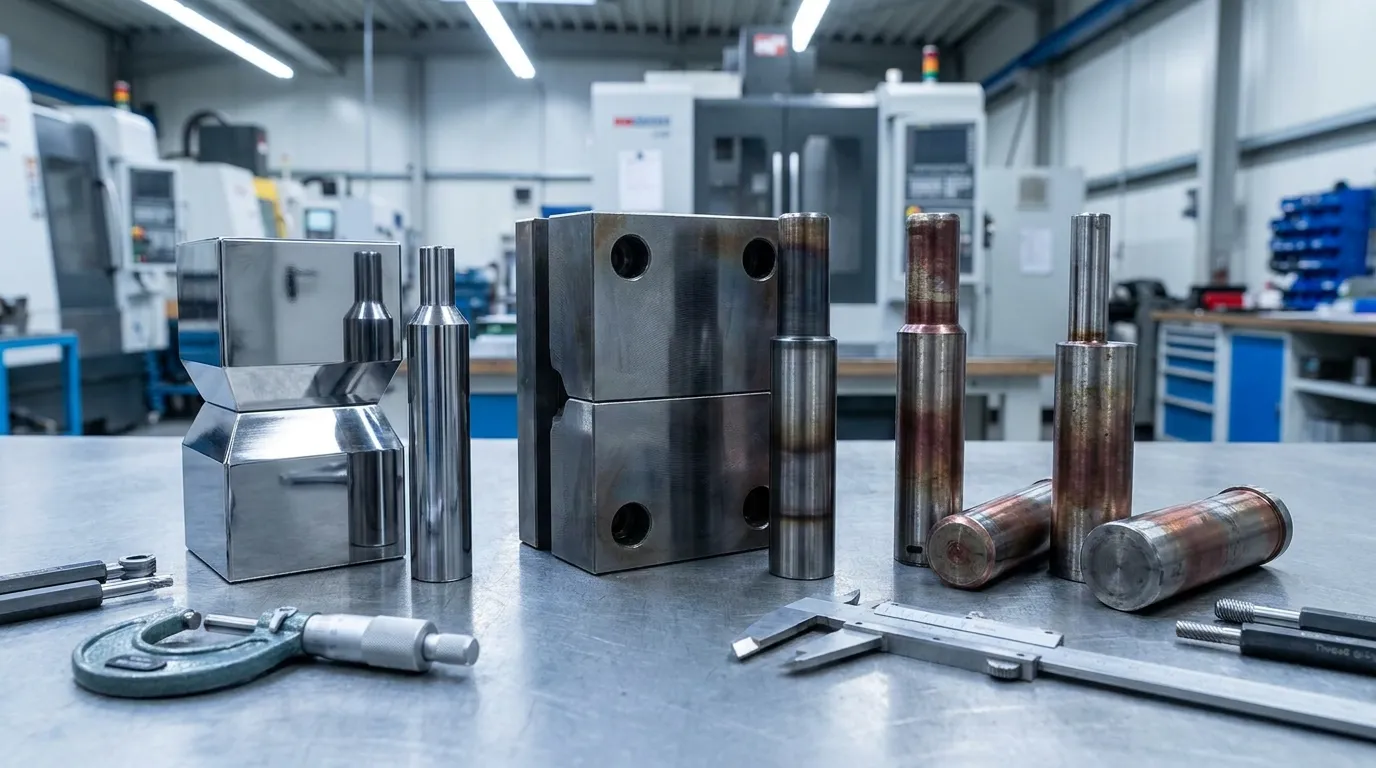
Tool steel punching dies balance durability and cost for many industrial applications, while carbide dies offer superior wear resistance for high-volume production. Material choice should match production cycles, sheet material hardness, and maintenance expectations.
Tool material affects wear resistance, sharpening frequency, edge quality, and overall operating cost. Buyers should match material selection to actual production conditions instead of assuming the hardest material is always the best choice.
Carbide punching dies are not always the best option. They last longer in high-volume production, but tool steel is often easier and cheaper to maintain for shorter production runs or moderate workloads.
Tabela de Seleção de Material para Cunhos de Punção
| Material | Resistência ao desgaste | Nível de Custo | Melhor Volume de Produção | Frequência de Manutenção |
|---|---|---|---|---|
| Aço para Ferramentas D2 | Médio-Alto | Médio | Corridas de volume médio | Moderado |
| SKD11 | Alto | Médio-Alto | Estampagem de precisão | Moderado |
| Carbeto | Muito alto | Alto | Produção em grande volume | Baixo |
| Aço de Alta Velocidade | Médio | Médio | Uso industrial geral | Moderado |
A factory producing thin stainless steel brackets for automotive use may benefit from carbide tooling because downtime costs are high. In contrast, a smaller fabrication company producing limited batches may save money with tool steel dies that are easier to sharpen and replace.
Quando o carbeto vale o custo maior
Carbide becomes more practical when production volumes are high and materials are abrasive. It performs well with stainless steel, electrical steel, and other harder materials that increase wear rates.
Extremely tight tolerance claims are not automatically better. Over-specifying tolerances can raise tooling costs without improving production quality. Buyers should request tolerances that match the actual application and production environment.
Fabricantes que comparam materiais e componentes também podem revisar Materiais de ferramentas de precisão for additional component references.
Why do punch and die tolerances matter?
Punch and die tolerances directly affect cut quality, burr formation, tool wear, e consistência da produção. Proper clearance helps maintain cleaner edges and longer tooling life while reducing scrap and maintenance costs.
Tolerance control determines how accurately the punch and die interact during production. Poor clearance settings can create rough edges, excessive burrs, or premature chipping. Com o tempo, these issues increase scrap rates and maintenance costs.
Punch and die clearance refers to the gap between the cutting edges during operation. De acordo com Guia de autorização da MISUMI, proper clearance improves cutting performance and extends tooling life.
What is punch and die clearance?
Clearance settings vary based on material thickness and hardness. Thin aluminum sheets need different clearance than thick stainless steel plates. Buyers should confirm that suppliers understand the target material before approving production drawings.
A practical example is burr reduction in thin sheet production. One manufacturer reduced secondary finishing work after adjusting clearance for thinner stainless steel stock. Cleaner edges reduced polishing time and improved consistency across production batches.
Lista de Tolerância e Qualidade
- Confirme a espessura do material antes de definir a folga
- Ajustar os níveis de tolerância às necessidades reais da aplicação
- Verifique a capacidade de EDM e usinagem CNC
- Solicite relatórios de inspeção para dimensões críticas
- Revise os procedimentos de afiação e manutenção
Maintenance planning also matters because worn tooling can slowly change clearance values over time. Buyers sourcing long-term replacement components can review Peças de reposição para ferramentas for ongoing tooling support.
How do you choose the right punching die supplier?
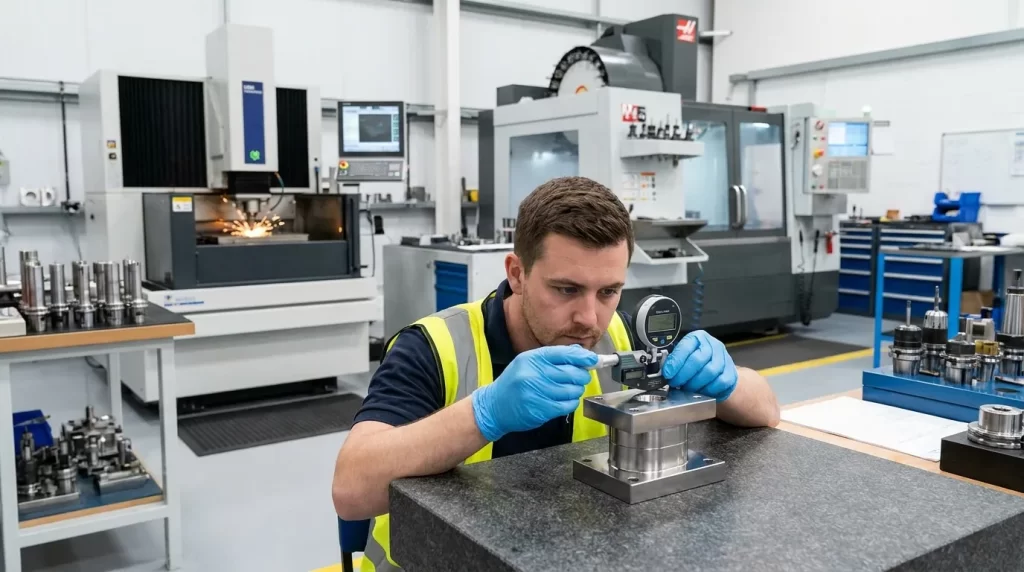
A reliable punching die supplier should provide verified material specifications, machining capabilities, tolerance controls, and quality inspection procedures. Buyers should also confirm lead times, production capacity, and experience with similar applications.
Supplier selection affects more than price. Weak machining standards or inconsistent inspection procedures can increase scrap, Tempo de inatividade, and replacement costs long after delivery.
The cheapest overseas punching die supplier can create higher long-term costs if documentation, clearance control, or quality inspection standards are inconsistent. Buyers should compare supplier capability, not just quotation pricing.
Lista de Avaliação de Fornecedores de Matriz de Perfuração
| Área de Avaliação | O que confirmar |
|---|---|
| Capacidade CNC | Capacidade de usinagem de precisão |
| Capacidade de EDM por Fio | Precisão do corte fino |
| Certificação de Materiais | Graus verificados de aço ou carboneto |
| Documentação de Controle de Qualidade | Relatórios de inspeção e tolerâncias |
| Confiabilidade do Prazo de Entrega | Programação realista de produção |
| Suporte à Exportação | Coordenação de embalagem e envio |
A strong supplier should also understand the buyer’s industry requirements. An automotive stamping supplier may need different tolerances than an appliance manufacturer or electronics producer.
If you’re evaluating broader tooling manufacturing experience, Expertise em fabricação de matrizes provides additional context about industrial die production capabilities.
What should buyers include in a punching die RFQ?
A detailed RFQ helps suppliers quote accurately and reduces production misunderstandings. Missing technical details often lead to delayed revisions, incorrect tolerances, or tooling redesigns after production begins.
An effective punching die RFQ should include:
- Desenhos CAD ou arquivos 3D
- Especificações de materiais
- Tolerâncias exigidas
- Estimativas de volume de produção
- Expectativas de acabamento superficial
- Tempo de entrega alvo
- Informações de máquina de prensa, se relevante
A common sourcing mistake happens when buyers provide drawings without tolerance details. One supplier may quote for standard machining tolerance, while another assumes ultra-precision requirements. That difference can change pricing and lead time significantly.
For projects involving custom tooling configurations, Soluções personalizadas para matrizes can help buyers compare available options before requesting quotations.
How can buyers reduce customs and shipping delays for punching dies?
Códigos HS incorretos, incomplete invoices, and missing compliance documents are common causes of customs delays for industrial tooling shipments. Buyers can reduce delays by confirming classification accuracy and documentation requirements before shipment.
International tooling shipments often move through multiple customs checks before delivery. Even accurate tooling production can become a problem if shipping paperwork is incomplete or incorrectly classified.
De acordo com Referência do código HS da FreightAmigo, industrial tooling classifications must match the actual product category and intended use. Documentation errors are also identified as a common cause of customs delays in Guia de atraso alfandegário da EximAgent.
Lista de Verificação de Prevenção de Atrasos da Alfândega
- Verifique a classificação do código HS antes do envio
- Use descrições detalhadas de produtos nas faturas
- Inclua documentação do país de origem
- Confirme que a embalagem corresponde aos documentos de envio
- Revise os requisitos de importação com parceiros de transporte
- Mantenha registros de comunicação com fornecedores e alfândega
One imported tooling shipment experienced delays because the invoice described the product only as “metal tooling.” Customs officers requested additional classification details, which delayed delivery and production scheduling. A more detailed invoice could have prevented the issue.
What maintenance practices extend punching die lifespan?
Regular maintenance reduces wear, melhora a consistência, and protects tooling accuracy over time. Even high-quality dies lose performance when sharpening schedules and inspections are ignored.
A preventive maintenance approach usually costs less than replacing damaged tooling unexpectedly. Buyers should confirm that maintenance procedures are realistic for their production environment before selecting tooling materials.
Lista de Verificação de Manutenção do Cunho de Perfuração
- Inspecione as arestas de corte regularmente
- Monitorar a formação das rebarbas durante a produção
- Siga os intervalos de afiação programados
- Store tooling in dry, protected conditions
- Verifique o alinhamento e a folga durante a manutenção
- Substitua rapidamente os componentes do guia desgastados
A small production facility using tool steel dies may sharpen tooling more often but spend less on replacement costs overall. High-volume manufacturers often accept higher carbide tooling costs because fewer production stoppages offset the investment.
Fabricantes que planejam cronogramas de manutenção de longo prazo podem explorar Peças de manutenção de ferramentas for replacement component support.
Acertando o Próximo Passo
The best punching dies are the ones that match your production reality. Material hardness, Volume de produção, Requisitos de tolerância, and supplier capability all affect long-term performance and operating cost.
Before placing an order, confirm machining standards, inspection procedures, material certification, and shipping documentation requirements. A lower upfront price does not always mean lower production cost over time.
If your team is comparing broader tooling systems or manufacturing applications, reviewing an Aplicações em moldes de injeção resource can also help connect punching die selection with larger production planning decisions.
Perguntas Frequentes
What is the difference between a punch and a die?
A punch applies force while the die shapes and supports the material. Both components work together to create accurate cuts, holes, or formed shapes during stamping and punching operations.
What materials are commonly used for punching dies?
Tool steel and carbide are the most common punching die materials. Tool steel balances durability and cost, while carbide performs better in high-volume or high-wear manufacturing environments.
What is punch and die clearance?
Punch and die clearance is the controlled gap between cutting components. Proper clearance improves edge quality, reduces burr formation, and helps extend tooling lifespan during production.
Which punching die type is best for high-volume production?
Progressive dies are widely used for high-volume production. They perform multiple operations in sequence, which improves speed, consistency, and automation efficiency in large manufacturing runs.
What causes punching dies to wear out quickly?
Incorrect clearance and poor maintenance are major causes of punching die wear. Excessive production load, improper material selection, and delayed sharpening schedules can also shorten tooling lifespan.
What documents help avoid customs delays for industrial tooling?
Accurate shipping and classification documents help reduce customs delays. Commercial invoices, HS codes, and origin documentation should all match the actual tooling being imported.
Compartilhe:


Escrito por Sunshine
Em Sol, Somos um fabricante e fornecedor profissional de componentes de moldes de precisão, oferecendo uma ampla variedade de produtos para aplicações de estampagem e molde por injeção. Nosso foco principal inclui a formação de matrizes, pinos e mangas ejetor, e postes guia e buchas. Com usinagem CNC avançada, Controle rigoroso de qualidade, e fortes capacidades de produção, Garantimos confiabilidade, Peças de alta precisão, juntamente com componentes padrão em estoque para fornecimento global rápido e eficiente.
NOTÍCIAS
RECEBA O SERVIÇO
Com peças de qualidade para todos os orçamentos e equipe amigável treinada para tornar sua visita informativa e sem complicações.
