



Pinos de punção para estampagem em aço inoxidável: Opções de Materiais e Revestimento
There is no single best material or coating for punch pins used in stainless steel stamping. The right combination depends on the stainless grade and condition, Espessura da folha, Geometria do punção, Volume de produção, Lubrificação, O traçado, Autorização, and the failure mode already appearing in production.
A punch substrate provides the bulk toughness, Resistência à compressão, and edge support. Heat treatment establishes its usable hardness and fracture resistance. Surface finish affects friction and material pickup. The coating or surface treatment then modifies wear, Calor, and sliding behavior. Choosing only one of these elements rarely solves the complete problem.
This guide focuses on punch pins used to pierce or blank stainless steel sheet. It does not assume that the punch itself must be made from stainless steel. Para informações mais amplas sobre tipos de matriz, system-level material selection, Autorização, Tolerâncias, e fontes, ver o Guia de matrizes de punção (inferido).
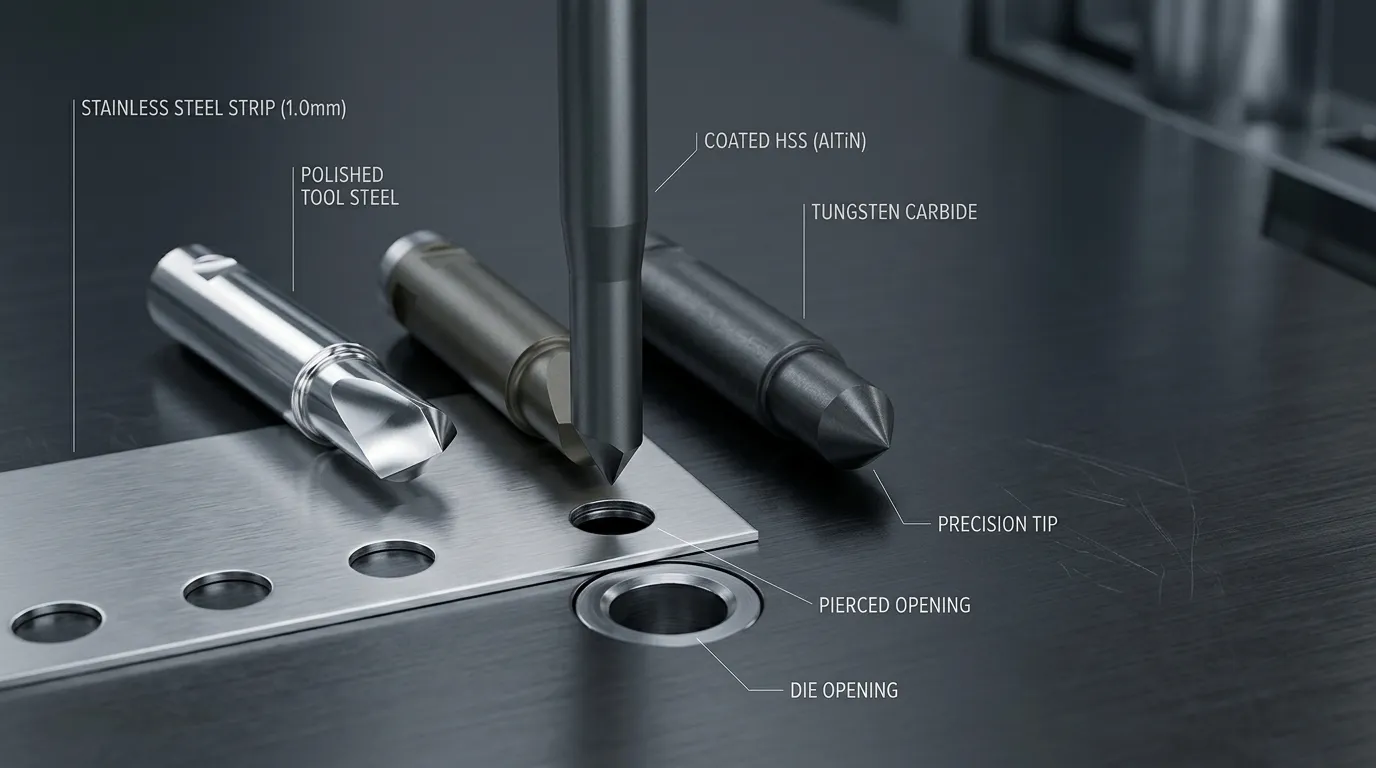
Por que o aço inoxidável muda a seleção do pino perfurado
Stainless steel is not one uniform work material. Austenitic, ferritic, martensitic, and duplex grades have different mechanical properties and forming behavior. O Visão geral da WorldStainless sobre famílias de aço inoxidável is useful background, but the tooling decision must go further than identifying the family name.
The supplier or tool engineer should know:
- the exact stainless grade;
- Espessura da folha;
- temper, Dureza, or tensile condition;
- Condição da superfície;
- pierced-hole or blank geometry;
- expected production quantity;
- lubrication method or restrictions;
- current punch material and coating;
- the actual failure seen in production.
Stainless applications often create high contact pressure, Atrito deslizante, and heat at the punch surface. Under unfavorable conditions, workpiece material can transfer onto the punch. This adhesive wear process is commonly described as galling or material pickup.
Uma revisão revisada por pares de Agallamento na conformação de metais explains that friction, Condição da superfície, Pressão, Temperatura, and wear development interact during the process. Once pickup begins, the roughened punch surface can attract more material, increase stripping force, damage the sheet surface, and accelerate further wear.
Stainless sheet may also work-harden near the cutting zone. Thicker or stronger material raises the load on the cutting edge. These conditions make it risky to choose a punch only by nominal hardness.
Escolha o substrato do punção antes de escolher o revestimento
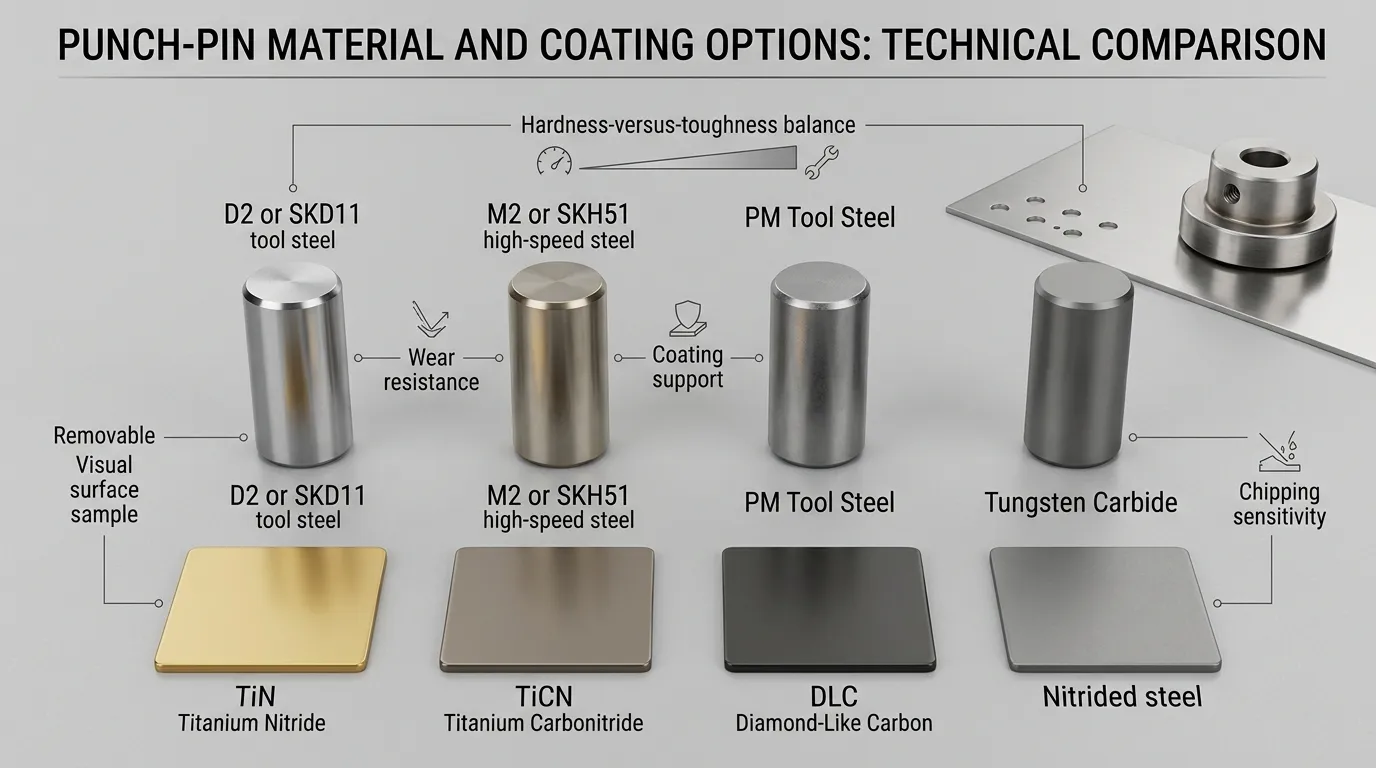
The coating is supported by the material underneath it. A hard coating on an unsuitable, poorly heat-treated, or damaged substrate can still crack, delaminate, chip, or fail with the cutting edge.
The main punch-material options should be compared using several properties:
| Substrato de punção | Principais pontos fortes | Principais limitações | Motivo típico para considerar isso |
|---|---|---|---|
| Aço para ferramentas do tipo D2 ou SKD11 | Resistência ao desgaste, Resistência à compressão, Estabilidade dimensional | Can be less tolerant of impact, Deflexão, or sharp stress concentrations than tougher grades | Geometria estável e produção conduzida por desgaste moderado |
| M2, SKH51, or SKH9 HSS | Better balance of wear resistance, Resistência, e resistência ao calor | Higher cost than conventional tool steel; still dependent on correct heat treatment | Stainless, thicker sheet, coated punches, or higher production demands |
| Aço para ferramentas PM | Forte equilíbrio entre desgaste e tenacidade e microestrutura mais uniforme | Custo do material premium e requisitos específicos de processamento por grau | Quando o aço convencional se desgasta rápido demais, mas o carboneto fica muito frágil |
| Aço para ferramentas resistente a choques | Alta tenacidade e resistência a fraturas relacionadas ao impacto | Menor resistência ao desgaste do que graus de desgaste fortemente ligados | Lascar ou impactar é mais importante do que desgaste gradual |
| Carboneto de tungstênio | Very high hardness, Resistência à compressão, e resistência ao desgaste | Brittle under misalignment, choque, Deflexão, or poor edge support | Produção estável e de alto desgaste com ferramentas rígidas |
| Aço inoxidável para ferramentas, como SUS420 ou SUS440 | Resistência à corrosão e polimento | Não é automaticamente o melhor substrato para perfurar folhas de inox | Ambientes ou aplicações corrosivas onde o próprio punção precisa de resistência à corrosão |
D2 or SKD11 for Stable, Wear-Led Applications
D2-class cold-work tool steel is widely used where wear resistance and compressive strength are important. Material documentation for BÖHLER K110, a D2-class steel, lists stamping and blanking among its applications and emphasizes wear resistance and dimensional stability.
D2 or SKD11 may be a reasonable starting point when:
- the punch has a robust cross-section;
- alignment and clearance are controlled;
- production volume is moderate;
- gradual wear is the main concern;
- sudden chipping or bending is not occurring.
It becomes a weaker choice when the punch is very slender, has sharp corners, experiences side loading, or breaks before the cutting edge wears out. Nesses casos, additional hardness may make the problem worse rather than better.
M2, SKH51, or SKH9 When Toughness and Heat Resistance Matter More
High-speed steel is commonly evaluated when the punch needs a stronger balance of wear resistance, Resistência, and resistance to heat generated during repeated cycling.
Orientação técnica de CONIC sobre materiais de ferramentas associates M2-type material with stainless steel, thicker sheet, coating use, and larger production quantities. That does not make M2 a universal answer, but it explains why HSS often appears in stainless stamping recommendations.
SunshinePro's Punção de aço de alta velocidade page lists SKH51 and SKH9 among its material options, along with vacuum heat treatment, Esmerilamento de precisão, EDM, and optional TiN or TiCN coatings. These are company-specific product options, not fixed specifications for every application.
HSS is worth evaluating when:
- D2 wears or chips too quickly;
- surface heat is significant;
- the punch will receive a PVD coating;
- production volume justifies a higher-cost substrate;
- the geometry needs more fracture resistance than conventional wear steel provides.
Aço para ferramentas PM para maior equilíbrio de desgaste–tenacidade
Powder-metallurgy tool steels are useful when both wear and fracture resistance matter. Their more uniform microstructure can provide a better combination of properties than many conventionally produced tool steels.
Por exemplo, the manufacturer describes BÖHLER K490 MICROCLEAN as a PM cold-work steel combining wear resistance, Resistência à compressão, Resistência, and dimensional stability for applications that include stamping and blanking.
PM steel may be justified when:
- conventional D2-type steel wears too quickly;
- HSS does not provide the required service interval;
- carbide chips under the existing geometry or loading;
- downtime costs more than the material upgrade;
- repeated regrinding and stable dimensional behavior are important.
The recommendation must still be grade-specific. “PM steel” is a manufacturing category, not one standardized set of properties.
Carbide for Stable High-Wear Conditions, Not Every High-Volume Job
Tungsten carbide offers high hardness, Resistência à compressão, and resistance to abrasive wear. It can be effective in stable, high-volume applications where the punch receives rigid support and loading remains predictable.
Its main limitation is brittleness. Carbide is less forgiving of:
- Desalinhamento;
- Desvio do soco;
- impact or interrupted loading;
- weak corner geometry;
- Apoio inadequado;
- slug interference;
- Carregamento lateral;
- incorrect clearance.
A carbide punch that chips after a few cycles is not improved by selecting an even harder carbide grade without correcting the mechanical cause.
SunshinePro's Punção de Carbureto page lists tungsten carbide, Esmerilamento de precisão, EDM, customized dimensions, and TiN, TiCN, or DLC coating options. Suitability still requires a review of the punch geometry, Peça de trabalho, Condições de imprensa, e histórico de falhas.
Quando uma ferramenta inoxidável é realmente o requisito
A punch used on stainless steel does not automatically need a stainless substrate.
Corrosion-resistant grades such as SUS420 or SUS440 may be selected when the tool itself is exposed to moisture, corrosive substances, frequent cleaning, or an environment where rust resistance matters. SunshinePro lists these grades on its separate stainless punch-pin product page.
That is a different engineering requirement from selecting a wear-resistant punch for stainless sheet. In many stamping applications, HSS, PM steel, conventional tool steel, or carbide may provide a more useful balance of wear, Resistência, and edge stability.
Ajuste o revestimento ou tratamento superficial ao modo de falha
Coating choice should begin with the observed surface failure.
- Desgaste adesivo ou galha: prioritize low friction, resistance to material transfer, Preparação de superfície, e lubrificação.
- Desgaste abrasivo: prioritize surface hardness and resistance to gradual material loss.
- High heat: review thermal stability and compatibility with the substrate’s heat-treatment condition.
- Chipping or fracture: correct the substrate, Geometria, Alinhamento, or loading before focusing on the coating.
- Alta força de desmembramento: inspect pickup, Fim, Lubrificação, and punch withdrawal conditions.
A coating name alone is not enough. Performance also depends on coating thickness, Aderência, Processo de deposição, edge preparation, Dureza do substrato, Temperatura de funcionamento, e acabamento superficial.
TiN and TiCN Are Common Options, Not Universal Answers
TiN is one of the most familiar hard coatings used on tooling. It can improve wear resistance in suitable systems, but it should not automatically be described as the preferred stainless-steel coating.
Por exemplo, Orientação de revestimento da Dayton Lamina assigns different treatments to adhesive wear, desgaste abrasivo, Calor, and specific work materials. Its recommendations also show that TiN is not universally preferred for stainless applications.
TiCN is commonly considered where higher wear resistance and improved sliding behavior are required. It may be evaluated for abrasive wear or material-pickup problems, but its performance still depends on substrate support, Preparação de superfície, coating quality, e condições de operação.
SunshinePro lists TiN and TiCN as available options on its HSS and stainless-steel punch-pin pages. The final selection should be based on the actual application rather than coating popularity.
AlTiN ou AlCrN para condições relacionadas ao calor
AlTiN and AlCrN coatings are often considered where elevated surface temperature and demanding wear conditions are central concerns.
Before selecting either coating, confirmar:
- the substrate’s tempering resistance;
- coating-process temperature;
- required friction behavior;
- edge preparation;
- Aderência do revestimento;
- whether heat or galling is the dominant failure.
A heat-resistant coating will not correct an unsupported edge or a punch that bends under load.
DLC e sistemas multicamadas lubrificantes para desgaste adesivo
DLC and other low-friction multilayer systems may be considered where adhesive wear, Galling, and high stripping force dominate.
Orientação técnica de fabricantes de ferramentas, como Mate Precision connects low-friction coating selection with lubrication restrictions, punch dimensions, Espessura da folha, and deflection. This is important because a lubricious surface can reduce friction, but it cannot stabilize a weak punch geometry.
DLC suitability depends on the substrate, Processo de deposição, service temperature, Aderência do revestimento, and edge loading. SunshinePro lists DLC on its carbide-punch page, but that does not confirm availability or suitability for every punch material.
Nitruração quando um tratamento de difusão se encaixa no plano de serviço
Nitriding hardens the punch surface by diffusion rather than adding a separate deposited layer. It can be useful where surface hardness and geometry coverage are important.
Its selection should consider:
- substrate compatibility;
- case depth;
- Acabamento superficial exigido;
- Mudança dimensional;
- Tolerância para remoagem;
- whether the treated layer will remain after sharpening.
Nitriding should not be described as a SunshinePro capability unless confirmed for the specific order. It remains a general technical option to discuss with the tooling and treatment supplier.
Diagnostice a falha antes de atualizar a ferramenta
A more expensive material or coating is useful only when it addresses the actual failure.
| Sintoma observado | Likely mechanism | Verifique antes de atualizar | Possível direção do material | Possível direção da superfície |
| Acúmulo de inox no punção | Desgaste por restrição ou adesivo | Fim, Lubrificação, Calor, Autorização, stripping action | Mantenha um substrato resistente se ele não estiver deformando ou lascando | Low-friction PVD, DLC-type system, Nitruração, or improved polishing depending on conditions |
| Arredondamento gradual das arestas | Desgaste abrasivo | Workpiece condition, Autorização, punch hardness, Volume de produção | HSS, PM steel, or carbide if the process is stable | TiCN ou outro revestimento focado em desgaste |
| Pequenos lascas na borda de corte | Fratura local ou tenacidade insuficiente | Geometria das arestas, Alinhamento, Cantos, Suporte de punção, Tratamento térmico | Tougher HSS, PM steel, or shock-resistant steel | Não trate o revestimento como a solução principal |
| Quebra repentina do punção | Mechanical overload, Deflexão, Desalinhamento, or brittle substrate | Orientação, Retinedor, Autorização, slug interference, Comprimento do punção | Substrato conduzido por tenacidade após corrigir a causa mecânica | O revestimento é secundário |
| Deformação ou rolamento de borda | Inadequate hardness, Resistência à compressão, or support | Tratamento térmico, punch load, Espessura, Geometria | Higher-strength tool steel, HSS, PM steel, or carbide where stable | Revestimento de desgaste somente após correção do substrato |
| Alta força de retirada | Captador, poor stripping, Acabamento áspero, or inadequate lubrication | Stripper condition, punch surface, lubrificante, Carregamento lateral | Manter resistência suficiente para a carga de retirada | Tratamento de baixo atrito quando compatível |
O diagnóstico geral de fratura pertence ao guia separado de Quebra de punção em matrizes de estampagem. The critical point here is that chipping and breakage often indicate a bulk-material or mechanical problem, not a missing coating.
Verifique a geometria e as condições do die antes de culpar o material
The punch operates as part of a complete die system. Before changing the substrate or coating, inspect the conditions that control how the load reaches the cutting edge.
- Confirm punch alignment. Misalignment creates uneven edge loading and can chip even a premium punch.
- Review punch-and-die clearance. Clearance should match the workpiece material and thickness. An unsuitable value can increase force, Formação de rebarbas, Desgaste, and fracture risk.
- Inspect the stripper and guide system. Poor guidance or abnormal stripping can bend the punch during withdrawal.
- Check the retainer and mounting condition. Movement at the head or shank changes how the punch is loaded.
- Inspect for slug interference. A trapped or pulled slug can create sudden overload.
- Review the punch surface. Grinding marks, Danos, or pickup can accelerate galling.
- Confirm lubrication. Restricted lubrication changes the friction and coating requirements.
- Account for coating thickness. Final dimensions and tolerances should reflect the complete coated condition.
O Guia de componentes do die provides broader information about punches, Pins, Buchas, Componentes do guia, and wear parts.
Socos Pequenos e Esguios Precisam de uma Análise de Resistência Primeiro
A small-diameter or high-aspect-ratio punch can deflect before the cutting edge reaches its nominal material limit.
Risk rises when the punch has:
- comprimento excessivo sem suporte;
- Cantos afiados;
- Seções estreitas;
- Carregamento lateral;
- interrupted contact;
- Orientação ruim;
- heavy stripping force.
In this situation, selecting carbide or maximizing hardness can increase chipping risk. A tougher HSS or PM steel, comprimento menor sem suporte, stronger guidance, and improved corner design may provide a better result than a harder coating.
Use as condições de aplicação para selecionar o sistema de revestimento material
The following matrix provides a starting direction, not a final engineering specification.
| Condição de aplicação | Direção do substrato a avaliar | Direção da superfície para avaliar | Verifique primeiro |
| Moderate volume, robust geometry, controlled process | D2/SKD11 ou HSS | Polished uncoated surface, TiN, TiCN, or nitriding depending on wear | Grade, Espessura, Autorização, Lubrificação |
| Desgaste abrasivo em alto volume | HSS, PM steel, ou carboneto | Tratamento de PVD focado no desgaste | Alinhamento, edge support, regrinding plan |
| Irritação com captador de material visível | Aço resistente HSS ou PM se o substrato permanecer estável | Low-friction PVD, DLC-type system, multilayer coating, or nitriding | Fim, lubrificante, Calor, stripper action |
| Punção pequena ou fina com lascamento | Tough HSS, PM steel, or shock-resistant steel | Revestimento somente após o controle da causa da fratura | Comprimento sem suporte, Orientação, Cantos, Alinhamento |
| Chapa de aço inox grossa ou de alta carga | HSS or PM steel; carbide only in a rigid, stable setup | Calor- and wear-appropriate coating | Punch load, Autorização, Apoio, Condição da prensa |
| Ambiente corrosivo de ferramentas | Aço inoxidável resistente à corrosão quando a carga permite | Tratamento compatível com o substrato de aço inoxidável selecionado | Se a resistência à corrosão ou o desempenho de perfuração é a principal prioridade |
Do not use this matrix to skip testing or drawing review. Two applications using the same stainless grade may need different punches because the thickness, hole diameter, Comprimento do punção, Lubrificação, Velocidade de pressão, and service expectations are different.
Compare as Opções de Ferramentas por Disponibilidade e Custo por Acerto
Initial purchase price is a weak basis for comparing punch options.
A more useful evaluation includes:
- hits between sharpening or replacement;
- unplanned downtime;
- tool-change frequency;
- regrinding cost;
- recoating feasibility;
- dimensional loss after sharpening;
- scrap and surface-damage risk;
- inspection time;
- prazo de entrega de substituição;
- probability of sudden fracture.
A PM steel or carbide punch may cost more at the start but reduce cost per hit in a stable application. The same upgrade can become expensive if the punch continues to break because of misalignment or poor guidance.
Regrinding also changes the tool. It can reduce punch length, remove the treated surface near the cutting edge, alter corner geometry, and affect shut height or penetration. Recoating is possible only when enough usable material remains and the surface can be restored to the condition required by the coating supplier.
The service plan should therefore be considered before the original material and coating are selected.
Informações a serem incluídas em uma RFQ personalizada para pinos perfurados
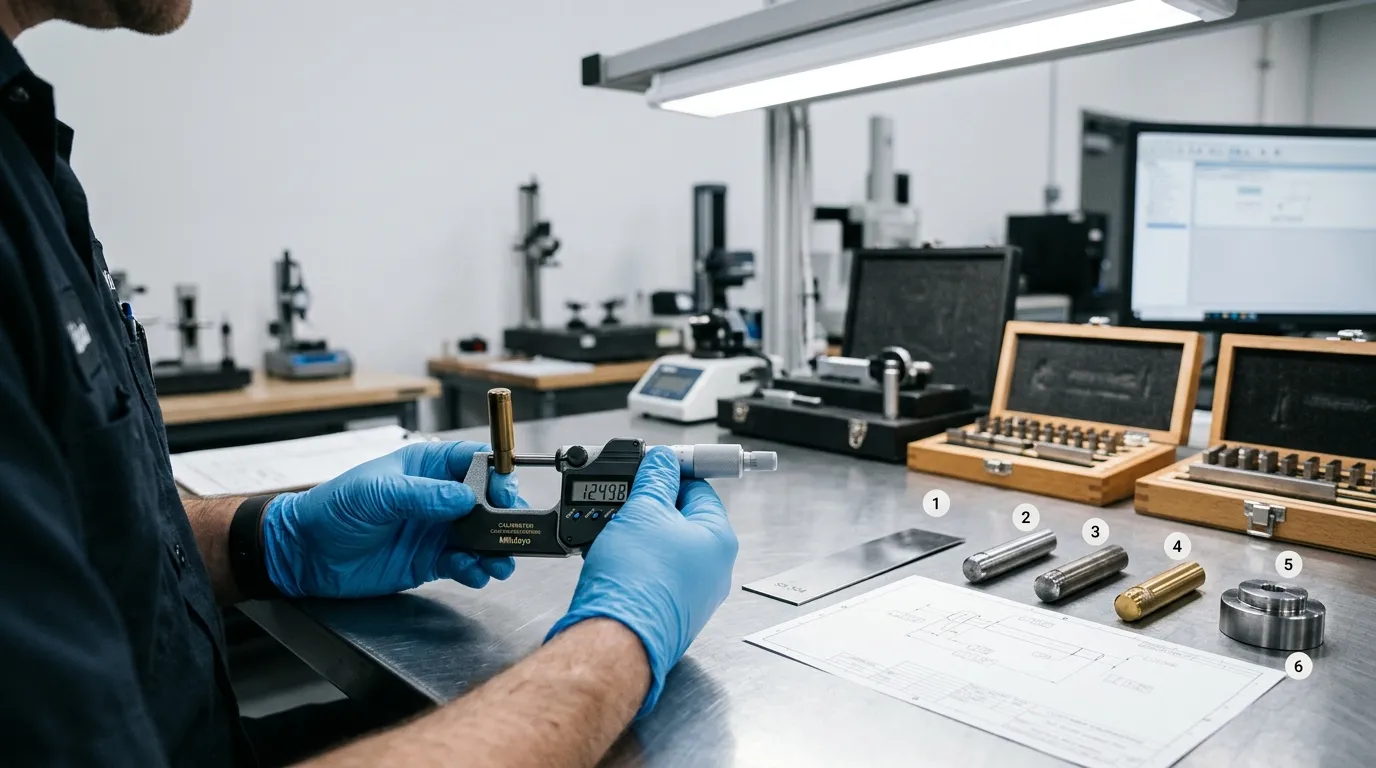
A supplier cannot make a defensible recommendation from the phrase “punch for stainless steel” alone.
Include the following information in the request:
- stainless grade and family;
- Espessura da folha;
- temper, Dureza, or tensile condition;
- part and hole drawing;
- Diâmetro do punção, Comprimento, cabeça, shank, and corner geometry;
- required dimensional tolerances;
- die clearance where known;
- press type and stroke rate;
- Volume de produção esperado;
- target service interval;
- lubricant or dry-running restriction;
- current punch material and hardness;
- current coating or treatment;
- photographs or samples of wear, captador, Lascamento, or breakage;
- regrinding and recoating expectations;
- Material Obrigatório, Dureza, Dimensional, ou documentação de revestimento.
SunshinePro states that it supplies standard components and non-standard customized parts processed from customer drawings. Its relevant punch pages list combinations of CNC machining, Esmerilamento de precisão, EDM, Tratamento térmico a vácuo, custom dimensions, HSS, Carbeto, stainless tool steel, and selected coating options.
These website-confirmed capabilities should still be reviewed against the actual drawing and application. A tolerance or material listed on one product page should not be assumed to apply to every punch geometry.
Princípio da Seleção Final
Use this order when selecting punch pins for stainless steel stamping:
- Identify the stainless grade, condição, Espessura, and feature geometry.
- Determine whether the current failure is galling, desgaste abrasivo, Lascamento, Quebra, or deformation.
- Correct alignment, Autorização, Orientação, Fim, Desmontagem, and lubrication problems.
- Select the substrate for bulk toughness, Resistência à compressão, and edge stability.
- Select the coating or treatment for the dominant surface failure.
- Compare serviceability, Tempo de inatividade, and cost per hit.
- Confirm the final system through drawing review and application-specific validation.
For a custom review, submit the drawing, stainless specification, Condições de produção, and current failure details through SunshinePro’s Página de contato. That information gives the supplier a practical basis for evaluating the punch material, Tratamento térmico, Fim, Revestimento, e requisitos de inspeção.
Compartilhe:


Escrito por Sunshine
Em Sol, Somos um fabricante e fornecedor profissional de componentes de moldes de precisão, oferecendo uma ampla variedade de produtos para aplicações de estampagem e molde por injeção. Nosso foco principal inclui a formação de matrizes, pinos e mangas ejetor, e postes guia e buchas. Com usinagem CNC avançada, Controle rigoroso de qualidade, e fortes capacidades de produção, Garantimos confiabilidade, Peças de alta precisão, juntamente com componentes padrão em estoque para fornecimento global rápido e eficiente.
NOTÍCIAS
RECEBA O SERVIÇO
Com peças de qualidade para todos os orçamentos e equipe amigável treinada para tornar sua visita informativa e sem complicações.
