



Componentes de Molde de Precisão: Guia para Conjuntos de Moldes de Alta Precisão
Precision mold components improve mold alignment, Repetibilidade, and long-term production stability by maintaining tight tolerances across repeated manufacturing cycles. Componentes como postes de referência, Buchas, pinos ejetores, and inserts directly affect flash control, Consistência dimensional, Resistência ao desgaste, e vida útil do molde. Choosing the right materials, Níveis de dureza, and fit tolerances helps reduce downtime, minimize repairs, and maintain reliable high-volume production.
High-accuracy molds depend on more than cavity design alone. The quality and fit of each internal component determine how consistently the mold performs after thousands or even millions of cycles. Alinhamento ruim, desgaste desigual, and loose tolerances often start with small component failures that grow into expensive production issues. Understanding which precision parts matter most helps buyers and engineers build more stable mold assemblies from the start.
What are precision mold components?
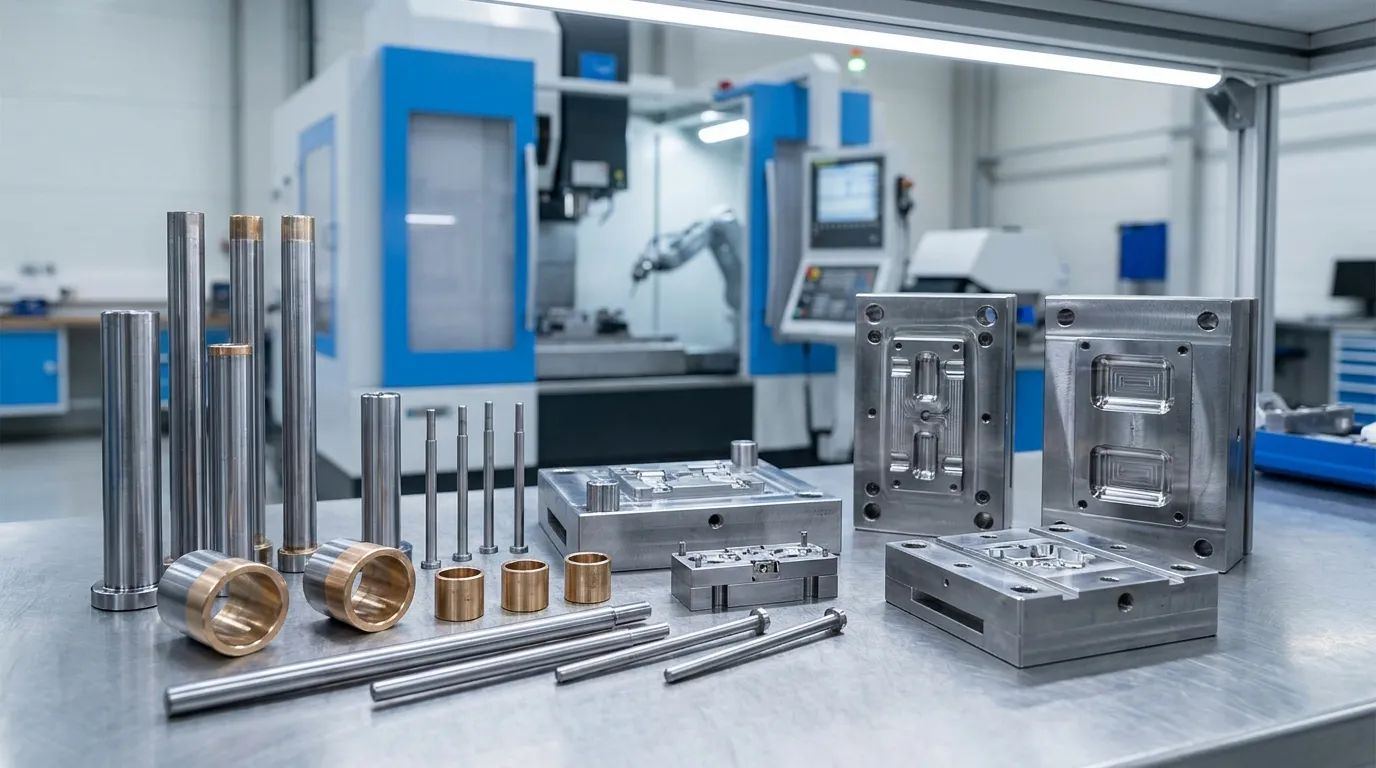
Precision mold components are high-tolerance parts used to maintain alignment, Repetibilidade, and dimensional stability inside mold assemblies. Components like guide posts, Buchas, pinos ejetores, and inserts directly affect mold accuracy, Resistência ao desgaste, and production consistency over long manufacturing cycles.
These components are machined and ground to tight tolerances so mold halves close accurately during every production cycle. Even small alignment errors can create flash, desgaste desigual, or dimensional variation in molded parts. That is why high-cycle molds rely heavily on precision-fit internal systems.
| Componente | Função principal |
|---|---|
| Postes-guia | Alinhar metades do molde |
| Buchas | Reduzir o desgaste durante o movimento |
| Pinos ejetores | Peças moldadas de liberação |
| Inserts | Características de peças críticas de forma |
| Mangas | Movimento do ejetor de suporte |
| Cavidades e núcleos | Modele o produto final |
Manufacturers often combine hardened tool steels and carbide materials to improve wear resistance in these areas. De acordo com Visão geral dos componentes de moldagem de precisão da Nidec, precision-fit mold elements are widely used in applications requiring stable dimensional control and repeatable production accuracy.
For a broader overview of mold system architecture, o Guia completo de componentes do molde explains how these assemblies fit into the larger injection molding process.
Você também pode explorar o relacionado Sistemas de componentes de molde used in different tooling configurations.
Which precision mold components affect alignment the most?
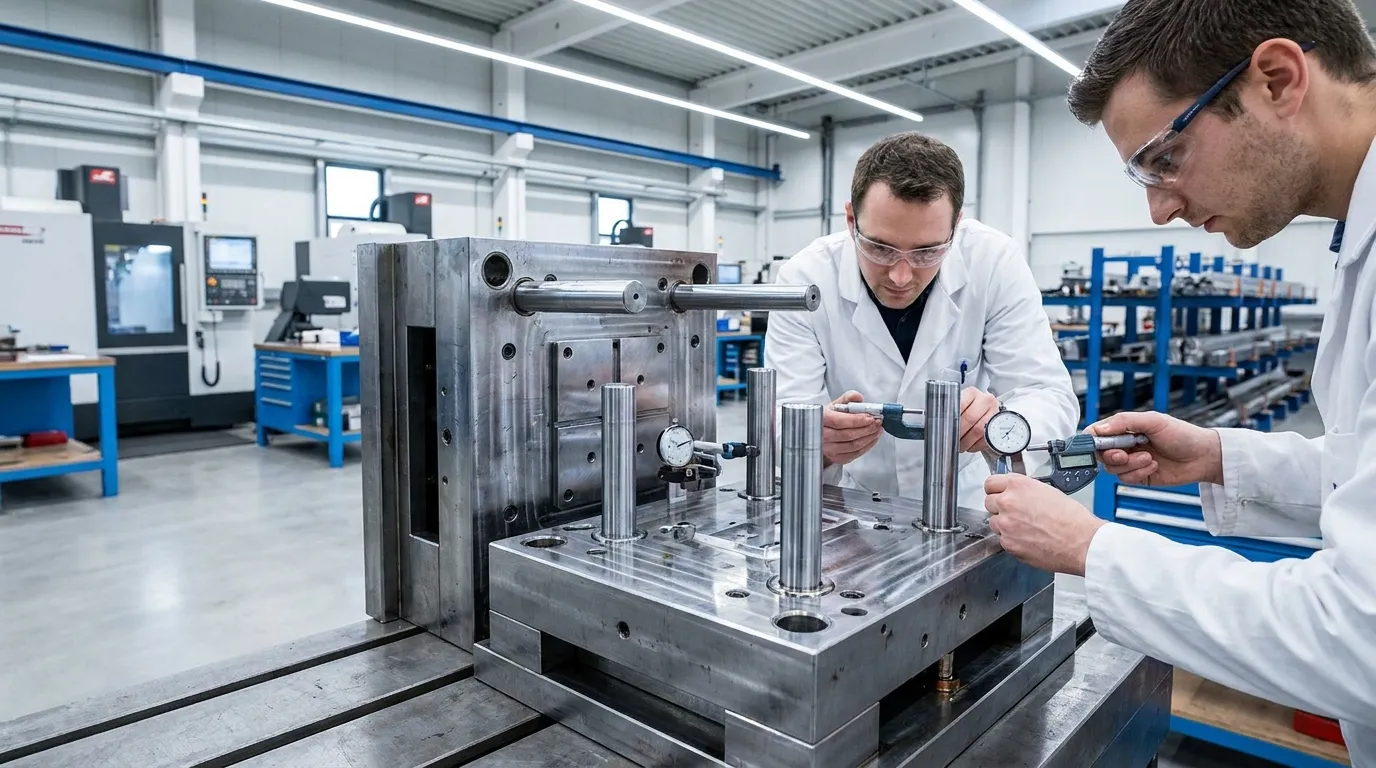
Postes-guia, Buchas, and precision inserts have the biggest impact on mold alignment because they control cavity positioning during repeated production cycles. Poor fit or premature wear in these components increases flash risk, Variação dimensional, and mold instability.
Alignment problems rarely begin with major mold damage. In most cases, wear starts gradually inside guide systems or mating surfaces. Once movement develops between mold halves, the cavity no longer closes consistently, and defects become harder to control.
Postes guia e buchas
Guide posts and bushings absorb repeated opening and closing movement during every molding cycle. Se essas partes se desgastam de forma desigual, the mold halves can shift slightly during closure. That small shift may create flash, burrs, or part mismatch over time.
A high-cycle automotive grille mold is a common example. After extended production, worn bushings can create enough play to cause visible flashing along long cosmetic edges. Replacing only the worn guide system often restores part quality without rebuilding the full mold.
Inserts e cavidades
Precision inserts also affect alignment because they maintain cavity positioning in critical areas. Loose insert fit can create variation in wall thickness or gate geometry, especially in medical or electronics molds.
Low-cost insert systems are not always the best choice. They may reduce initial tooling cost, but frequent replacement and production instability often erase those savings during long production runs.
Tabela de Risco de Faltura de Componentes de Precisão
| Componente | Problema de desgaste comum | Sintoma de Produção | Atualização Recomendada |
|---|---|---|---|
| Guia | Desgaste superficial | Flashing na linha de separação | Sistema de guia endurecido |
| Buchas | Crescimento da limpeza | Desajuste de molde | Bucha de atenuação de precisão |
| Inserção | Desgaste das bordas | Variação dimensional | Inserção de carboneto |
| Pino ejetor | Irritação | Fixação de peças | Pino endurecido polido |
Fabricantes que trabalham com ferramentas de tolerância restrita frequentemente atualizam para Sistemas de guias de precisão to reduce long-term alignment drift.
How do tight tolerances improve repeatability in mold assemblies?
Tight component tolerances reduce movement between mating mold parts during repeated cycles. Better fit improves cavity alignment, stabilizes ejection, Reduz o flashing, and helps maintain consistent part dimensions during long production runs.
Repeatability matters most in high-volume production. A mold that performs well for 5,000 cycles may still fail in long-term production if clearances grow too quickly. Precision-ground components slow that wear progression by minimizing friction and movement between mating surfaces.
Tolerance control becomes especially important in molds with thin walls or cosmetic surfaces. Even minor cavity shift can affect appearance, Ajuste, or sealing performance. Medical device molds often use tighter ejector pin tolerances to avoid surface marks during part release.
- Alinhamento da cavidade mais estável
- Redução da formação de flash e rebarbas
- Melhor consistência dimensional
- Ciclos de ejeção mais suaves
- Menor frequência de manutenção
Over-specifying one component rarely fixes the entire system. Tight tolerances only help when the full mold assembly can maintain alignment consistently. A precision insert paired with a worn guide system still creates instability during production.
Muitos fornecedores de ferramentas oferecem Peças de molde com tolerância apertada specifically designed for long-cycle production environments.
What materials and hardness levels work best for precision mold parts?
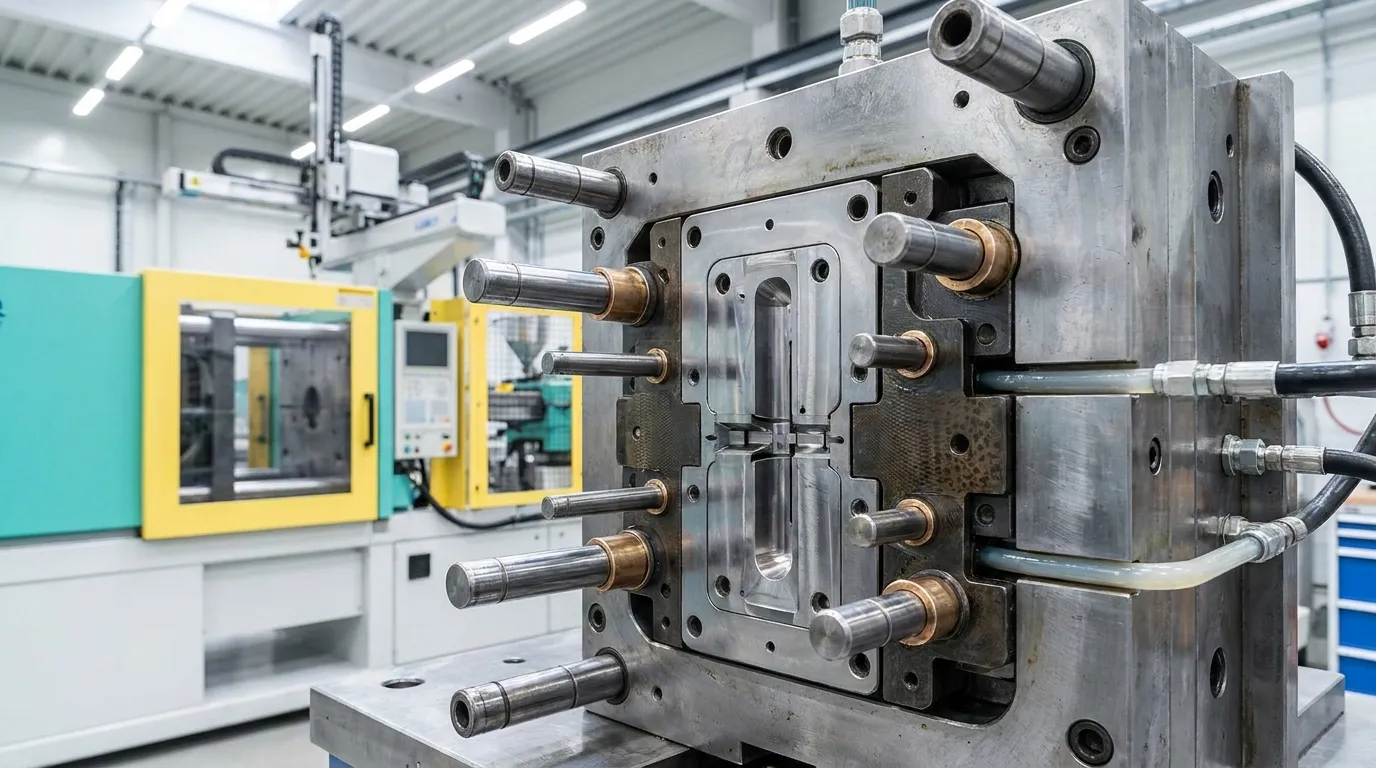
Material selection affects wear resistance, thermal stability, and service life in precision mold assemblies. Carbide components offer superior wear resistance, while hardened tool steels balance toughness, Maquinabilidade, and long-cycle durability.
Material choice depends on cycle volume, molding conditions, e tolerâncias exigidas. High-speed production creates friction and heat that quickly damage softer components. Harder materials hold dimensional accuracy longer under those conditions.
| Material | Vantagem Típica | Uso comum |
|---|---|---|
| SKD11 | Resistência ao desgaste | Inserts e perfuradores |
| SKH51 | Resistência ao calor | Ferramentas de alta velocidade |
| Carbeto | Dureza extrema | Inserts de precisão |
| Aço para ferramentas | Tenacidade equilibrada | Sistemas gerais de molde |
De acordo com Referências de componentes de precisão iPROS, carbide and hardened tool steels are commonly selected for applications requiring long wear life and dimensional stability.
Heat treatment quality matters just as much as raw material selection. Poorly controlled hardening can create distortion or cracking, especially in precision-ground components. Buyers should ask suppliers about hardness range, Métodos de inspeção, and traceability before approving production.
Consumer electronics molds often highlight this issue clearly. One housing mold using upgraded carbide inserts reduced replacement frequency significantly because the insert edges resisted wear during continuous production.
If material durability is a priority, Estes Materiais de ferramentas de precisão are commonly used in high-accuracy assemblies.
When do standard mold components stop being reliable?
Standard mold components often become unreliable in high-cycle, tight-tolerance, or medical-grade applications where wear accumulates quickly. Precision-ground or custom-fit components improve alignment stability and reduce downtime in these demanding environments.
Standard catalog components work well in many general-purpose molds. They are cost-effective and easy to replace. Problems usually appear when production cycles increase, Tolerâncias se apertam, or molded parts require strict cosmetic consistency.
Medical molding is one example where standard systems often struggle. De acordo com Orientação para requisitos de moldagem por injeção médica, repeatable dimensional control and traceability are critical in regulated production environments.
Tabela de Decisão de Componentes Padrão vs Precisão
| Condições de Produção | Componentes Padrão | Componentes de Precisão |
|---|---|---|
| Ferramentas de baixo volume | Geralmente aceitável | Opcional |
| Superfícies estéticas | Risco moderado | Recomendado |
| Partes médicas | Frequentemente insuficiente | Preferencial |
| Moldes de alto ciclo | Desgaste mais rápido | Melhor estabilidade a longo prazo |
| Tolerâncias apertadas | Possíveis problemas de liberação | Melhor repetibilidade |
A common mistake is delaying component upgrades until visible defects appear. By that stage, wear may already affect cavities, Inserts, or shut-off surfaces. Replacing guide systems earlier often costs far less than repairing damaged mold sections later.
How do precision components extend mold life?
Precision components extend mold life by reducing friction, Desalinhamento, and uneven wear during repeated production cycles. Better fit between moving parts helps the mold maintain stable operation longer without frequent adjustments or repairs.
Long-cycle molds place constant stress on guide systems, ejector assemblies, and mating surfaces. Once clearances begin increasing, wear spreads quickly across neighboring components. That chain reaction shortens overall tooling life.
A production mold running one million cycles illustrates this clearly. In one automotive application, worn guide bushings caused cavity mismatch and flashing along cosmetic surfaces. Replacing the guide system restored alignment and delayed a far more expensive cavity rebuild.
Checklist de Melhoria da Vida do Mofo
- Use sistemas de guia endurecidos para moldes de alto ciclo
- Ajuste o material do insert ao volume de produção
- Inspecione o desgaste dos pinos ejetores regularmente
- Substitua as buchas gastas antes que apareça dano à cavidade
- Mantenha horários de lubrificação consistentes
- Monitore o alinhamento durante a manutenção preventiva
Low-cost ejector systems often become the first major wear point in fast-cycle production. That is especially true in molds using aggressive ejection timing or thin-wall parts. Upgrading those systems early usually improves production stability and reduces downtime.
Você pode revisar mais Componentes resistentes ao desgaste commonly used to improve tooling durability.
What should buyers evaluate before sourcing precision mold components?
Buyers should evaluate tolerance capability, Qualidade do tratamento térmico, Rastreabilidade de materiais, Métodos de inspeção, and delivery consistency before selecting a precision mold component supplier. These factors affect both mold stability and long-term production reliability.
A supplier's machining accuracy matters, but inspection capability matters just as much. Precision components should include documented dimensional checks, hardness verification, and repeatable manufacturing controls.
- Capacidade de tolerância
- Precisão de esmerilamento
- Consistência do tratamento térmico
- Certificação de materiais
- Qualidade do acabamento superficial
- Confiabilidade da entrega
- Prazos de entrega para substituição
Production scheduling also affects sourcing decisions. Delayed component delivery can hold up mold trials, validation runs, or customer approvals. Some manufacturers now build extra inspection and logistics planning into production schedules to reduce tooling delays, as discussed in Análise recente de planejamento da produção de moldes.
Import timing may also affect tooling schedules in some regions. Buyers handling overseas shipments should review applicable customs and trade documentation requirements before finalizing delivery timelines. O Orientação da Alfândega de Bangladesh is one example of how import procedures can influence manufacturing lead times.
Before selecting a supplier, it also helps to compare available Fornecedor de componentes de moldes personalizados capabilities against actual production requirements instead of choosing based on price alone.
Acertando o Próximo Passo
Precision mold components directly affect alignment stability, Consistência dimensional, e vida útil do molde. Small differences in fit, Dureza, or wear resistance often become major production issues after extended cycles. That is why component selection should match the actual operating conditions of the mold, not just the initial tooling budget.
If your application involves tight tolerances, Superfícies cosméticas, Partes médicas, or high-cycle production, it is worth reviewing the full guide system, ejector assembly, and insert strategy before launch. Choosing the right precision mold components early usually reduces downtime, lowers maintenance costs, and keeps production more stable over time.
Perguntas Frequentes
What are precision mold components?
Precision mold components are high-tolerance parts used to maintain alignment, stability, and dimensional accuracy inside mold assemblies. Common examples include guide posts, Buchas, pinos ejetores, Inserts, and cavities.
Why are guide posts and bushings important?
Guide posts and bushings keep mold halves aligned during repeated opening and closing cycles. Um mau alinhamento aumenta o desgaste, flash defects, and dimensional inconsistency during production.
What materials are commonly used for precision mold parts?
Carbide and hardened tool steels like SKD11 and SKH51 are commonly used because they provide strong wear resistance and dimensional stability. Material choice depends on cycle volume, Requisitos de tolerância, e condições de operação.
How do ejector pins affect molding quality?
Ejector pins affect part release consistency and surface quality during mold opening. Poorly fitted or worn ejector pins can create marks, sticking problems, or uneven ejection force.
When should custom mold components be used?
Custom mold components are usually necessary when standard catalog parts cannot maintain required tolerances, fit conditions, or production durability. They are common in medical, Automotivo, and high-cycle tooling applications.
How do precision components improve mold life?
Precision components reduce friction, Desalinhamento, and uneven wear during repeated cycles. Better fit and surface finish help molds maintain stable operation for longer production runs.
Compartilhe:


Escrito por Sunshine
Em Sol, Somos um fabricante e fornecedor profissional de componentes de moldes de precisão, oferecendo uma ampla variedade de produtos para aplicações de estampagem e molde por injeção. Nosso foco principal inclui a formação de matrizes, pinos e mangas ejetor, e postes guia e buchas. Com usinagem CNC avançada, Controle rigoroso de qualidade, e fortes capacidades de produção, Garantimos confiabilidade, Peças de alta precisão, juntamente com componentes padrão em estoque para fornecimento global rápido e eficiente.
NOTÍCIAS
RECEBA O SERVIÇO
Com peças de qualidade para todos os orçamentos e equipe amigável treinada para tornar sua visita informativa e sem complicações.
