



Guia de Componentes de Molde: Tipos, Funções, e Lista de Compras
Componentes de molde são as peças de precisão que controlam o alinhamento, Resfriamento, alimentação, and ejection inside injection molds. Buyers should evaluate component materials, Tolerâncias, Tratamento térmico, Frequência de substituição, and supplier delivery capability before sending an RFQ. Standard components reduce lead time and maintenance complexity, while custom components improve fit for specialized production requirements.
A mold can only perform as well as the parts inside it. Poor component selection often leads to flash defects, Questões de alinhamento, unexpected downtime, or expensive replacements. Buyers who understand how mold systems work can make better sourcing decisions, avoid production delays, and compare suppliers with more confidence. Este guia explica os principais componentes do molde, how they function, e o que verificar antes de fazer um pedido.
O que são componentes de mofo e por que eles são importantes?
Mold components are the individual precision parts that control alignment, Resfriamento, Ejeção, and cavity formation inside a mold. Their quality affects cycle time, part accuracy, Vida útil do molde, and maintenance frequency.
Injection molds contain many moving and fixed parts that work together during production. These parts guide molten plastic, shape the final product, cool the mold, and eject finished components safely. Even a small tolerance issue can affect production consistency.
The most important systems include the mold base, cavity and core inserts, Componentes do guia, Canais de resfriamento, e sistemas ejetores. Each one supports mold stability during repeated production cycles. Você pode explorar algo mais amplo Sistemas de componentes de molde to understand how these systems interact across full mold assemblies.
High-quality components also reduce maintenance pressure. A low-cost ejector pin with weak heat treatment may wear out quickly and stop production unexpectedly. For high-cycle manufacturing, repeatable precision matters more than the lowest upfront component price.
Quais são os principais tipos de componentes de molde?
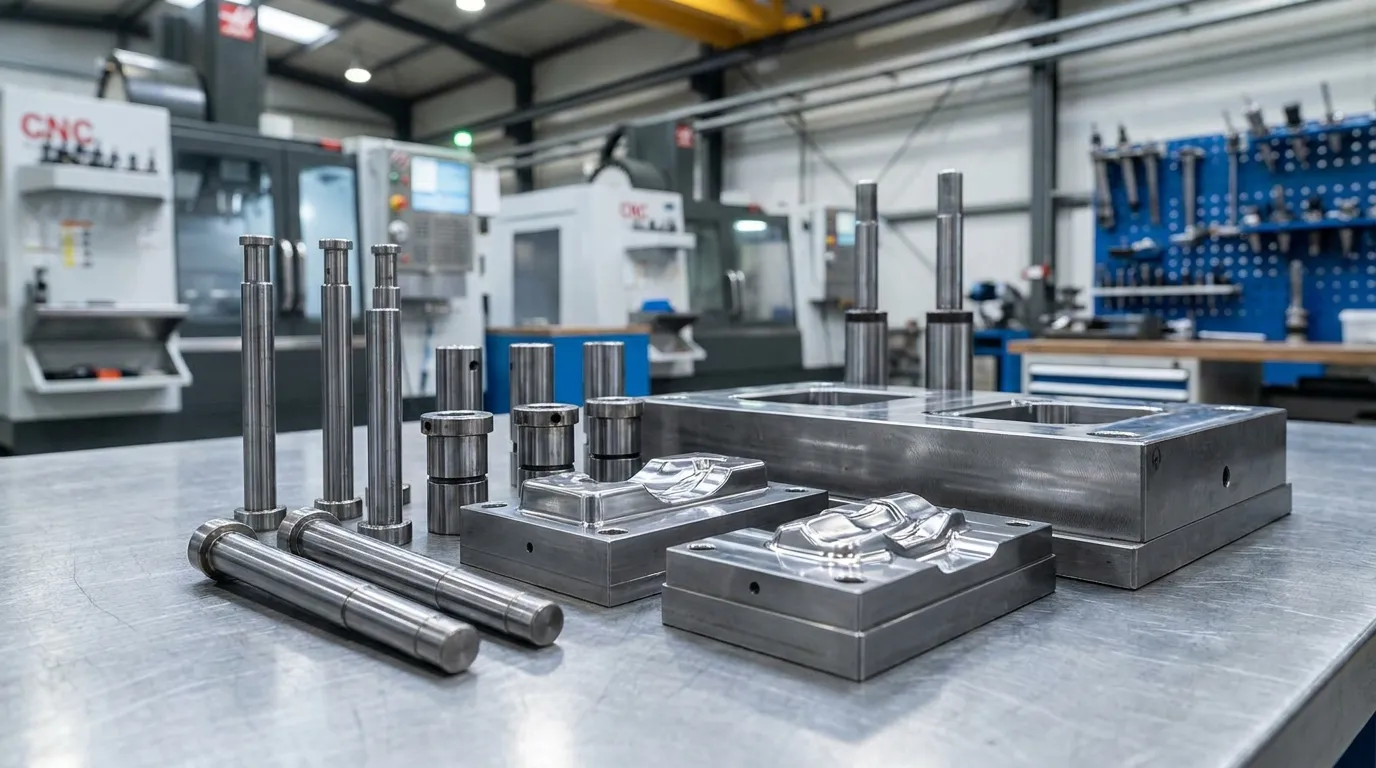
The main mold component categories include mold bases, cavity and core systems, Sistemas ejetores, Canais de resfriamento, venting systems, e componentes guia. Each system controls a different stage of molding accuracy and production efficiency.
Every injection mold combines structural and functional systems. Structural parts hold the mold together, while functional systems manage plastic flow, Resfriamento, and ejection during production.
Componentes estruturais
| Componente | Função principal | Preocupação Comum |
|---|---|---|
| Base do molde | Suporta o conjunto completo do molde | Estabilidade do alinhamento |
| Inserto na cavidade | Forma a forma externa da peça | Resistência ao desgaste |
| Inserto de núcleo | Geometria interna das formas | Usinagem de precisão |
| Pinos guia | Alinhar metades do molde | Desgaste por atrito |
| Buchas | Apoie o movimento orientador | Tolerância de folga |
The mold base acts as the foundation. Cavity and core inserts shape the finished product, while guide pins and bushings maintain alignment during repeated opening and closing cycles.
Sistemas funcionais
| Sistema | Propósito | Impacto na Produção |
|---|---|---|
| Sistema de corredores | Direciona plástico derretido | Consistência de preenchimento |
| Canais de resfriamento | Remover o calor | Tempo de ciclo |
| Sistema de ventilação | Libera ar aprisionado | Qualidade da superfície |
| Sistema de ejeção | Remove peças finalizadas | Prevenção de danos |
Cooling and venting systems often receive less attention during RFQs, but they strongly affect production efficiency. Poor cooling design can increase cycle time significantly, while weak venting may create burn marks or trapped gas defects.
Para uma explicação mais ampla de Estrutura do molde de injeção plástica, it helps to review how these systems work together in complete tooling assemblies.
Quais componentes do molde se desgastam mais rápido?
Pinos ejetores, Buchas, socos, and guide components usually wear out first because they handle repeated friction, Calor, e tensões mecânicas. Material quality and heat treatment strongly affect replacement frequency.
Moving parts experience constant contact during production cycles. Ejector pins slide repeatedly against steel surfaces, guide bushings absorb alignment pressure, and punches face direct mechanical force. Without proper hardness or lubrication, these components degrade quickly.
An automotive supplier producing high-volume interior clips faced repeated downtime because ejector pins were replaced every two months. The issue was not mold design. The pins used insufficient hardness treatment and wore down under continuous production pressure.
Common high-wear components include:
- Pinos ejetores
- Buchas guia
- Placas de desgaste
- Socos
- Buchas sprue
Low-cost components are not always the cheapest option long term. For high-cycle molds, stronger heat treatment and better surface finishing often reduce maintenance costs over time. Many manufacturers prioritize durability-focused Peças de molde de precisão for this reason.
Componentes padrão vs personalizados para moldes: which should buyers choose?
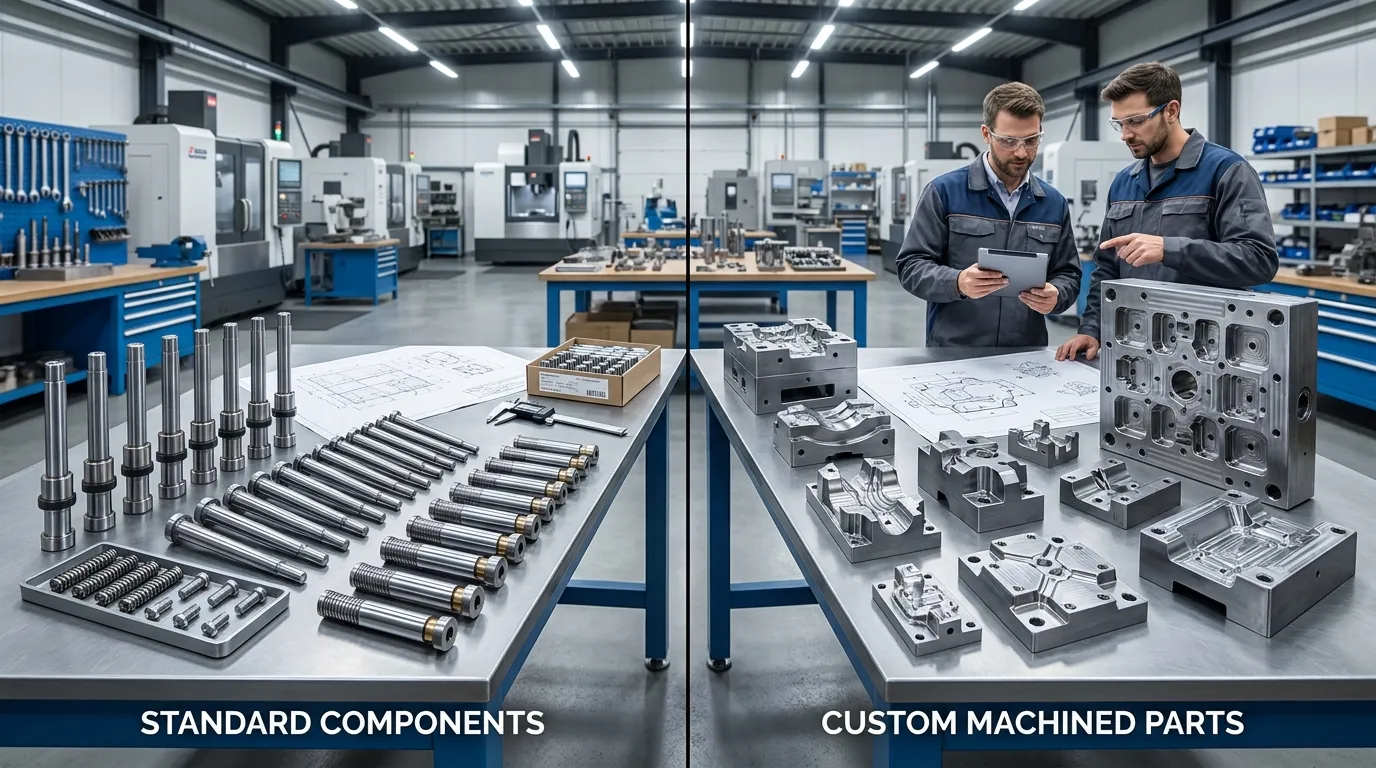
Standard mold components reduce lead time and simplify replacement, while custom components improve fit for specialized applications or tight tolerances. A escolha certa depende do volume de produção, Complexidade, e prioridades de manutenção.
Standard components work well for many molds because they are easier to source and replace. Suppliers often keep standard ejector pins, Marcos orientadores, and bushings in stock, which shortens delivery timelines and reduces downtime risk.
Custom components become necessary when molds require unusual geometry, unique tolerances, or specialized production conditions. Medical and electronics molds often use custom-machined parts to maintain tighter dimensional control.
Quando as peças padrão funcionam melhor
| Melhor Ajuste | Por que os Componentes Padrão Ajudam |
|---|---|
| Produtos de consumo geral | Substituição mais rápida |
| Volumes de produção moderados | Menor custo de ferramenta |
| Ambientes que exigem muita manutenção | Gerenciamento de inventário mais fácil |
| Prazos apertados do projeto | Prazos de entrega mais curtos |
A packaging manufacturer reduced downtime by replacing custom bushings with stocked standard parts. Replacement time dropped from three weeks to four days because the supplier already carried inventory.
Quando a usinagem personalizada é necessária
| Melhor Ajuste | Por que Componentes Personalizados Ajudam |
|---|---|
| Ferramentas médicas | Maior precisão |
| Geometrias complexas | Melhor encaixe |
| Moldagem de alta pressão | Durabilidade aprimorada |
| Resinas especiais | Compatibilidade de materiais |
Standard components are not always the safest choice. They reduce sourcing complexity, but custom parts may improve stability for high-precision molds where alignment tolerance is critical. A consumer electronics supplier improved part consistency after switching to custom guide posts with tighter tolerances.
Compradores avaliando Acessórios personalizados para moldes should compare long-term maintenance costs, not just initial component pricing.
Quais materiais são comumente usados para componentes de molde?
Tool steel is the most common material for mold components because it balances hardness, Maquinabilidade, e resistência ao desgaste. Different steel grades perform better under different production conditions, especially when molds run high volumes or abrasive resins.
Heat treatment also matters. A well-machined component can still fail early if hardness levels are inconsistent. Many suppliers focus heavily on machining quality but overlook long-term wear stability during heat treatment.
Fatores de seleção do aço para molde
| Fator | Por que isso importa |
|---|---|
| Dureza | Melhora a resistência ao desgaste |
| Maquinabilidade | Afeta a precisão de fabricação |
| Resistência à corrosão | Ajuda em ambientes sensíveis à umidade |
| Estabilidade térmica | Reduz o risco de deformação |
| Acabamento superficial | Suporta liberação suave da peça |
A mold running glass-filled plastic resin usually needs stronger wear resistance than one producing simple consumer packaging. Buyers should confirm both steel grade and heat-treatment specifications during RFQ review.
Fast delivery means little if tolerances shift after repeated production cycles. Consistent material quality often matters more than short-term lead time savings.
O que os compradores devem verificar antes de enviar uma RFQ?
Before requesting a mold component quote, buyers should confirm dimensions, Tolerâncias, Categorias de materiais, heat treatment requirements, Acabamento superficial, e prazos de entrega. Missing specifications often cause delays, inaccurate pricing, or compatibility problems.
Incomplete RFQs create confusion for both buyers and suppliers. Missing tolerances or unclear material requirements can lead to revised quotes, delayed production, or components that fail during assembly.
The safest approach is to standardize RFQ information before contacting suppliers.
Lista de Verificação de RFQ para Componentes de Modo
| RFQ Item | Por que isso importa |
|---|---|
| Desenhos técnicos | Confirma geometria |
| Requisitos de tolerância | Previne problemas de ajuste |
| Grau de material | Suporta durabilidade |
| Especificação de tratamento térmico | Melhora a expectativa de vida |
| Acabamento superficial | Afeta o desempenho do molde |
| Quantidade necessária | Precificação de impactos |
| Alvo de entrega | Ajuda no planejamento do inventário |
| Normas de inspeção | Confirma expectativas de controle de qualidade |
A medical mold project experienced customs delays because component drawings and invoices used inconsistent descriptions. The supplier corrected documentation, but production lost nearly two weeks waiting for replacement approval.
Buyers should also ask suppliers about stocked inventory. A supplier with standard components already available can often prevent emergency shutdowns caused by replacement delays.
How do delivery and customs issues affect mold component sourcing?
Códigos HS incorretos, missing invoices, and incomplete customs documentation can delay mold component shipments and interrupt production schedules. Buyers should verify export paperwork and supplier inventory before approving urgent orders.
Many sourcing delays happen after production is already complete. Customs clearance issues, incorrect classification codes, and missing paperwork can stop critical replacement components from reaching the factory on time.
Causas comuns de atraso aduaneiro
- Classificação incorreta do HS
- Faturas comerciais ausentes
- Listas de embalagem incompletas
- Reservas de inspeção
- Escassez de estoque de fornecedores
A mold manufacturer shipping replacement guide bushings for an automotive line used the wrong HS code during export documentation. Customs flagged the shipment for review, adding several days to clearance time and delaying production restart.
Urgent projects benefit from suppliers that maintain inventory locally or regionally. Replacement speed matters most when a production line is already down. Buyers evaluating global sourcing should ask about stock availability before confirming orders.
According to guidance from Bangladesh Customs and international trade references, documentation consistency plays a major role in preventing shipment delays. Even small invoice mismatches can trigger inspections during customs processing.
How should buyers evaluate mold component suppliers?
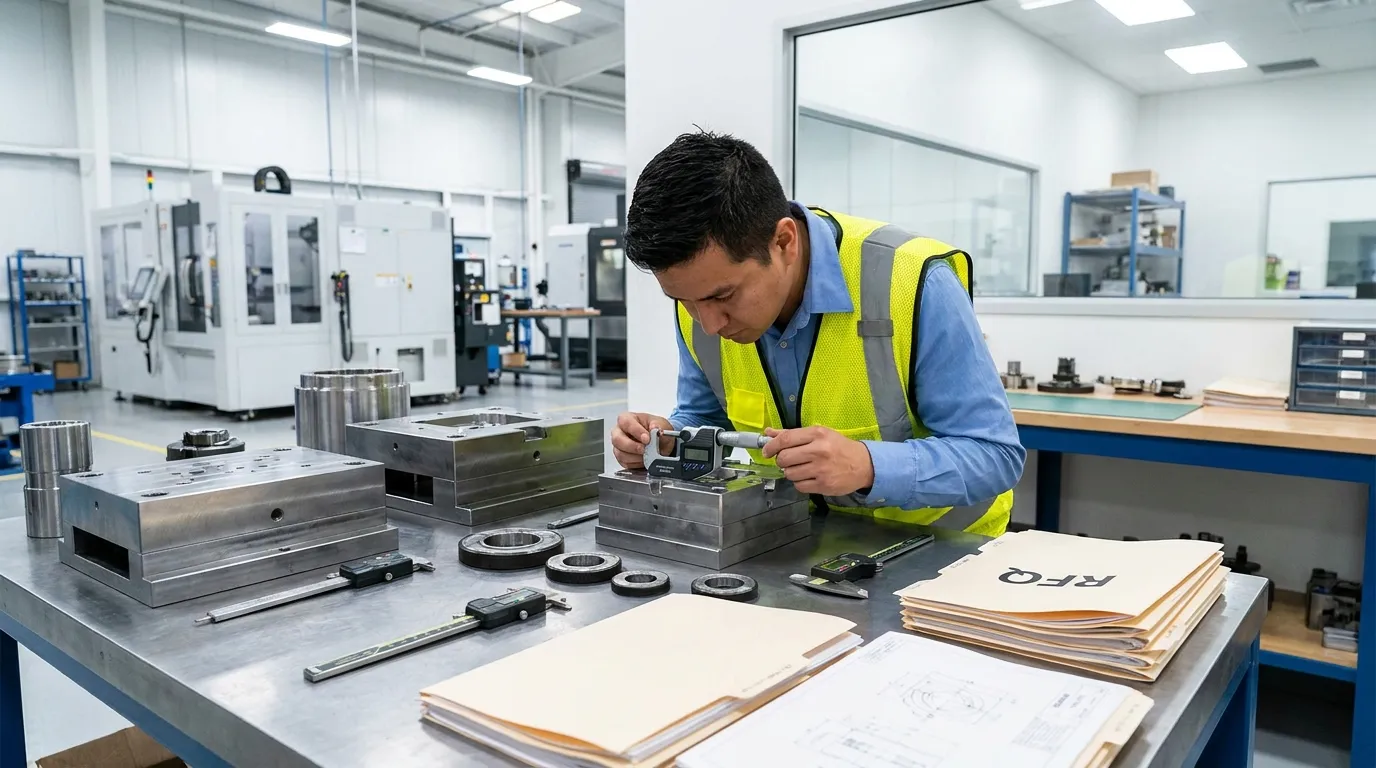
Reliable mold component suppliers should demonstrate precision tolerances, Rastreabilidade de materiais, inventory capacity, quality inspection systems, and stable delivery performance. Buyers should evaluate long-term replacement support, not only initial pricing.
A supplier may offer competitive pricing but still create problems later through inconsistent machining or delayed replacements. Buyers should focus on repeatability and support, especially for molds running continuous production schedules.
Lista de verificação de avaliação de fornecedores
| Área de Avaliação | O que os compradores devem verificar |
|---|---|
| Capacidade de tolerância | Padrões de precisão CNC |
| Rastreabilidade de materiais | Certificação do aço |
| Controle de tratamento térmico | Consistência da dureza |
| Inspeção de qualidade | Sistemas de medição |
| Suporte de inventário | Disponibilidade de substituição |
| Experiência de exportação | Precisão da documentação |
An electronics manufacturer reduced alignment defects after switching suppliers because the new vendor maintained tighter guide-post tolerances and stronger inspection procedures.
Para compradores comparando Aplicações na fabricação de moldes, supplier flexibility also matters. Different industries require different wear resistance, Tolerâncias, and production speeds. A supplier experienced in automotive tooling may not always be the best fit for medical or electronics molds.
Acertando o Próximo Passo
Choosing the right mold components is less about finding the cheapest option and more about reducing long-term production risk. Qualidade do material, Precisão na usinagem, Tratamento térmico, Suporte de inventário, and delivery reliability all affect mold performance after installation.
Antes de enviar sua próxima RFQ, review the component system carefully and identify which parts directly affect alignment, Desgaste, e consistência de ciclos. Strong sourcing decisions early in the process usually prevent expensive downtime later. Buyers who understand mold systems can compare suppliers more confidently and build more stable production operations.
Perguntas Frequentes
What are the main systems of a mold?
The main mold systems include the mold base, Sistema de alimentação, Sistema de resfriamento, venting system, ejection system, and guiding system. Each system supports molding accuracy, Eficiência do ciclo, and consistent part quality.
What are standard mold components?
Standard mold components are pre-manufactured parts made to common industry dimensions and tolerances. They reduce lead time, simplify replacement, and lower sourcing costs compared with fully custom parts.
What are the most important factors when choosing mold steel?
The most important mold steel factors are hardness, Resistência ao desgaste, Maquinabilidade, and heat-treatment stability. The correct choice depends on production volume, Tipo de resina, e a vida útil esperada do molde.
What causes customs delays for mold component shipments?
Customs delays often happen because of incorrect HS codes, Faturas incompletas, missing documentation, ou requisitos de inspeção. Delays can interrupt production schedules when replacement components are urgently needed.
Which mold components require replacement most often?
Pinos ejetores, Buchas guia, socos, and wear plates usually require replacement first because they experience repeated friction and mechanical stress. Proper lubrication and heat treatment can extend their service life.
Should buyers choose standard or custom mold components?
Standard components work well for many applications because they reduce cost and replacement complexity. Custom components are better for unusual geometries, specialized tolerances, or high-performance tooling requirements.
Compartilhe:


Escrito por Sunshine
Em Sol, Somos um fabricante e fornecedor profissional de componentes de moldes de precisão, oferecendo uma ampla variedade de produtos para aplicações de estampagem e molde por injeção. Nosso foco principal inclui a formação de matrizes, pinos e mangas ejetor, e postes guia e buchas. Com usinagem CNC avançada, Controle rigoroso de qualidade, e fortes capacidades de produção, Garantimos confiabilidade, Peças de alta precisão, juntamente com componentes padrão em estoque para fornecimento global rápido e eficiente.
NOTÍCIAS
RECEBA O SERVIÇO
Com peças de qualidade para todos os orçamentos e equipe amigável treinada para tornar sua visita informativa e sem complicações.
