



Guia de Componentes de Molde: Tipos, Funções, e Lista de Compras
Mold components are the precision parts that control alignment, Resfriamento, feeding, and ejection inside an injection mold. Buyers should compare component types, material grades, Tolerâncias, Dureza, and lead times before sending an RFQ. Standard parts reduce replacement costs and delivery risk, while custom components work better for specialized molds with tighter performance requirements.
A mold may look simple from the outside, but component quality decides how well it performs on the production floor. Poor ejector pins, weak guide bushings, or incorrect tolerances can lead to flash, Fixação, Tempo de inatividade, and expensive repairs. This guide explains the main mold component types, o que cada um faz, and what buyers should check before choosing a supplier or requesting a quote.
What are mold components and why do they matter?
Mold components are the individual functional parts inside an injection mold, incluindo pinos ejetores, Buchas guia, Sistemas de resfriamento, and mold bases. Their precision affects cycle time, Qualidade das peças, alignment accuracy, e vida útil do molde.
Every injection mold uses multiple parts that work together during molding. These components guide mold movement, cool molten plastic, ejetar peças finalizadas, and keep alignment stable during repeated production cycles. If one critical part wears out early, the entire mold can lose accuracy.
Standardized components also make maintenance easier. Factories can replace worn pins, Buchas, or springs without redesigning the entire tool. That matters for high-volume production lines where every hour of downtime affects output and delivery schedules.
Buyers comparing suppliers should focus on more than machining price. Grau de material, hardness treatment, and dimensional consistency often determine whether a mold performs well after 100,000 cycles or after 1 million cycles.
For a broader overview of mold construction and tooling workflow, Veja estes Fundamentos do molde de injeção plástica.
What are the main types of mold components?
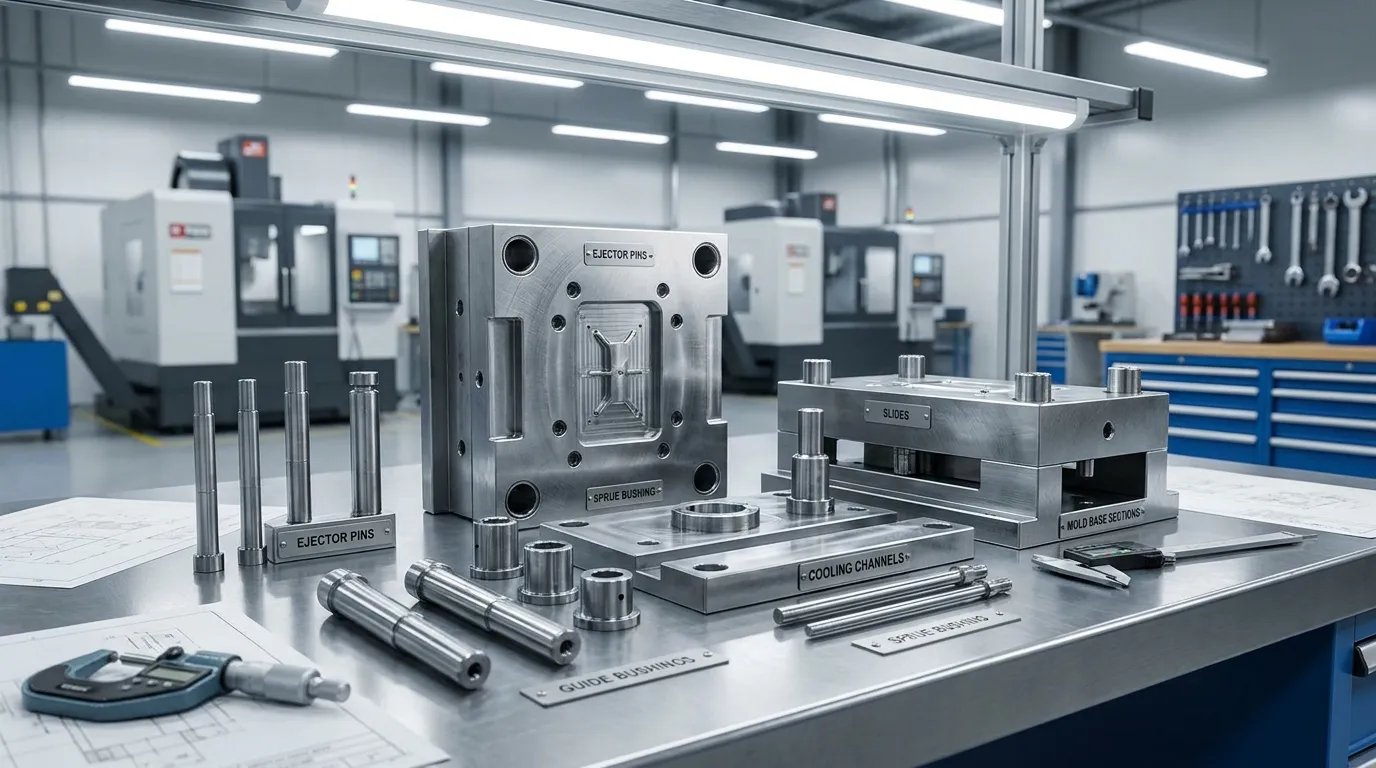
The main mold components include the mold base, guiding system, Canais de resfriamento, feed system, and ejection system. Each section controls a different part of molding performance, from alignment and resin flow to cooling efficiency and part release.
Most injection molds follow a similar structure, even when part geometry changes. Understanding these systems helps buyers compare molds and evaluate supplier capabilities more accurately.
| Grupo Componente | Função principal | Partes Comuns |
|---|---|---|
| Base de Molde | Sustenta toda a estrutura do molde | Plates, clamps, support pillars |
| Sistema de Guiamento | Mantém o alinhamento durante a abertura e o fechamento | Pinos guia, Buchas guia |
| Sistema de Alimentação | Direciona resina derretida para dentro da cavidade | Buchas sprue, Corredores, portões |
| Sistema de Resfriamento | Controla a temperatura do molde | Canais de resfriamento, fittings |
| Sistema de Ejeção | Remove as peças moldadas com segurança | Pinos ejetores, Mangas, stripper plates |
According to industry references from FirstMold, cooling and ejection systems directly affect cycle consistency and molded part quality. Poor cooling design can increase warpage, while weak ejection systems may scratch finished surfaces.
Componentes de ejeção
Ejector pins are among the most heavily used mold parts. They push finished plastic parts out of the cavity after cooling. Sleeve ejectors and stripper plates are also common in molds with deep or complex geometry.
An automotive supplier producing high-volume trim parts may replace ejector pins every 500,000 cycles. Upgrading to hardened coated pins often reduces replacement frequency and lowers maintenance downtime.
Componentes de guiamento
Guide pins and guide bushings keep both mold halves aligned during operation. Misalignment can damage cavities, create flash, or increase wear on moving sections.
Standard guide systems are usually the safer choice for maintenance-heavy factories because replacement parts are easier to source quickly. Custom guide systems work best only when a mold requires specialized movement or tight space constraints.
For more detail on component categories and tooling systems, visit Sistemas de componentes de molde.
Quais componentes do molde se desgastam mais rápido?
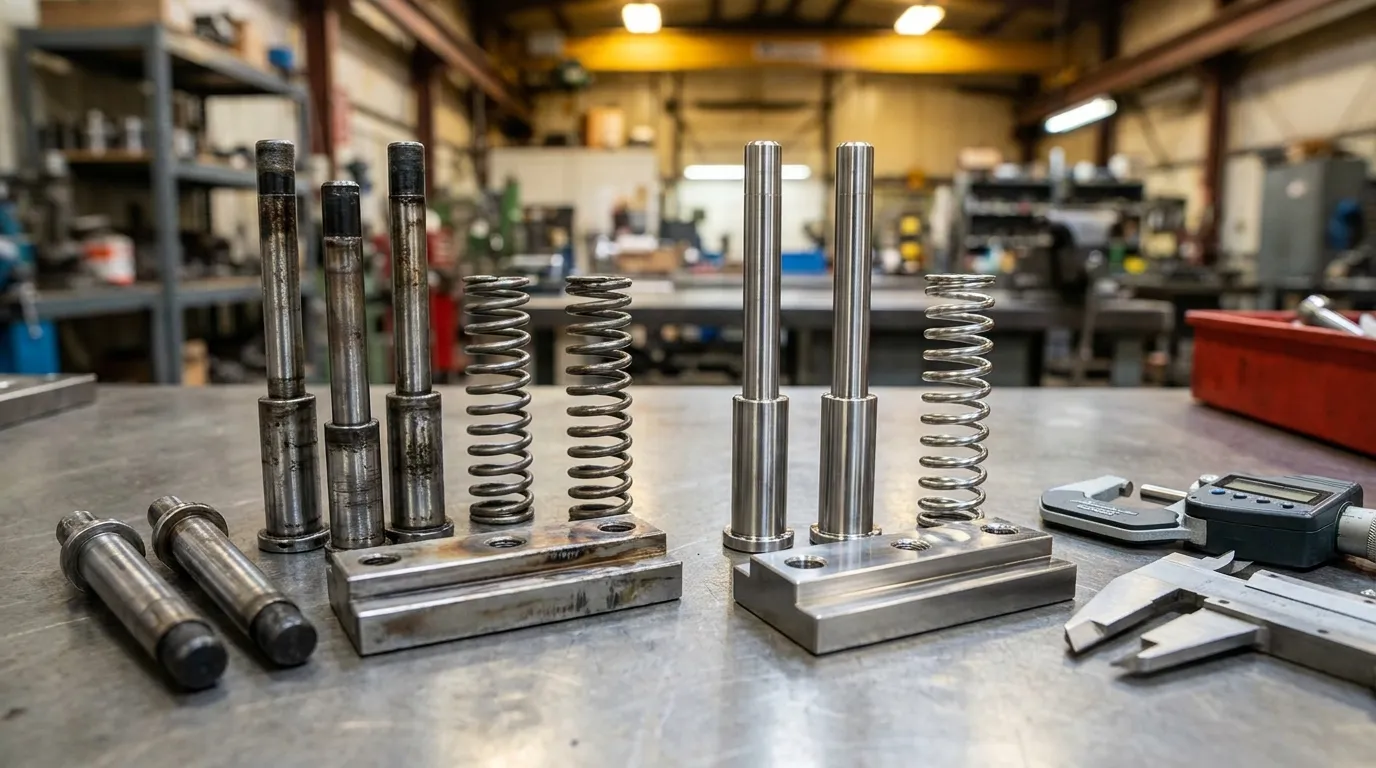
Pinos ejetores, Buchas guia, slides, and springs usually wear out faster because they face repeated friction, Calor, and movement. Buyers should check hardness, Revestimento, Qualidade do material, and replacement availability before ordering.
High-wear parts operate under constant pressure and repeated movement. Friction between sliding components slowly removes material, especially in molds running abrasive resins or high production volumes. Weak coatings or low-grade steel can accelerate wear even faster.
The most common wear-prone components include:
- Pinos ejetores
- Buchas guia
- Molas de retorno
- Ferrolhos e levantadores
- Pinos do núcleo expostos a materiais abrasivos
A medical mold buyer working in a humid cleanroom environment may choose stainless steel components to reduce corrosion risk. Standard carbon steel parts often degrade faster when moisture exposure is constant.
Extremely tight tolerances are not always beneficial. Over-specifying tolerances can increase machining cost and lead time without improving molded part quality. Buyers should match tolerance requirements to the actual application instead of requesting the highest precision by default.
Preventive maintenance also matters. Replacing inexpensive wear components early usually costs far less than repairing damaged cavities or mold bases later.
Componentes padrão vs personalizados para moldes: which is better?
Standard mold components are faster and cheaper to replace, while custom components work better for specialized geometry or high-performance molds. A escolha certa depende do volume de produção, Tolerâncias, and maintenance priorities.
Many buyers assume custom components always improve mold performance. Isso nem sempre é verdade. Standard components reduce sourcing complexity, Simplificar manutenção, and lower emergency replacement costs for most production environments.
Custom components become useful when a mold requires unusual geometry, limited installation space, or advanced movement systems. Medicina, Aeroespacial, and multi-cavity tooling often require more customization than general consumer product molds.
Tabela de Decisão Padrão vs Personalizada
| Fator | Componentes Padrão | Componentes Personalizados |
|---|---|---|
| Custo | Lower | Mais alto |
| Prazo de Entrega | Mais rápido | Mais devagar |
| Disponibilidade de Substituição | Fácil | Limitado |
| Manutenção | Mais simples | Mais especializado |
| Flexibilidade de Precisão | Moderado | Mais alto |
| Melhor Caso de Uso | Moldes de produção geral | Ferramentas especializadas |
The cheapest mold components often create the highest long-term production cost. Substituições frequentes, Questões de alinhamento, and downtime can easily exceed the savings from a lower initial purchase price.
A factory producing packaging parts around the clock may prefer standardized guide bushings because emergency replacements are easier to source locally. A specialized medical mold may justify custom components because dimensional stability is more critical than replacement convenience.
What materials are commonly used for mold components?
Tool steel is the most common material for mold components because it handles pressure, Calor, and repeated movement well. Stainless steel and coated alloys are also used when corrosion resistance or wear protection is important.
A seleção de materiais depende do volume de produção, Tipo de resina, e condições de operação. Components exposed to abrasive glass-filled plastics usually require harder steel grades than molds running softer resins.
| Material | Uso comum | Principal Vantagem |
|---|---|---|
| Aço para Ferramentas Temperado | Pinos ejetores, cores | Alta resistência ao desgaste |
| Aço inoxidável | Ambientes médicos e úmidos | Resistência à corrosão |
| Aço de liga | Slides e sistemas móveis | Resistência |
| Aço Nitrutrado | Componentes de alto atrito | Dureza superficial |
Heat treatment matters as much as the steel itself. Improper hardening can lead to cracking, Deformação, or uneven wear during production cycles. Buyers should confirm hardness specifications in the RFQ instead of assuming all suppliers use the same standards.
A supplier quoting low-cost components without hardness certification may create future maintenance problems. That risk increases in high-volume automotive or electronics production where molds cycle continuously for long periods.
What should buyers check before sending an RFQ?
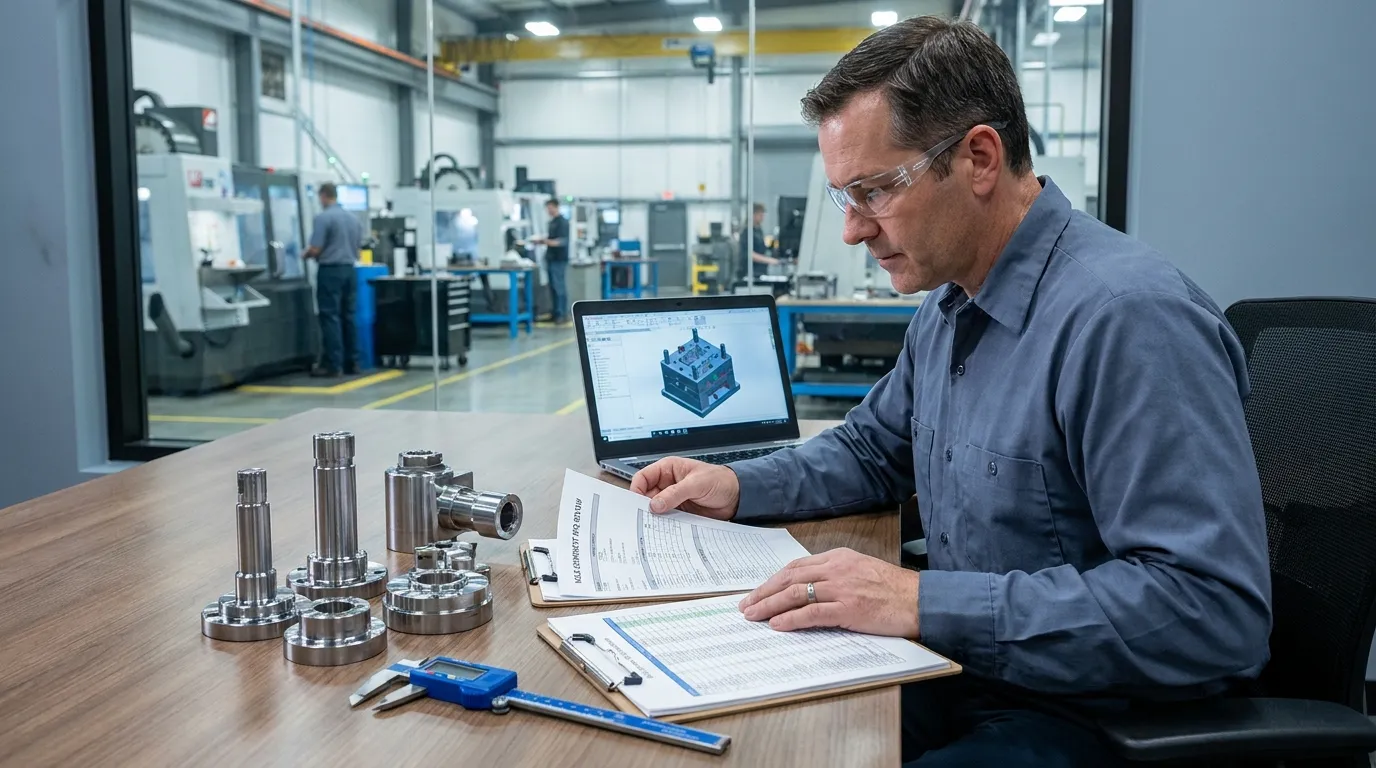
Before sending an RFQ for mold components, buyers should confirm tolerances, Grau de aço, Dureza, Revestimentos, delivery lead time, Normas de inspeção, and replacement availability. Missing specifications often cause fit problems and production delays.
Many RFQ problems start with incomplete technical details. Suppliers may quote different materials, Tolerâncias, or coatings if specifications are unclear. That makes pricing difficult to compare accurately.
A procurement team comparing two RFQs may discover one supplier omitted hardness specifications entirely. The lower quote can look attractive at first, but the long-term wear risk may be much higher.
Lista de Verificação de RFQ para Compradores
| Item a confirmar | Por que isso importa |
|---|---|
| Classificação do Material | Afeta a resistência ao desgaste |
| Faixa de Dureza | Impactos Vida útil |
| Requisitos de Tolerância | Previne problemas de ajuste |
| Acabamento de Superfície | Suporta movimento suave |
| Tipo de revestimento | Reduz atrito e desgaste |
| Padrão de Inspeção | Confirma a precisão dimensional |
| MOQ | Impacta a flexibilidade de compra |
| Prazo de Entrega | Ajuda no planejamento de produção |
| Disponibilidade de Substituição | Reduz o risco de tempo de inatividade |
Detalhes de RFQ que os fornecedores precisam
Most suppliers need clear drawings, production volume estimates, resin information, and dimensional tolerances before quoting accurately. Surface finish requirements and expected mold life should also be included early.
Factories ordering overseas should ask about inventory availability before approving production. Long machining queues or material shortages can extend delivery schedules significantly.
If you're comparing overseas manufacturing partners, working with a Fornecedor de componentes de moldes personalizados that provides engineering support and inspection documentation can reduce sourcing risk.
How do lead times and customs delays affect mold component sourcing?
Lead times for mold components depend on machining complexity, inventory availability, and international shipping processes. Incorrect documentation or HS codes can delay customs clearance and disrupt mold maintenance schedules.
Production delays often come from logistics issues rather than machining itself. Custom parts usually require longer manufacturing windows, while stock components can ship quickly if inventory is available.
Industry estimates from Aprios show complex injection mold tooling can require lead times of several weeks, especially when multiple machining operations and heat treatment processes are involved.
A shipment of replacement mold accessories may also get delayed during customs clearance if HS codes or paperwork are incomplete. One overseas buyer experienced maintenance downtime after guide bushings were held for classification review during import processing.
Lista de Verificação de Obtenção de Componentes de Mofo
- Verifique o status do estoque antes de fazer o pedido
- Confirmar a precisão do código HS
- Revise os requisitos de documentação alfandegária
- Manter estoque reserva para componentes de desgaste
- Solicite prazos estimados de envio antecipadamente
- Cronomes de substituição de planos antes que ocorram falhas
Factories running high-volume production lines often keep spare ejector pins, Buchas, and springs on-site. Waiting for emergency overseas shipments can stop production for days.
How do you evaluate a mold component supplier?
A reliable mold component supplier should provide consistent tolerances, clear material specifications, stable lead times, and responsive technical support. Buyers should evaluate long-term reliability instead of comparing price alone.
Strong suppliers usually maintain quality control systems and provide dimensional inspection records. They should also explain steel grades, heat treatment methods, and coating options clearly during quotation discussions.
Tabela de Avaliação de Fornecedores
| Área de Avaliação | O que verificar |
|---|---|
| Controle de Qualidade | Inspection reports, measurement process |
| Verificação de Materiais | Steel certifications, hardness data |
| Capacidade de Usinagem | Faixa de tolerância de precisão |
| Profundidade do Estoque | Disponibilidade de peças padrão |
| Estabilidade no Tempo de Entrega | Estimativas realistas de entrega |
| Suporte de Engenharia | Esclarecimento de RFQ e aconselhamento técnico |
| Suporte à Substituição | Disponibilidade de componentes sobressalentes |
Suppliers serving automotive or electronics production often maintain stricter tolerance consistency because those industries depend on repeatability. Buyers working with complex molds should ask how dimensional deviations are handled during inspection.
For examples of how component choices vary across industries, Revise estes Aplicações em moldes de injeção.
Acertando o Próximo Passo
Choosing the right mold components is not only about matching dimensions on a drawing. Material quality, Planejamento de substituição, prazos de antecedência, and supplier consistency all affect long-term production performance.
Start by identifying which components experience the most wear in your molds. Then compare suppliers based on technical capability, inventory support, and inspection standards instead of price alone. A well-planned RFQ usually prevents more problems than it creates.
If your production depends on stable cycle times and reliable maintenance scheduling, investing in higher-quality mold components often saves money over the full life of the tool.
Perguntas Frequentes
Quais são as principais partes de um molde de injeção?
The main parts of an injection mold include the mold base, cavidade, Núcleo, Sistema de resfriamento, feed system, and ejection system. Each section supports molding accuracy, Lançamento parcial, and cycle efficiency.
What does an ejector pin do?
An ejector pin pushes the molded plastic part out of the cavity after cooling. Poor ejector pin quality can cause sticking, arranhões, or inconsistent ejection during production.
What materials are mold components made from?
Most mold components are made from hardened tool steel, Aço inoxidável, or wear-resistant alloy steel. Material choice depends on production volume, Abrasividade da resina, Exposição à corrosão, e tolerâncias exigidas.
How long do mold components last?
Mold component lifespan depends on material quality, Manutenção, molding pressure, and production cycles. High-wear parts like ejector pins and bushings usually require replacement more often than mold bases.
What causes mold component failure?
Mold components commonly fail because of friction, Lubrificação ruim, incorrect hardness, corrosion, ou problemas de alinhamento. Using low-grade materials or incorrect tolerances also increases premature wear risk.
Should I choose standard or custom mold components?
Standard components are easier to replace and usually cost less, while custom components support specialized mold geometry or tighter tolerances. The best choice depends on mold complexity and production goals.
Compartilhe:


Escrito por Sunshine
Em Sol, Somos um fabricante e fornecedor profissional de componentes de moldes de precisão, oferecendo uma ampla variedade de produtos para aplicações de estampagem e molde por injeção. Nosso foco principal inclui a formação de matrizes, pinos e mangas ejetor, e postes guia e buchas. Com usinagem CNC avançada, Controle rigoroso de qualidade, e fortes capacidades de produção, Garantimos confiabilidade, Peças de alta precisão, juntamente com componentes padrão em estoque para fornecimento global rápido e eficiente.
NOTÍCIAS
RECEBA O SERVIÇO
Com peças de qualidade para todos os orçamentos e equipe amigável treinada para tornar sua visita informativa e sem complicações.
