



Medical Device Plastic Injection Molding: Design Tips for Molded Parts
Medical device plastic injection molding works best when part design decisions happen before tooling starts. Engineers should focus on wall thickness, Ângulos de Draft, Compatibilidade de esterilização, Tolerâncias, and moldability early in development. Small geometry changes can prevent tooling revisions, validation delays, production defects, and unnecessary manufacturing costs later in the process.
Medical molded parts have far less room for design mistakes than consumer products. A feature that looks acceptable in CAD can still create warping, Flash, sterilization failures, or tooling delays once production begins. This guide focuses on practical design decisions before mold manufacturing starts, so engineering teams can reduce risk and move into validation with fewer surprises.
What makes medical device plastic injection molding design different?

Medical device plastic injection molding requires stricter design control than standard consumer molding because geometry, Escolha de materiais, Compatibilidade de esterilização, and validation requirements directly affect safety, compliance, e fabricabilidade.
Medical products must meet tighter quality expectations than most commercial plastic parts. A small dimensional issue can affect assembly, sterility, fluid flow, or patient safety. That changes how engineers approach geometry, Tolerâncias, and material selection from the beginning.
The regulatory side also affects design decisions. O Estrutura de dispositivos médicos da FDA e sistemas de qualidade como ISO 13485 increase the importance of process consistency and documentation. Molded parts need repeatable performance, not just successful prototypes.
Medical parts also face sterilization exposure that consumer products rarely encounter. Steam, radiation, or chemical sterilization can weaken plastics, distort geometry, or shorten product lifespan if the wrong resin is selected.
| Peça plástica para consumidores | Peça Médica Moldada |
|---|---|
| Foco em qualidade cosmética | Validação e segurança focadas |
| Expectativas de tolerância moderadas | Consistência dimensional apertada |
| Requisitos de documentação mais baixos | Documentação rigorosa do processo |
| Exposição limitada à esterilização | Exposição repetida à esterilização |
| Mudanças de design mais rápidas | Revisões de engenharia controlada |
If your team still needs broader tooling knowledge, Sunshine Pro Guia completo de componentes de molde explains the larger injection mold engineering process in more detail.
Você também pode analisar o mais amplo Processo de moldagem de dispositivos médicos before finalizing tooling decisions.
How do you know if a medical part is actually moldable?
A medical plastic part is considered moldable when its geometry supports consistent filling, Ejeção, Estabilidade dimensional, and validation without requiring excessive tooling complexity or repeated secondary operations.
Many medical parts fail during tooling because the original CAD model was designed around appearance or assembly first, then manufacturability second. A design can look clean on screen but still create sink marks, Chutes curtos, or difficult ejection once production begins.
The easiest way to evaluate moldability is to review geometry before tooling approval. Engineers should check wall transitions, undercuts, Ângulos de Draft, gate placement, and cooling behavior early. Small adjustments during DFM review are far cheaper than modifying hardened tooling later.
Recursos que comumente criam problemas de ferramentas
Several features increase mold complexity quickly:
- Undercuts profundos que exigem ações laterais
- Cantos internos agudos
- Transições súbitas da espessura da parede
- Superfícies planas sem tiragem de ar
- Nervuras finas presas a paredes grossas
- Superfícies cosméticas escondendo as localizações dos portões
A reusable surgical handle is a common example. The prototype may look correct during 3D printing, but once injection molding begins, missing draft angles can create ejection damage and surface drag marks. That often forces expensive tooling revisions after steel cutting has already started.
Complex undercuts and cosmetic geometry are not always the best choice for medical products. They may look acceptable in CAD, but they frequently increase tooling risk without improving device performance.
| Verificação de Moldabilidade | Por que isso importa |
|---|---|
| Espessura uniforme da parede | Reduz empenamento e marcas de afundamento |
| Ângulo de tiragem adequado | Suporta ejeção suave |
| Undercuts limitados | Reduz a complexidade das ferramentas |
| Linha de separação de estábulo | Melhora a repetibilidade dimensional |
| Localização do portão acessível | Melhora a consistência do preenchimento |
For a broader overview of tooling structure, review these Fundamentos do molde de injeção before finalizing production tooling.
Which medical-grade plastics work best for molded parts?
The best plastic depends on the device’s sterilization method, durability requirements, chemical exposure, and regulatory needs. Policarbonato, polipropileno, Polietileno, and PEEK are among the most common medical injection molding materials.
No single resin works for every medical application. Some plastics handle repeated sterilization well but cost more. Others reduce material cost but struggle with dimensional stability or long-term chemical exposure.
A disposable diagnostic housing, por exemplo, may use polypropylene because it balances chemical resistance and cost. A reusable surgical component may need PEEK or polycarbonate to survive repeated sterilization cycles and mechanical stress.
A successful prototype does not automatically mean the design is production-ready. Some materials perform well during testing but lose strength or discolor after repeated sterilization exposure.
| Material | Melhor Uso | Compatibilidade de Esterilização | Limitação Principal |
|---|---|---|---|
| Polipropileno (PP) | Dispositivos descartáveis | Bom | Menor rigidez |
| Policarbonato (PC) | Alojamentos cirúrgicos | Bom | Risco de trinca por tensão |
| Polietileno (OU) | Sistemas de tubulação e fluidos | Moderado | Menor resistência ao calor |
| ESPIAR | Dispositivos de alto desempenho | Excelente | Custo mais alto |
| PVC | Peças médicas flexíveis | Moderado | Restrições regulatórias |
Material selection should also match manufacturing conditions. Clean room molding, chemical exposure, and long production runs all affect resin performance over time.
For more production context, Guia do Sunshine Pro para Materiais de moldagem médica explains how different medical plastics behave during manufacturing.
How do sterilization requirements change part design?
Sterilization requirements directly affect resin selection, Espessura da parede, e estabilidade dimensional de longo prazo. A part that survives prototyping may still fail after repeated steam, radiation, or chemical sterilization cycles.
Sterilization affects more than material strength. It can change color stability, Acabamento superficial, Flexibilidade, and dimensional accuracy over time. Engineers should evaluate sterilization early instead of treating it as a final production step.
Steam sterilization creates high heat exposure. Gamma radiation can weaken certain plastics. Chemical sterilization may create stress cracking in materials that already carry internal molding stress.
A disposable diagnostic housing offers a good example. One design used uneven wall thickness near a mounting feature. The part molded correctly during testing but warped after gamma sterilization because cooling behavior and shrinkage were inconsistent across the geometry.
| Método de Esterilização | Preocupação com o projeto | Foco Recomendado |
|---|---|---|
| Esterilização a vapor | Distorção térmica | Materiais resistentes ao calor |
| Radiação gama | Fragilidade do material | Resina radiativamente estável |
| Esterilização química | Trinca por tensão | Compatibilidade química |
| Esterilização por EtO | Ventilação e resíduos | Acessibilidade geométrica |
Engineers should also avoid late-stage sterilization changes. Switching sterilization methods after tooling approval often creates expensive redesign work.
What wall thickness and draft angle rules reduce molding problems?
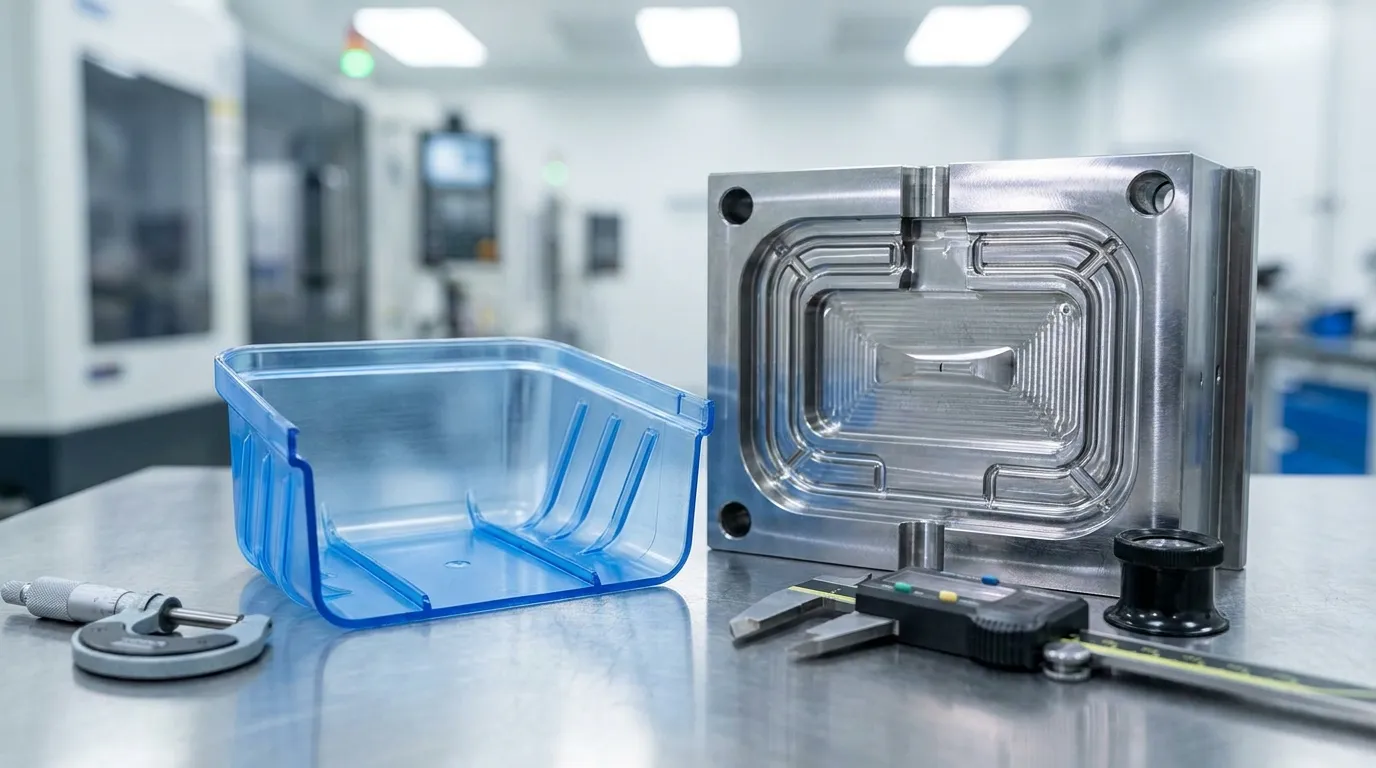
Consistent wall thickness and proper draft angles reduce warping, Marcas de afundamento, Flash, and ejection damage. Small geometry changes early in design often prevent expensive tooling modifications later.
Wall thickness controls how plastic cools and shrinks inside the mold. Large thickness differences create uneven cooling, which often leads to warping, Marcas de afundamento, ou variação dimensional.
Draft angles help the part release from the mold cleanly. Without enough draft, molded parts can drag across steel surfaces during ejection. That damages cosmetic finishes and increases cycle instability.
Erros comuns de geometria em peças médicas
- Bosses grossos conectados a paredes finas
- Superfícies estéticas de tiragem zero
- Cantos internos agudos
- Costelas profundas sem suporte adequado
- Transições abruptas de espessura da parede
A catheter component redesign showed how small geometry changes can improve manufacturability. The original design used deep side actions and tight corner transitions. After simplifying the geometry and improving draft angles, the manufacturer reduced tooling lead time and improved molding consistency.
| Regra de Geometria | Prática Recomendada |
|---|---|
| Espessura da parede | Mantenha a uniformidade possível |
| Ângulo de rascunho | Adicionar corrente de ar em todas as faces verticais |
| Raio de canto | Use transições suaves |
| Espessura das nervuras | Mantenha a parede mais fina que a parede adjacente |
| Design do chefe | Evite acúmulo de material grosso |
If you need deeper tooling context, Guia do Sunshine Pro para Design dos componentes do molde explains how part geometry affects mold performance.
How tight should tolerances really be for medical molded parts?
Not every medical molded feature requires ultra-tight tolerances. Over-constraining dimensions increases tooling complexity, inspection costs, and production risk without always improving device performance.
Many engineering teams apply tight tolerances across entire parts instead of focusing on critical dimensions. That approach increases tooling cost and slows production without adding functional value.
Critical dimensions should receive tighter control because they affect assembly, sealing, fluid flow, or patient safety. Cosmetic or non-functional features usually do not need the same tolerance level.
A reusable medical enclosure showed this clearly during production planning. The original drawing specified ±0.02 mm tolerances across several non-critical features. The tighter limits increased tooling complexity and inspection time but did not improve product function. Relaxing those dimensions simplified manufacturing and reduced production risk.
Tighter tolerances are not always safer in medical molding. Excessive dimensional restrictions can actually increase molding instability by narrowing acceptable processing windows.
| Tipo de Característica | Estratégia de Tolerância Recomendada |
|---|---|
| Superfícies de vedação | Controle rigoroso |
| Interfaces de montagem | De moderado a apertado |
| Características cosméticas | Controle moderado |
| Superfícies não funcionais | Tolerância padrão de moldagem |
| Seções finas e flexíveis | Revisão dependente do material |
Material shrinkage also matters. Polipropileno, Policarbonato, and PEEK behave differently during cooling. Tolerance decisions should match actual molding behavior instead of CAD assumptions.
Long production runs can also create dimensional wear inside tooling. Guia do Sunshine Pro para Controle preciso de desgaste de moldes explains how mold wear affects long-term consistency.
Which design mistakes cause molding defects in medical parts?
Many medical molding defects begin with avoidable design decisions. Uneven walls, Cantos afiados, Colocação ruim dos portões, and unrealistic tolerances often create quality problems before production even begins.
Defects are often blamed on processing conditions, but part geometry usually creates the root problem. Poor cooling balance, difficult filling paths, and unstable ejection commonly trace back to early design decisions.
Medical parts are especially sensitive because validation requirements leave less room for process variation. A geometry problem that might be acceptable in consumer molding can become a major quality issue in regulated production.
| Defeito | Causa comum de projeto |
|---|---|
| Marcas de afundamento | Seções grossas de parede |
| Deformação | Resfriamento desigual |
| Flash | Geometria de desligamento ruim |
| Planos curtos | Caminhos de fluxo finos |
| Linhas de solda | Má colocação dos portões |
A medical startup experienced a validation delay after selecting material late in the tooling process. The original mold design worked for one resin family but created filling instability after the material switch. That forced redesign work during validation instead of before tooling approval.
Tool durability matters as well. Repeated molding stress, abrasive resins, and tight shutoffs increase wear over time. Guia do Sunshine Pro para Fatores de durabilidade do molde explains how tooling performance affects long-term molding stability.
What should engineers confirm before medical mold manufacturing starts?
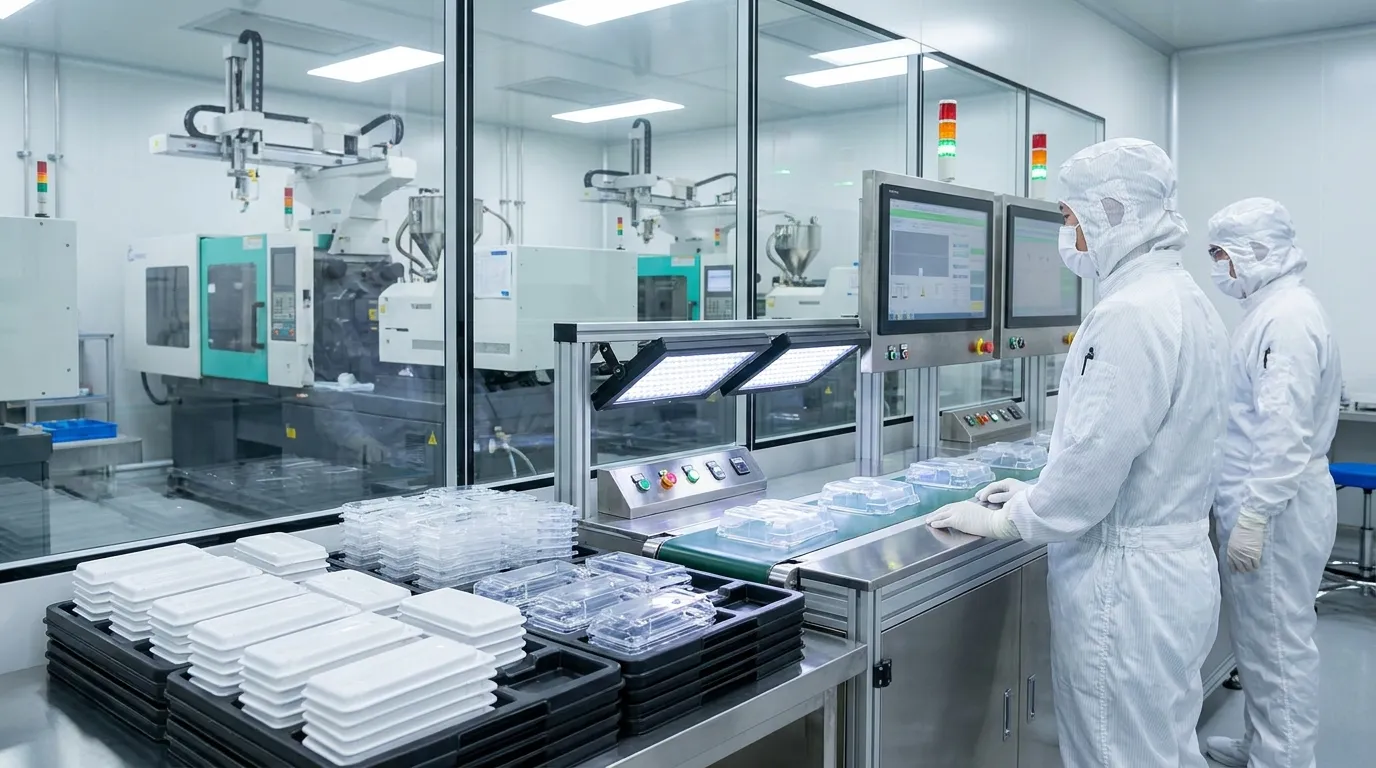
Teams should finalize manufacturability decisions before steel cutting begins. Once tooling enters production, even small design changes can increase lead times, validation work, e custo de ferramenta.
The most important step is aligning product engineering, Ferramentas, and manufacturing requirements before approvals are signed. Seleção de materiais, sterilization strategy, gate placement, and tolerance expectations should all be reviewed together.
Lista de Verificação de Moldabilidade de Peças Médicas
| Item de Revisão Pré-Ferramenta | Verificação de Status |
|---|---|
| Geometria CAD finalizada | □ |
| Ângulos de rascunho confirmados | □ |
| Espessura uniforme da parede revisada | □ |
| Método de esterilização aprovado | □ |
| Seleção da resina finalizada | □ |
| Estratégia de tolerância revisada | □ |
| Localização do portão avaliada | □ |
| Requisitos de validação documentados | □ |
| Linha de despedida aprovada | □ |
| Revisão do DFM concluída | □ |
Informações que seu fabricante de molde precisa antes da aprovação da ferramenta
Before tooling starts, provide:
- Arquivos CAD finais
- Especificação do material
- Requisitos de esterilização
- Volume de produção esperado
- Requisitos cosméticos de superfície
- Expectativas de validação
- Dimensões críticas e tolerâncias
Late-stage changes create some of the biggest delays in medical injection molding projects. A material revision or geometry update after tool steel is cut can add weeks to the production schedule.
Equipes que se preparam para a produção podem avaliar os Sunshine Pro Preparação de ferramentas médicas process to better align engineering and manufacturing expectations.
O que fazer a seguir
Medical device plastic injection molding works best when manufacturability drives design decisions from the start. Small geometry adjustments, realistic tolerances, and early sterilization planning can prevent expensive tooling changes later.
Before approving a mold build, review the part from both an engineering and production perspective. Ask whether every feature truly improves function, or simply increases tooling complexity. A cleaner, more stable design usually shortens validation time and improves long-term production consistency.
If your team is still evaluating tooling strategy, Seleção de materiais, or mold engineering details, use the broader injection mold guides from Sunshine Pro to support the next phase of development.
Perguntas Frequentes
What plastics are commonly used in medical injection molding?
Policarbonato, polipropileno, Polietileno, ESPIAR, and PVC are commonly used in medical injection molding because they offer different balances of durability, Resistência química, Compatibilidade de esterilização, and biocompatibility. The best option depends on the device application and regulatory requirements.
How long does it take to make a medical injection mold?
Production mold timelines commonly range from eight to twenty weeks depending on part complexity, Requisitos de validação, Contagem de cáries, and tooling revisions. Design changes during tooling development often create the biggest delays.
Why is DFM important in medical injection molding?
DFM helps engineers identify geometry, Tolerância, and tooling risks before manufacturing begins. Early DFM review reduces mold revisions, production defects, and validation delays.
Can sterilization damage injection molded medical parts?
Sim. Some plastics lose strength, discolor, warp, or crack after repeated steam, radiation, or chemical sterilization exposure. Material selection and wall design should account for sterilization early in development.
What causes warping in medical molded parts?
Warping is commonly caused by uneven wall thickness, poor cooling balance, sharp geometry transitions, or material shrinkage variation. Consistent geometry usually improves dimensional stability.
Are tighter tolerances always better for medical parts?
Não. Excessively tight tolerances increase tooling complexity, inspection costs, and molding instability. Critical dimensions should receive tighter control while non-critical features should remain manufacturable.
Compartilhar:


Escrito por Sunshine
Em Sol, Somos um fabricante e fornecedor profissional de componentes de moldes de precisão, oferecendo uma ampla variedade de produtos para aplicações de estampagem e molde por injeção. Nosso foco principal inclui a formação de matrizes, pinos e mangas ejetor, e postes guia e buchas. Com usinagem CNC avançada, Controle rigoroso de qualidade, e fortes capacidades de produção, Garantimos confiabilidade, Peças de alta precisão, juntamente com componentes padrão em estoque para fornecimento global rápido e eficiente.
NOTÍCIAS
RECEBA O SERVIÇO
Com peças de qualidade para todos os orçamentos e equipe amigável treinada para tornar sua visita informativa e sem complicações.
