



Processo de Molde por Injeção: Guia Passo a Passo do Design à Produção
Injection mold process describes the complete workflow used to design, manufacture, test, and mass-produce plastic parts using injection molding tools. The process includes DFM review, Design de moldes, Usinagem, Testes de mofo, Amostragem, quality validation, and production ramp-up. Stable production depends on accurate tooling, controlled process parameters, and early defect prevention before full manufacturing begins.
Injection molding projects rarely fail because of one major issue. Most problems start with small design mistakes, rushed tooling decisions, or unstable sampling results. Understanding the full process helps buyers avoid delays, reduce tooling revisions, and improve production consistency. This guide explains each stage clearly, from early DFM review to final production approval.
What Is the Injection Mold Process?
Injection mold process refers to the complete workflow of designing, building, Testes, and using a mold to mass-produce plastic parts. The process includes DFM review, mold manufacturing, Amostragem, quality approval, and stable production ramp-up.
The process starts long before molten plastic enters a mold cavity. Manufacturers first review the product design, evaluate moldability, and identify production risks. This early planning stage has a major effect on tooling quality, Estabilidade do ciclo, e custo de produção de longo prazo.
Uma vez aprovado o projeto, the mold moves through machining, Ajuste, Polimento, and assembly. Após a conclusão das ferramentas, manufacturers perform mold trials and sample inspections before releasing the tool for production. De acordo com o Visão geral da moldagem por injeção do Diretório IQS, injection molding remains one of the most common manufacturing methods for high-volume plastic parts.
If you're new to tooling fundamentals, isso Guia de molde de injeção plástica gives broader background on mold structures and manufacturing systems. Você também pode revisar Fundamentos do design de moldes plásticos to understand how product geometry affects tooling decisions.
How Does the Injection Mold Process Work Step by Step?
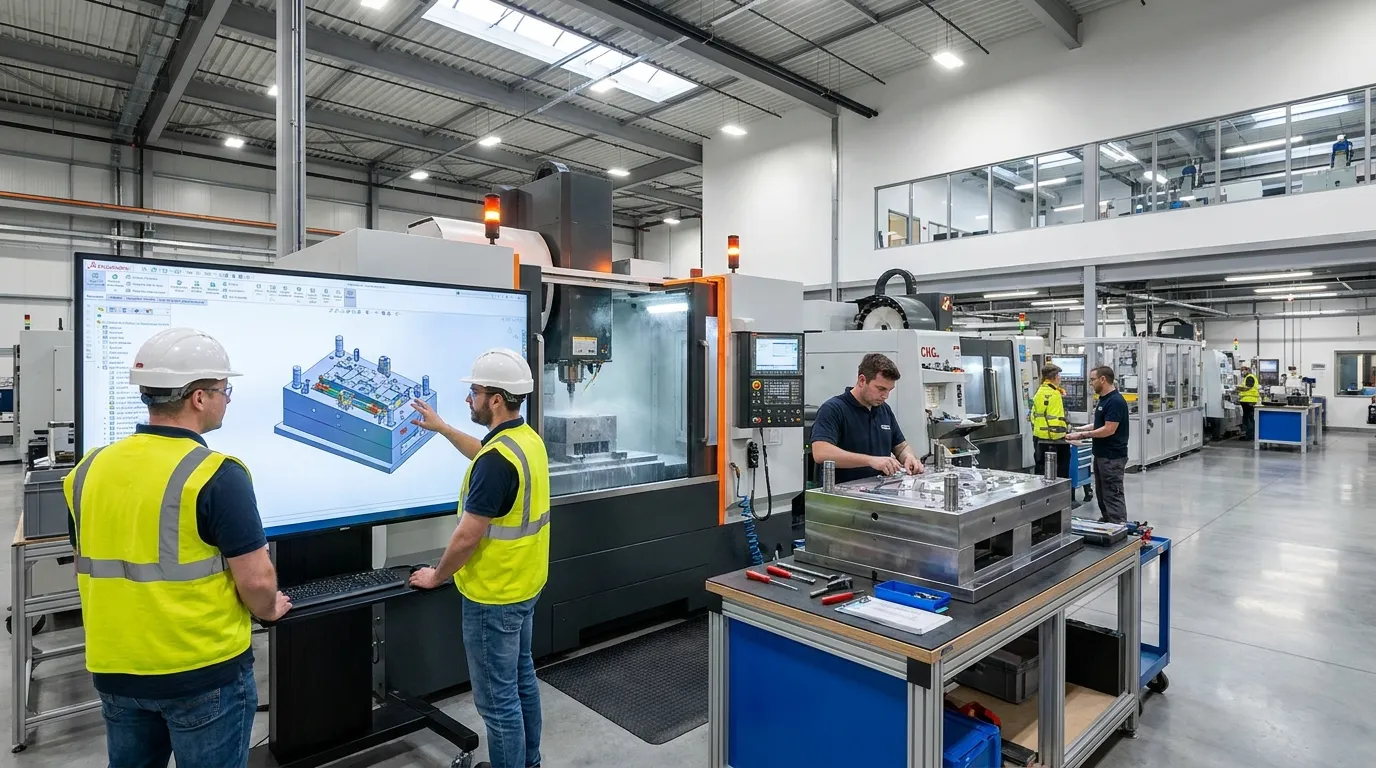
The injection mold process starts with design review and DFM analysis, followed by mold design, Usinagem, Montagem, Amostragem, Testes, e aprovação final da produção. Stable mass production begins only after part quality and cycle consistency are confirmed.
Most injection molding projects follow the same core sequence. The exact timeline changes based on complexity, tooling size, e requisitos de produção, but the overall workflow stays similar across industries.
| Palco | Objetivo principal | Saída Comum |
|---|---|---|
| Análise do DFM | Identificar riscos de mofagem | Recomendações de design |
| Design de moldes | Criar layout de ferramentas | Arquivos de molde 3D |
| Fabricação de ferramentas | Construa o molde | Componentes de molde usinado |
| Julgamento de mofo | Desempenho do molde de teste | Peças de amostra T1 |
| Validação | Confirme a consistência da qualidade | Amostras aprovadas |
| Aumento da produção | Estabilizar a fabricação | Produção total |
Revisão de projeto e DFM
The first stage focuses on manufacturability. DFM, or Design for Manufacturing, checks whether the part can be molded consistently without excessive defects or tooling risk. Engenheiros revisam a espessura da parede, Ângulos de Draft, Undercuts, Localizações dos portões, and material flow before steel cutting begins.
Uma carcaça de eletrônicos de consumo é um exemplo comum. If the housing wall thickness changes late in the project, the mold may require additional machining after sampling. That adds cost and delays production approval. Early DFM prevents many of these problems before tooling starts.
For a deeper breakdown of design optimization, review this guide on Processo de moldagem por injeção DFM.
Fabricação de moldes
After DFM approval, mold manufacturing begins. Toolmakers machine steel blocks using CNC equipment and EDM processes to create cavities, cores, and detailed part geometry. Canais de resfriamento, Sistemas ejetores, and alignment features are added during this stage.
Fast tooling is not always the best option. Rushed DFM review often creates larger delays later when mold corrections become necessary. A slightly longer design review usually saves time during sampling and production.
Amostragem e aprovação de produção
Once tooling is assembled, manufacturers perform mold trials to evaluate part quality and machine stability. The first sample run is often called T1 sampling. Engineers inspect dimensions, Qualidade cosmética, encolhimento, and molding consistency.
Mass production does not start immediately after T1 approval. Most projects require process adjustments and repeat testing before production becomes stable. This stage determines whether the mold can reliably support long-term manufacturing.
Why Is DFM Review Important Before Mold Manufacturing?
DFM review helps manufacturers identify molding risks before tooling begins. Early analysis reduces defects, prevents expensive steel modifications, and improves production consistency after sampling starts.
DFM review is one of the most important stages in the injection molding workflow. Uma vez que o corte de aço começa, design changes become expensive and time-consuming. A simple geometry issue can require additional machining, insert replacement, or another round of mold trials.
De acordo com Guia de moldabilidade da Protolabs, Consistência da espessura da parede, draft angle design, and material flow all affect molding success. These factors also influence cooling time, part warpage, and cycle stability.
- Cantos agudos que criam pontos de tensão
- Ângulos de calado insuficientes para ejeção de peças
- Espessura desigual da parede causando marcas de afundamento
- Colocação inadequada das portas afetando o fluxo de materiais
- Tolerâncias apertadas que aumentam a complexidade das ferramentas
A draft-angle correction is a good real-world example. A part may look acceptable in CAD, but without proper draft, the component sticks during ejection. Fixing that problem before machining prevents costly steel modifications later.
Low mold pricing can look attractive initially, but poor sampling stability usually increases long-term production cost and quality risk. Experienced suppliers spend more time reviewing manufacturability because stable production matters more than fast quoting.
Você pode aprender mais sobre otimização de design e Requisitos de design de moldes before tooling approval.
What Happens During Injection Mold Manufacturing?
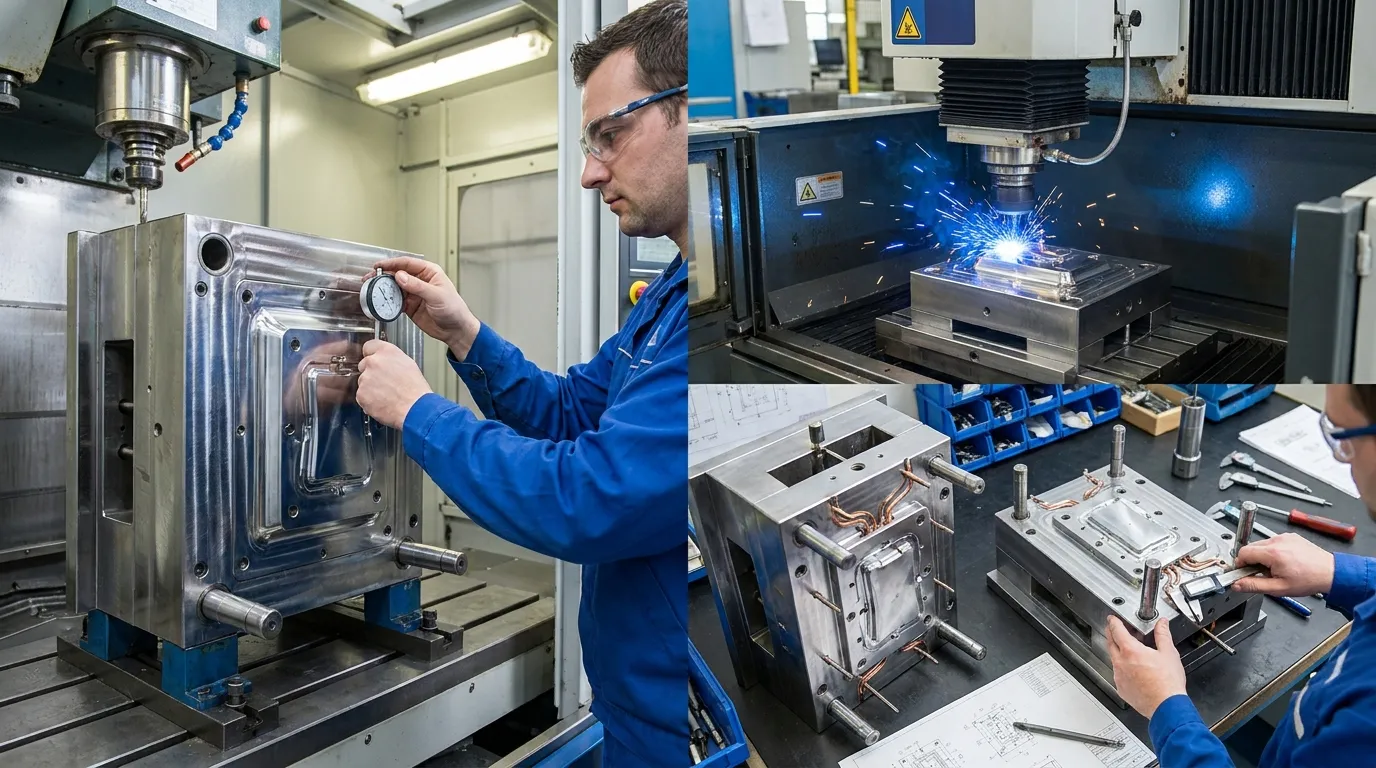
Injection mold manufacturing combines CNC machining, Processamento EDM, Polimento, Ajuste, and assembly to produce a mold capable of repeatable production. Accuracy during this stage directly affects part quality, Tempo do ciclo, e vida útil do molde.
Tool manufacturing transforms engineering files into a functional production mold. Most molds are built from hardened steel or aluminum, depending on expected production volume and part complexity.
Usinagem e EDM
CNC machining removes large sections of steel and creates the primary mold structure. EDM, or Electrical Discharge Machining, handles finer details and sharp internal features that traditional machining cannot easily produce.
Complex automotive trim components often require both machining methods. Tight cosmetic surfaces, snap-fit details, and textured areas usually need additional EDM processing before polishing begins.
| Etapa de Fabricação | Propósito |
|---|---|
| Usinagem CNC | Criar estrutura de molde |
| Processamento EDM | Produzir geometria detalhada |
| Moagem | Melhorar superfícies de precisão |
| Polimento | Melhorar o acabamento superficial |
| Ajuste | Alinhar os componentes do molde |
| Assembleia | Sistema de molde final para construção |
Ajuste e polimento de moldes
Após a usinagem, technicians fit all mold components together and check alignment accuracy. Cooling systems, pinos ejetores, Sliders, and guide components are installed during assembly. Surface polishing then improves cosmetic appearance and material flow.
A medical device enclosure is a good example. During sampling, cosmetic defects may appear near visible surfaces. Additional polishing is often required before final approval. De acordo com Pesquisa sobre processos de polimento em moldes, surface finishing has a direct impact on molded part quality.
Manufacturers also verify mold movement and sealing during this stage. Poor alignment can cause flash defects, Variação dimensional, or premature tool wear during production.
For additional tooling details, isso Guia de Ferramentas para Moldes de Injeção explains how mold systems are structured.
What Happens During Mold Trial and Sampling?
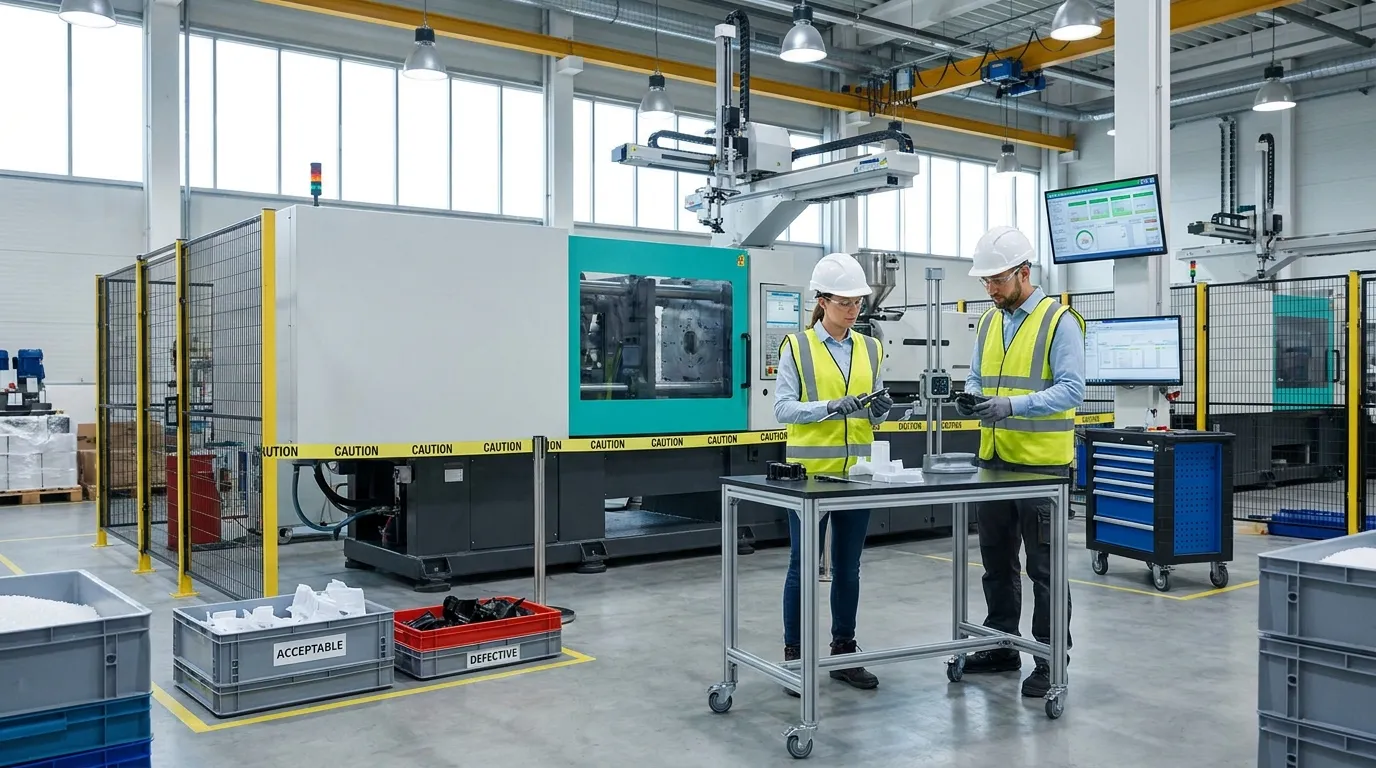
Mold trial and sampling verify whether the tool can consistently produce acceptable parts. Manufacturers evaluate dimensions, Defeitos, encolhimento, and cycle stability before approving the mold for production.
Sampling is the point where theoretical design becomes real production output. The first mold trial checks whether the mold performs correctly under production conditions. Engineers monitor filling balance, Comportamento de resfriamento, Precisão dimensional, e qualidade cosmética.
T1 samples often reveal issues that were not visible during design review. Common problems include warpage, Marcas de afundamento, Chutes curtos, Flash, or uneven shrinkage. Manufacturers then adjust process settings or modify tooling before running another trial.
Defeitos comuns encontrados durante a amostragem
| Defeito | Causa Típica | Solução Comum |
|---|---|---|
| Marcas de afundamento | Seções grossas de parede | Ajuste do design das paredes |
| Flash | Vedação ruim do mofo | Melhorar o ajuste |
| Warpage | Resfriamento desigual | Modificar o layout de resfriamento |
| Cena curta | Fluxo de material ruim | Ajustar a localização do portão |
| Marcas de queimadura | Ar aprisionado | Melhorar a ventilação |
A production ramp-up scenario shows why this stage matters. One manufacturer completed tooling on schedule, but unstable cycle times caused inconsistent dimensions during sampling. The project needed additional process tuning before production approval could move forward.
Many buyers focus too heavily on mold completion dates, but production stability after sampling is what actually determines project success. A mold that ships quickly but fails during validation usually creates larger delays later.
Manufacturers also use this stage to verify customer specifications and inspection requirements. Isso Validação de molde de injeção resource explains how design decisions influence final part quality.
How Does Mass Production Start After Sampling?
Mass production starts after sampling results are approved and process parameters become stable. Manufacturers monitor cycle time, Taxas de defeitos, and dimensional consistency before scaling to full production volume.
Production ramp-up focuses on consistency. Engineers lock machine parameters, validate repeatability, and monitor output quality before increasing manufacturing volume. This stage confirms that the process works reliably outside controlled trial conditions.
De acordo com Guia de desenvolvimento de processos de Kaysun, stable processing conditions help reduce variability and improve long-term manufacturing performance. Small changes in temperature, Pressão, or cooling time can significantly affect part quality.
- Tempo de ciclo estável
- Dimensões consistentes
- Taxas controladas de defeitos
- Verificação de desempenho de materiais
- Configurações de máquina repetíveis
An unstable process can delay mass production even when tooling is technically complete. One automotive project passed dimensional inspection during T1 trials, but cycle instability created inconsistent shrinkage during extended production runs. Additional process tuning delayed launch approval.
É aqui que Design de molde pronto para produção becomes important. Strong DFM planning makes production stabilization much easier after sampling.
What Delays Commonly Affect Injection Mold Projects?
Injection mold projects are commonly delayed by design revisions, Correções de ferramentas, material shortages, and international shipping issues. Delays often happen after steel cutting because modifications require additional machining and validation.
Most mold projects do not fail because of one major event. Delays usually build from multiple smaller issues across design, Ferramentas, Amostragem, and logistics.
| Causa do atraso | Quando acontece | Impacto | Método de Prevenção |
|---|---|---|---|
| Revisões tardias de projeto | Antes ou depois da ferramentagem | Usinagem adicional | Revisão completa do DFM cedo |
| Defeitos de amostragem | Durante os testes de T1 | Testes repetidos | Valide as ferramentas cuidadosamente |
| Escassez de materiais | Preparação para produção | Agendamento atrasado | Confirme a cadeia de suprimentos cedo |
| Atrasos na alfândega | Transporte internacional | Entrega tardia | Prepare a documentação com antecedência |
| Instabilidade de ciclos | Aumento da produção | Aprovação tardia | Otimizar as configurações do processo |
International logistics can also affect mold timelines. An automotive trim component shipped overseas may face inspection delays if customs documentation is incomplete. Information from CBP e Trade.gov shows that import processing and trade documentation can influence shipment timing.
Buyers should also understand that mold modifications after steel cutting are rarely quick fixes. Even small changes can require additional machining, Polimento, Ajuste, and repeat sampling before approval.
How Can Buyers Reduce Risk Before Starting an Injection Mold Project?
Reducing injection molding risk starts with preparation. Buyers who clarify specifications early usually avoid expensive tooling changes later. Good communication during DFM and sampling stages also improves project stability.
A strong supplier should explain process risks clearly before production starts. If the supplier avoids discussing DFM limitations, tolerance concerns, or sampling expectations, that is usually a warning sign.
- Confirme a revisão do DFM antes de cortar aço
- Revise a espessura da parede e os ângulos de rascunho
- Defina os requisitos de qualidade cosmética desde cedo
- Esclarecer as expectativas de aprovação de amostras
- Planeje prazos realistas para revisões
- Verifique a disponibilidade de materiais antes da produção
- Confirmar os padrões de inspeção e validação
A practical example is a consumer electronics enclosure with cosmetic surface requirements. If the customer approves tooling before discussing polishing standards, additional rework may appear during T1 sampling. That creates extra delays and additional cost.
Isso Lista de Verificação para Planejamento de Moldes de Injeção can help buyers organize design and production expectations before tooling approval.
O que fazer a seguir
The injection mold process works best when design review, Ferramentas, Amostragem, and production planning are treated as one connected workflow. Problems caught early are usually manageable. Problems discovered after tooling or during unstable production often become expensive and time-consuming.
Before starting a new project, review manufacturability carefully and confirm how your supplier handles DFM, Testes de mofo, and production validation. Stable production matters more than fast tooling completion. A supplier with strong process control can reduce defects, improve delivery consistency, and help avoid unnecessary mold revisions later in the project lifecycle.
Perguntas Frequentes
What is the injection mold process?
The injection mold process is the workflow used to design, manufacture, test, and use molds for producing plastic parts. It includes DFM review, Ferramentas, Testes de mofo, quality validation, and mass production preparation.
How long does injection mold manufacturing take?
Injection mold manufacturing timelines vary based on complexity, Revisões, and sampling requirements. Tooling and production ramp-up can extend project timelines across several weeks or months depending on mold size and validation needs.
Why is DFM important in injection molding?
DFM helps identify production risks before tooling starts. Early review reduces defects, minimizes costly tool modifications, and improves long-term production stability after sampling begins.
O que acontece durante a amostragem de mofo?
Mold sampling checks whether the mold can consistently produce acceptable parts. Manufacturers inspect dimensions, Defeitos, encolhimento, and cycle stability before approving the tool for production.
What causes injection molding delays?
Injection molding delays often come from design revisions, Correções de ferramentas, logistics issues, or material shortages. Changes after steel cutting usually increase lead times because additional machining and validation are required.
How do manufacturers reduce molding defects?
Manufacturers reduce molding defects through DFM review, controlled process settings, sampling adjustments, and consistent quality monitoring. Stable machine parameters are important before scaling to full production volume.
Compartilhe:


Escrito por Sunshine
Em Sol, Somos um fabricante e fornecedor profissional de componentes de moldes de precisão, oferecendo uma ampla variedade de produtos para aplicações de estampagem e molde por injeção. Nosso foco principal inclui a formação de matrizes, pinos e mangas ejetor, e postes guia e buchas. Com usinagem CNC avançada, Controle rigoroso de qualidade, e fortes capacidades de produção, Garantimos confiabilidade, Peças de alta precisão, juntamente com componentes padrão em estoque para fornecimento global rápido e eficiente.
NOTÍCIAS
RECEBA O SERVIÇO
Com peças de qualidade para todos os orçamentos e equipe amigável treinada para tornar sua visita informativa e sem complicações.
