



Projeto para Fabricação de Moldagem por Injeção: Checklist DFM para Compradores
Design for manufacturing injection molding helps buyers catch tooling risks before mold production starts. A proper DFM review checks wall thickness, Ângulos de Draft, Tolerâncias, Undercuts, and gate locations to reduce mold revisions, Defeitos de produção, and schedule delays. Buyers who review manufacturability early usually avoid expensive tooling changes after steel cutting and improve production stability.
Tooling problems rarely start on the factory floor. Most begin much earlier, during part design approval. A CAD model may look finished, but small geometry issues can trigger mold revisions, Defeitos cosméticos, or long production delays once tooling begins. This guide explains what buyers should review before approving injection mold tooling, and how a stronger DFM process helps prevent avoidable cost and schedule problems.
What is DFM in injection molding and why does it matter before tooling?
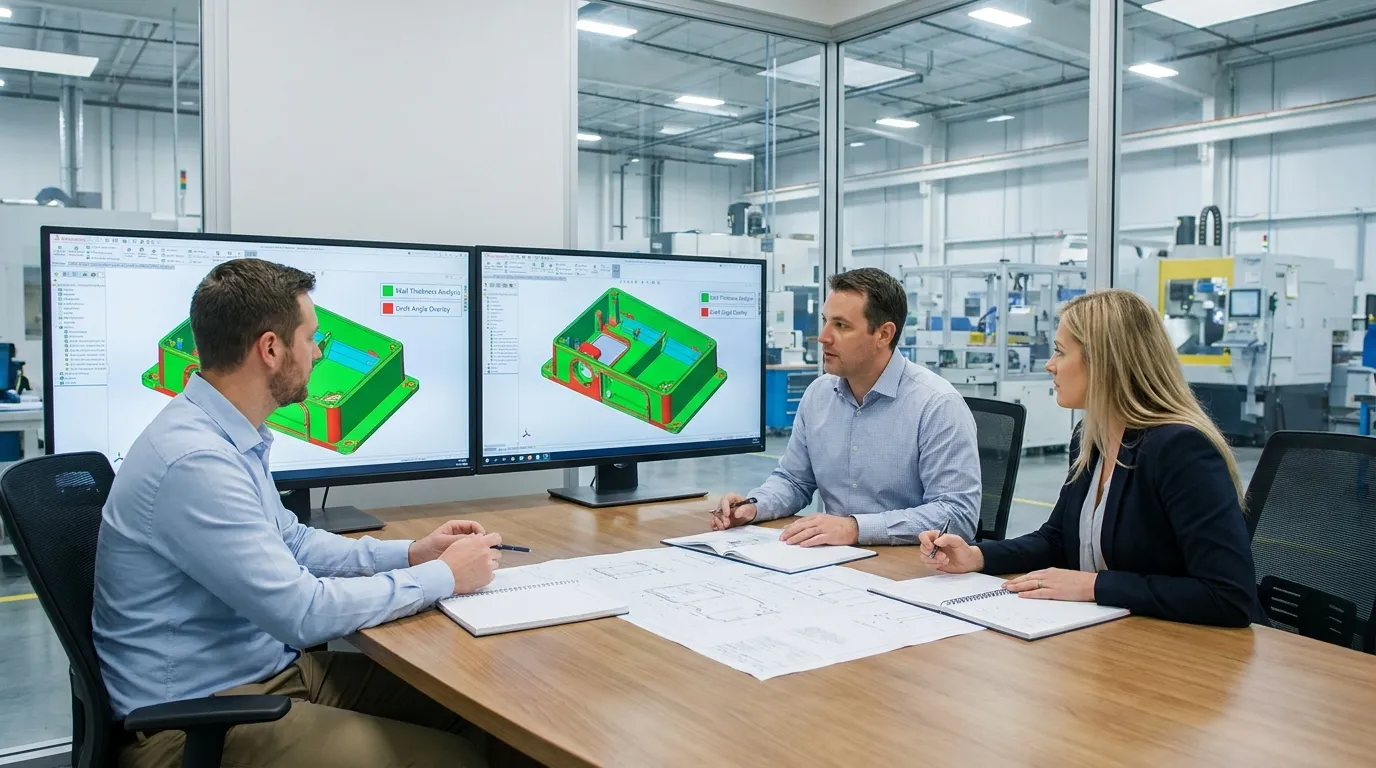
Design for manufacturing injection molding means reviewing a part design before tooling begins to reduce mold revisions, Defeitos, Atrasos, and production risk. A strong DFM review helps buyers avoid expensive tooling changes after steel cutting starts.
DFM, short for design for manufacturability, checks whether a plastic part can be molded efficiently and consistently. Suppliers usually review wall thickness, Ângulos de Draft, Undercuts, Posicionamento do portão, and tolerances before approving tooling. De acordo com o Kit de ferramentas DFM Protolabs, early manufacturability review helps reduce production cost and speed up manufacturing readiness.
For buyers, DFM matters because tooling changes become expensive once mold production starts. A small CAD adjustment after steel cutting may require cavity modifications, new inserts, ou reformulação de molde. That can delay sampling, qualification, and final production approval.
A good DFM review also improves communication between sourcing teams and mold makers. Instead of reacting to defects later, both sides agree on manufacturable geometry before production begins. If you need a broader process overview, o Guia completo de molde de injeção explains the full molding workflow and tooling process.
Objetivos comuns de uma revisão de DFM
- Reduzir revisões de molde
- Evitar marcas de afundamento e empenamento
- Melhorar o desmoldante
- Reduzir o prazo de entrega das ferramentas
- Menor risco de defeitos durante a produção
- Confirme tolerâncias realistas
Você também pode revisar de forma mais ampla Fundamentos do projeto de moldes por injeção before moving into tooling approval discussions.
Which design issues cause the most mold revisions and production delays?
Most injection molding delays begin with preventable design issues such as uneven wall thickness, insufficient draft, aggressive tolerances, and unnecessary undercuts. These problems often trigger tooling revisions after mold production has already started.
Many tooling delays come from geometry that looks acceptable in CAD but performs poorly during molding. Suppliers often flag these issues during DFM review because they affect cooling, mold release, Tempo do ciclo, or cosmetic quality.
A consumer electronics housing is a common example. Internal ribs may look structurally correct, but if the ribs are too thick, they can create sink marks on the visible outer surface. Fixing that problem after tooling starts usually requires steel modifications and additional mold sampling.
Por que mudanças tardias no projeto atrasam a aplicação das ferramentas
Late revisions slow production because mold tooling is built around finalized geometry. Assim que o corte de aço começa, even a small design update can affect multiple mold areas.
A gate relocation is one example. If a buyer changes gate position after tooling starts, the supplier may need to modify runner systems, cooling layouts, or cavity surfaces. That adds machining time and delays first article samples.
De acordo com Aprios, mold complexity and design changes directly affect injection molding lead times.
| Questão de projeto | Impacto na Manufatura | Risco de Atraso | Correção Típica |
|---|---|---|---|
| Espessura desigual da parede | Marcas de afundamento e empenamento | Médio a alto | Redesenho da geometria da parede |
| Ângulos de rascunho ausentes | Peças grudam durante a ejeção | Médio | Adicionar corrente de ar nas paredes verticais |
| Tolerâncias apertadas | Maior complexidade de ferramentas | Médio | Relaxar dimensões não críticas |
| Undercuts | Requer ações colaterais | Alto | Simplificar a geometria |
| Má colocação dos portões | Desequilíbrio ou defeitos de fluxo | Médio | Ajustar a localização do portão |
Some buyers assume tighter tolerances always improve quality. That is not always true. Tight dimensions help when assembly fit matters, but unnecessary precision increases tooling complexity, inspection cost, and production risk.
For a deeper look at mold engineering considerations, review the Processo de design de moldes used during tooling development.
What should buyers review in a DFM report before approving tooling?
A useful injection molding DFM report should identify manufacturability risks before tooling approval. Buyers should review draft analysis, wall thickness consistency, Localizações dos portões, tolerance feasibility, and predicted defect risks before releasing the mold for production.
A DFM report is more than a list of recommendations. It is a decision tool that helps buyers evaluate production risk before tooling moves forward. The best reports explain why a feature may create molding problems and what changes reduce that risk.
De acordo com Manufatura Boyan, DFM analysis helps identify molding issues before mold fabrication begins. Buyers should expect suppliers to explain both the problem and the manufacturing impact clearly.
Lista de verificação de avaliações de DFM para compradores
- Confirme ângulos de tiragem em paredes verticais
- Revise a consistência da espessura da parede
- Verifique as áreas previstas de afundamento ou dobra
- Verifique as recomendações de localização do portão
- Confirme tolerâncias realistas
- Revise os requisitos de subsubmissão
- Aprovar a seleção de resina
- Avaliar riscos estéticos de superfície
One common issue is tolerance stacking. A buyer may request very tight dimensions across several connected features without realizing the combined tolerance range becomes difficult to mold consistently. That usually increases inspection requirements and mold complexity.
Another frequent problem involves cosmetic expectations. Class A surface finishes are not always necessary. High-polish molds increase tooling cost and maintenance requirements, especially on parts where appearance has little impact on product performance.
If you want more detail on manufacturability review methods, o Revisão do Design de Moldes Plásticos guide explains common mold design considerations in more depth.
How do wall thickness and draft angles affect manufacturability?
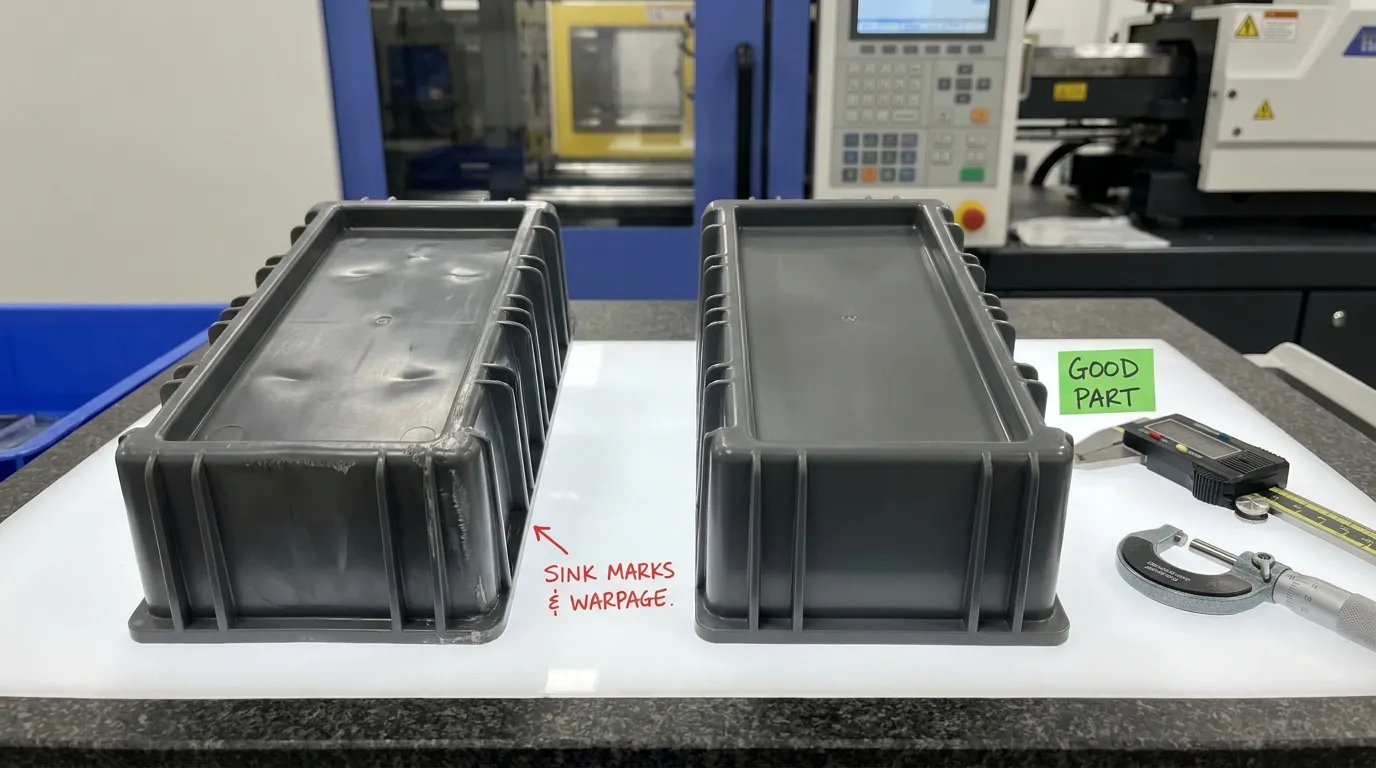
Uniform wall thickness and proper draft angles help plastic parts cool evenly and eject cleanly from the mold. Poor geometry increases the risk of sink marks, Dobra, Fixação, and extended production cycles.
Wall thickness and draft angle are two of the most important DFM checks in injection molding. Both directly affect part quality, mold performance, e consistência da produção.
De acordo com Protolabs, uneven wall sections can cause cooling problems and visible defects. Thick areas cool more slowly than thin sections, which creates internal stress and distortion.
Faixas recomendadas de espessura de parede
Uniform walls cool more consistently and reduce defect risk. Large thickness transitions should be avoided whenever possible.
| Design de Paredes | Resultado da Produção |
|---|---|
| Espessura uniforme da parede | Resfriamento estável e menor risco de dobra |
| Seções espessas e isoladas | Marcas de afundamento e tempo de ciclo mais longo |
| Transições de espessura acentuadas | Estresse e distorção internas |
| Paredes finas e sem suporte | Desempenho estrutural fraco |
A packaging component with uneven sidewalls is a good example. One section may cool faster than another, causing the part to twist slightly after ejection. That small amount of warpage can create assembly alignment problems later.
Diretrizes típicas de ângulo de rascunho
Draft angle helps molded parts release from the mold without damaging the surface.
| Tipo de Característica | Orientação Típica de Recrutamento |
|---|---|
| Paredes lisas | Mínimo de 1° |
| Superfícies texturizadas | 2° ou mais |
| Cavidades profundas | Pode ser necessário um rascunho adicional |
| Áreas de fechamento apertadas | Avaliação com o moldeiro |
Parts without enough draft often stick during ejection. That can leave drag marks, surface scratches, or damaged edges. In some cases, the mold itself experiences premature wear.
If your product requires tighter dimensional control, Análise Tolerâncias de moldagem de precisão before finalizing geometry.
When do tolerances and cosmetic requirements increase tooling cost?
Tight tolerances and cosmetic surface requirements often increase tooling complexity. Buyers should only apply strict requirements where the feature directly affects fit, Vedação, or product performance.
A common sourcing mistake is over-specifying dimensions that do not matter in real-world use. One buyer requested ±0.02 mm tolerances across non-critical plastic features on a consumer device enclosure. The supplier had to increase mold precision and inspection frequency, which raised both tooling and production cost.
| If the Requirement Is... | Then the Manufacturing Impact Is... |
|---|---|
| Tolerância de montagem apertada | É necessária maior precisão de usinagem |
| Acabamento cosmético de alto brilho | Mais polimento de molde é necessário |
| Textura em paredes profundas | Ângulo adicional de tiragem necessário |
| Correspondência multidimensional | Mais inspeção e balanceamento |
| Tolerância apertada não crítica | Despesa desnecessária com ferramentas |
Cosmetic perfection is not always the best choice. High-polish surfaces work well for visible consumer products, but they increase mold maintenance requirements and production sensitivity. For industrial parts or hidden components, a standard finish is often safer and more cost-effective.
Complex tolerances also affect cycle consistency. If dimensions are too aggressive for the selected resin or geometry, suppliers may struggle to maintain repeatable quality across long production runs.
For tighter production requirements, o Moldagem de alta precisão process guide explains how advanced tolerances affect tooling and manufacturing control.
How can buyers reduce tooling delays before production starts?
Buyers reduce tooling delays by finalizing manufacturable designs before steel cutting begins. Early DFM review, Tolerâncias realistas, and faster supplier feedback cycles help prevent expensive mold revisions and production slowdowns.
The fastest way to reduce injection molding delays is to solve design problems before tooling begins. Uma vez que o corte de aço começa, every revision becomes slower and more expensive.
De acordo com o Guia de moldagem por injeção de cubos, tooling turnaround can extend beyond several weeks depending on mold complexity. Design changes during that window usually create additional delays.
Perguntas que os compradores devem fazer antes da aprovação da ferramenta
- Are all draft angles approved?
- Has wall thickness been reviewed for sink risk?
- Are any undercuts avoidable?
- Which tolerances are function-critical?
- Has gate placement been finalized?
- Is the cosmetic finish requirement realistic?
- Has mold flow feedback been reviewed?
Clear communication also matters. Many delays happen because suppliers wait for approval on DFM recommendations. Slow buyer feedback can push tooling schedules back by days or weeks.
One supplier example involved a late undercut revision. The original design required side actions that increased mold complexity. Após a análise, the buyer simplified the geometry and removed the undercut before steel cutting. That avoided extra tooling components and shortened the production timeline.
Você também pode revisar a Processo de aprovação de ferramentas to understand how mold validation typically moves from design review into production sampling.
Checklist de DFM para compradores antes de lançar um molde de injeção para produção
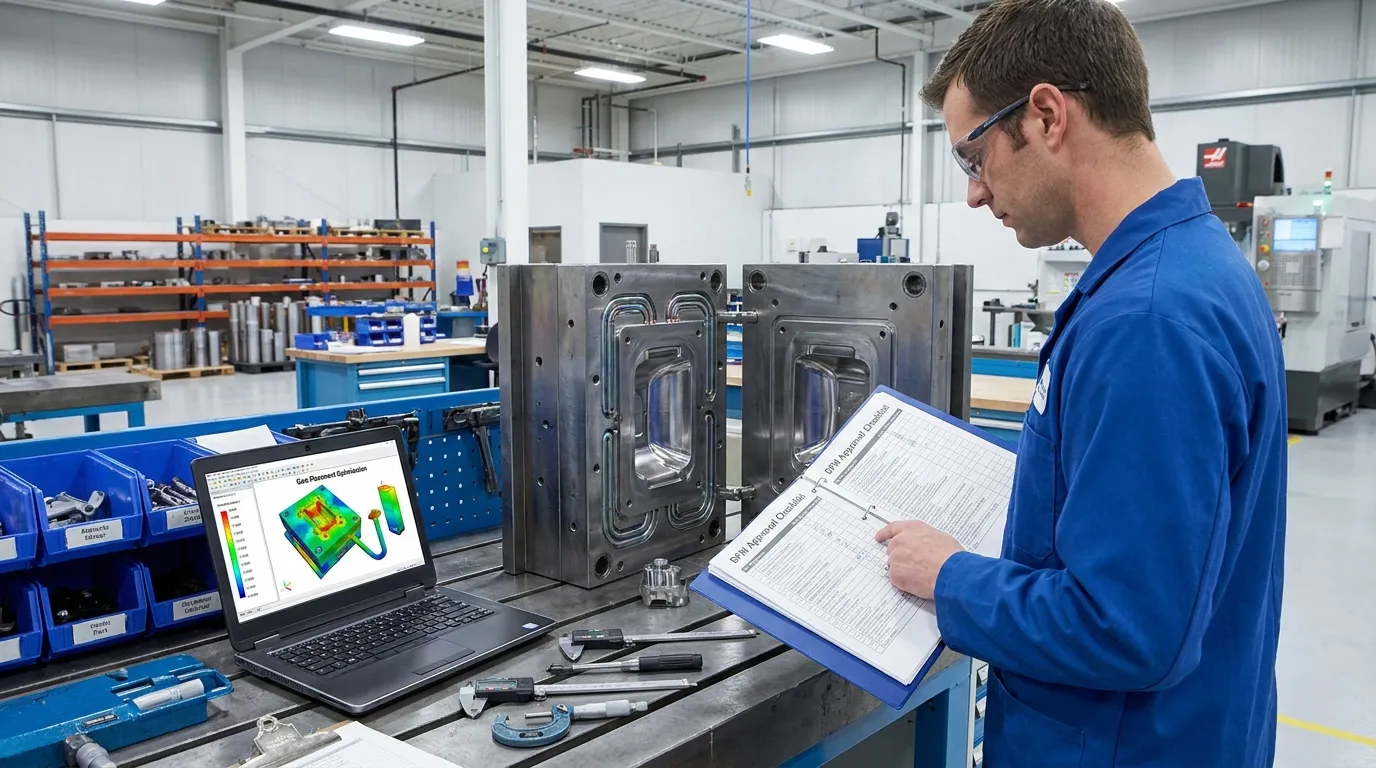
A buyer-side DFM checklist helps prevent mold revisions, tooling delays, and avoidable defects before production begins. The review should confirm geometry, Tolerâncias, Seleção de materiais, Localizações dos portões, and manufacturability feedback before approving tooling.
Lista de Verificação de Aprovação de DFM para Compradores
| Item da Revisão | Pergunta sobre a aprovação | Status |
|---|---|---|
| Geometria CAD | Are all dimensions finalized? | □ |
| Ângulos de rascunho | Has proper draft been added? | □ |
| Espessura da parede | Are walls consistent throughout the part? | □ |
| Localização do portão | Has the supplier approved flow direction? | □ |
| Tolerâncias | Are only critical dimensions tightly controlled? | □ |
| Seleção de materiais | Has the resin been confirmed for the application? | □ |
| Acabamento cosmético | Is the finish requirement necessary? | □ |
| Análise do fluxo de mofo | Have high-risk areas been reviewed? | □ |
| Undercuts | Can any side actions be removed? | □ |
| Aprovação do DFM | Has the supplier signed off before steel cutting? | □ |
Buyers who complete this checklist before tooling approval usually avoid the most common production setbacks. The goal is simple: fix manufacturability risks before they become tooling problems.
If you need broader background on tooling structure and molding systems, o Fundamentos dos componentes do molde guide covers the main mold elements used in production tooling.
Acertando o Próximo Passo
A strong design for manufacturing injection molding process reduces more than defects. It helps buyers control tooling cost, protect production schedules, and avoid preventable revisions after mold work starts.
Before approving tooling, review geometry carefully, confirm which tolerances actually matter, and resolve supplier feedback early. Small changes during CAD review are usually manageable. The same changes after steel cutting can create expensive delays.
The best DFM process is practical, fast, and collaborative. Buyers and mold makers should work from the same manufacturability checklist before production begins.
Perguntas Frequentes
What is DFM in injection molding?
DFM in injection molding means reviewing a part design to ensure it can be manufactured efficiently before tooling starts. The process helps reduce defects, Revisões de ferramentas, production delays, and unnecessary manufacturing cost.
Why are draft angles important in injection molding?
Draft angles help molded parts release cleanly from the mold during ejection. Sem o fluxo adequado, parts may stick, scratch, Dobra, or damage the mold surface during production.
What causes sink marks in injection molding?
Sink marks usually happen when wall thickness is uneven or sections are too thick to cool consistently. Poor rib design and incorrect packing pressure can also increase sink defects.
What should a DFM report include?
A DFM report should include draft analysis, wall thickness review, gate location recommendations, tolerance feedback, and predicted molding risks. The report helps buyers identify manufacturability problems before tooling approval.
How can buyers reduce injection molding delays?
Buyers reduce injection molding delays by completing DFM review before steel cutting and minimizing late-stage design changes. Faster communication with suppliers also helps avoid tooling rework and production slowdowns.
What are common injection molding design mistakes?
Common design mistakes include uneven wall thickness, Ângulos de rascunho ausentes, unrealistic tolerances, Cantos afiados, and unnecessary undercuts. These issues often increase tooling cost and defect risk.
Compartilhar:


Escrito por Sunshine
Em Sol, Somos um fabricante e fornecedor profissional de componentes de moldes de precisão, oferecendo uma ampla variedade de produtos para aplicações de estampagem e molde por injeção. Nosso foco principal inclui a formação de matrizes, pinos e mangas ejetor, e postes guia e buchas. Com usinagem CNC avançada, Controle rigoroso de qualidade, e fortes capacidades de produção, Garantimos confiabilidade, Peças de alta precisão, juntamente com componentes padrão em estoque para fornecimento global rápido e eficiente.
NOTÍCIAS
RECEBA O SERVIÇO
Com peças de qualidade para todos os orçamentos e equipe amigável treinada para tornar sua visita informativa e sem complicações.
